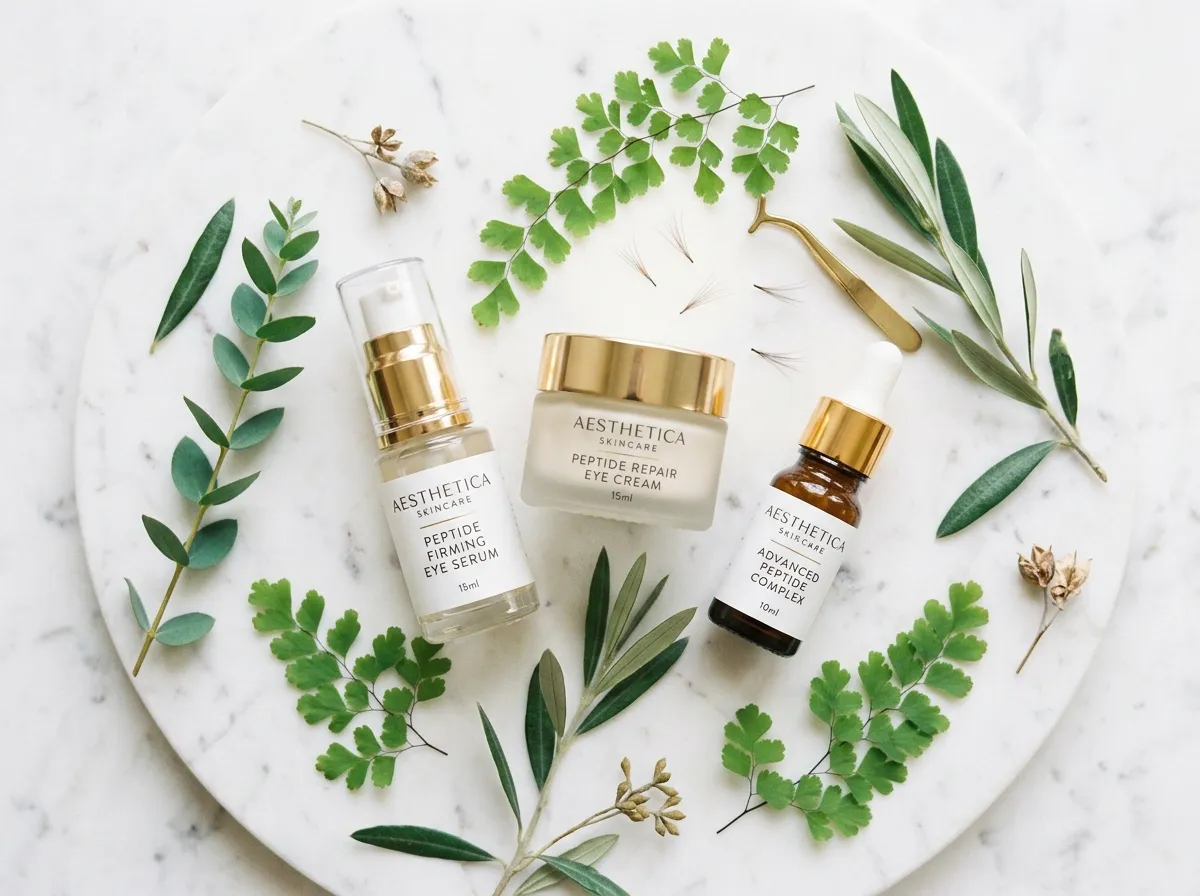
You cleanse, tone, moisturize, and SPF — but are you giving your eye area the targeted attention it actually deserves? If your skincare routine ends at your orbital bone, you are leaving one of the most important zones completely underserved. The skin around your eyes is up to ten times thinner than the rest of your face, and the lash line itself sits right at the intersection of delicate skin and follicle health. Enter: peptide eye creams — the 2026 skincare obsession that is quietly changing how lash lovers think about their entire beauty routine.
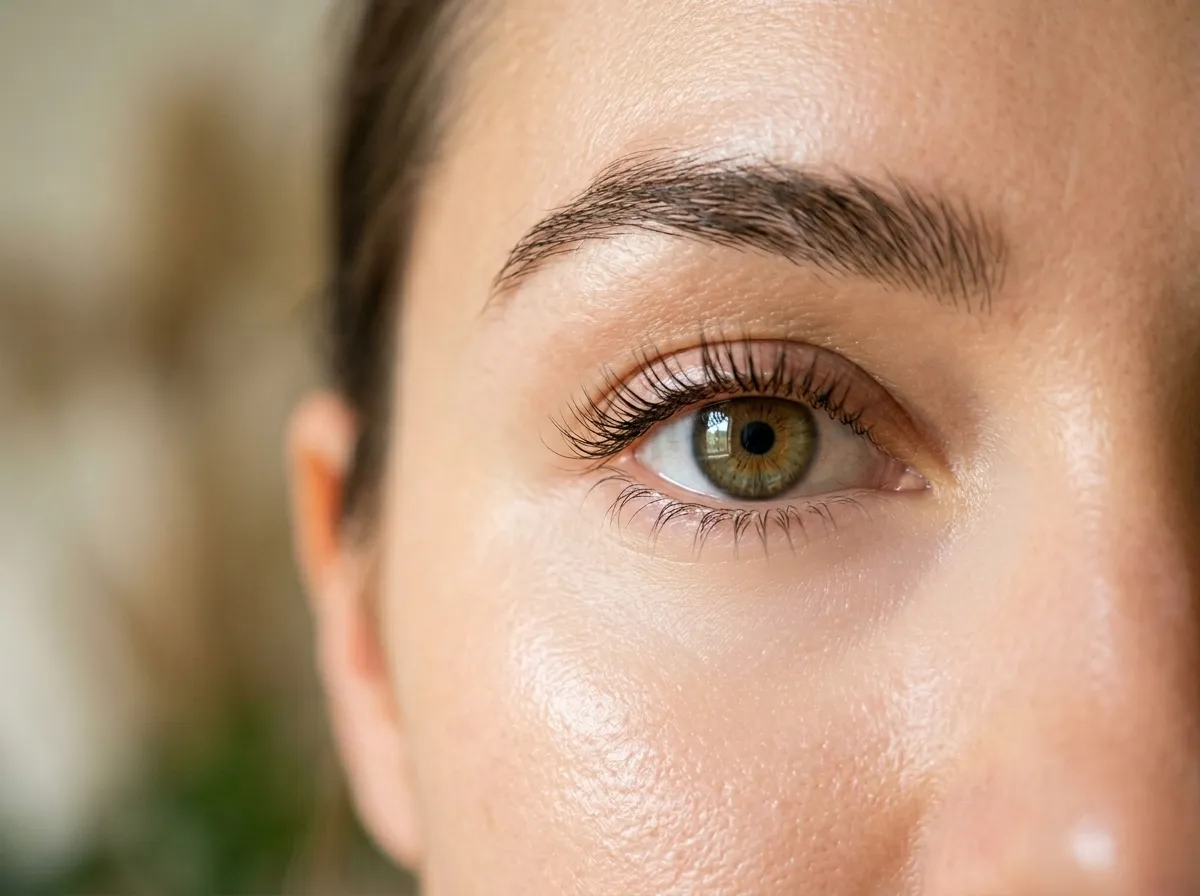
What Are Peptides and Why Do They Matter for Your Eye Area?
Peptides are short chains of amino acids — the fundamental building blocks of proteins like collagen and elastin. When applied topically, they send signals to your skin cells to produce more of these structural proteins, essentially acting like a repair crew for aging or damaged tissue.
In the context of eye area skincare, this matters enormously. The under-eye and lash-line zone loses collagen faster than anywhere else on your face due to constant movement — blinking alone accounts for roughly 10,000 micro-expressions per day. Over time, this leads to crepey texture, hollowing, dark circles, and weakened hair follicles along the lash line.
Peptide eye creams target all of these concerns simultaneously. Rather than just masking symptoms with hydration or reflection particles, they work at the cellular level to restore what has been lost. That is why dermatologists and beauty editors alike have crowned peptide formulations one of the top ingredient stories of 2026.
The Difference Between Peptides and Other Eye Cream Actives
If you have already explored caffeine-based eye care, you know that certain actives excel at specific jobs — caffeine constricts blood vessels to reduce puffiness, for example. Peptides work differently. Rather than a targeted, temporary fix, they deliver long-term structural improvement. Think of caffeine as the morning pick-me-up and peptides as the deep overnight renovation.
Retinol is another common eye area ingredient, but it can be too harsh for sensitive lash-line skin and is typically not recommended if you wear eyelash extensions, as it can accelerate cell turnover in ways that interfere with adhesive retention. Peptides, by contrast, are well-tolerated even on reactive skin and are considered extension-safe when applied correctly.
How Peptide Eye Creams Support Lash Health
Here is where things get especially interesting for lash lovers. Your lash follicles are embedded in that same thin, peptide-responsive skin surrounding the eye. When the skin is structurally compromised — dehydrated, collagen-depleted, or chronically inflamed — follicle function can suffer too. Weaker follicles mean thinner, more brittle natural lashes that are less able to support the weight of extensions and more prone to premature shedding.
A consistent peptide eye cream routine addresses this from the foundation up. By strengthening the dermal matrix around the lash line, you are essentially creating a healthier anchor for both your natural lashes and any extensions placed on them. Some peptide formulas also contain biotin derivatives and panthenol that directly condition the lash hair shaft, adding a dual benefit that bridges skincare and lash care beautifully.
If you have been experiencing faster-than-usual lash shedding or struggling with retention, it is worth examining your lash-line skincare — or lack thereof. Understanding the natural lash growth cycle can help you see how skin health and lash health are more connected than most people realize.
Peptides That Are Especially Beneficial Around the Eyes
Not all peptides perform the same function. When shopping for an eye cream, it helps to know which peptide types to look for on the ingredient list.
Signal Peptides
These instructions skin cells to produce more collagen and elastin. Common examples include Matrixyl (palmitoyl pentapeptide-4) and Argireline (acetyl hexapeptide-3). They are ideal for addressing fine lines and loss of firmness around the orbital area.
Carrier Peptides
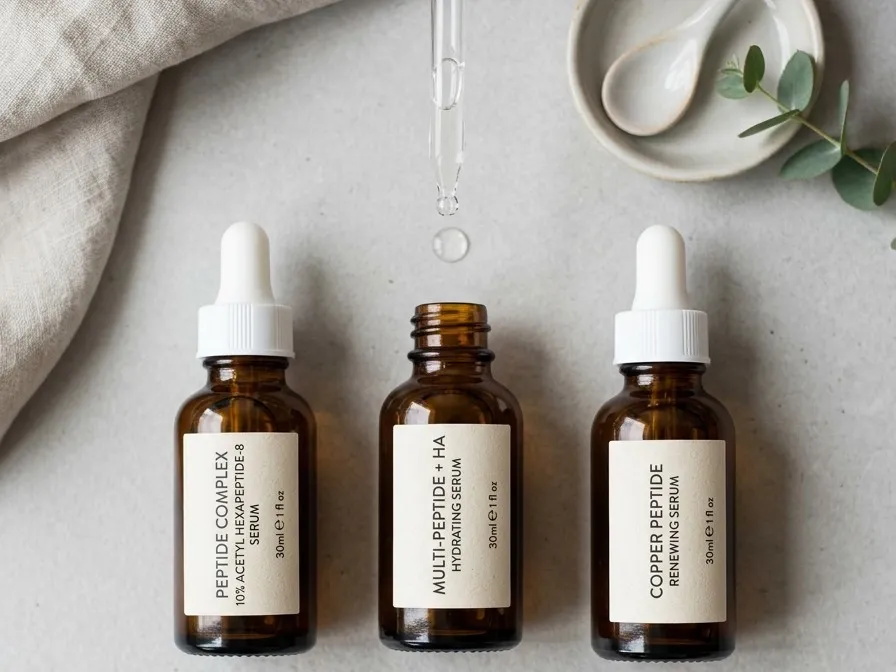
These deliver trace minerals — particularly copper — directly to skin tissue to support healing and regeneration. Copper peptides are gaining significant attention in 2026 for their role in lash follicle stimulation, as copper is a cofactor in the enzyme processes that support hair growth.
Neurotransmitter-Inhibiting Peptides
Often called “Botox-like” peptides, these temporarily relax the micro-muscles that cause expression lines. Argireline is the best-known example. They are particularly effective at the outer corners of the eyes where crow’s feet form.
How to Apply Peptide Eye Cream Without Disrupting Your Extensions
This is the question every extension wearer has, and the answer is more reassuring than you might expect. Peptide eye creams are generally extension-safe as long as you follow a few application rules.
Timing and Placement
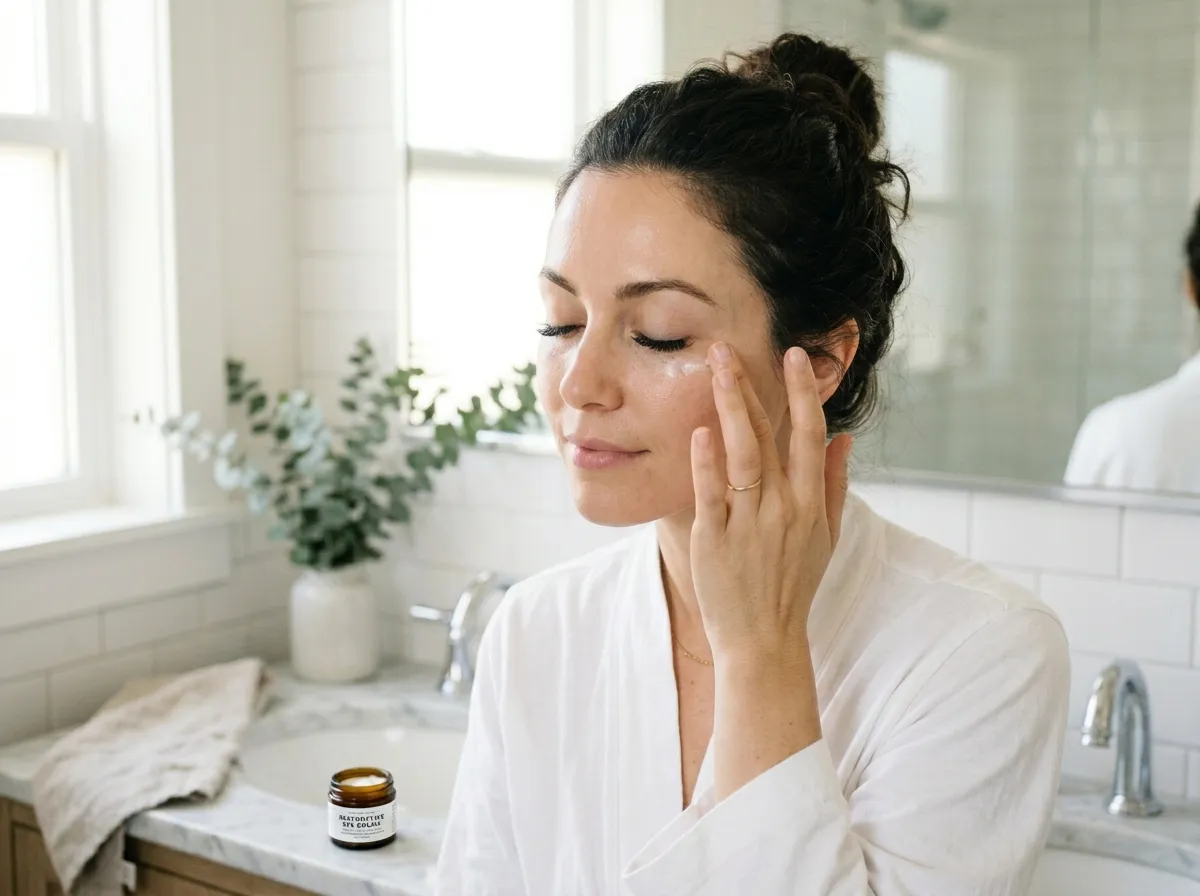
Always apply eye cream as part of your evening routine, after extensions have been dry and settled for the day. Use your ring finger — it applies the lightest pressure of any finger, which matters enormously on this delicate skin. Tap gently along the orbital bone and work the product inward toward the inner corner, stopping at least 5 to 7 millimetres away from the lash line itself. You want the active ingredients to reach the follicle zone through skin migration, not through direct contact with the adhesive bond.
Avoid applying eye cream to the upper lid or directly onto the lash line. For anyone who has ever experienced premature extension loss after moisturizing, this boundary is almost always the culprit. This is the same principle behind choosing oil-free formulas — oils migrate, and so does any emollient-heavy cream applied too close to the lashes.
What to Avoid in Your Formula If You Wear Extensions
Even the best peptide eye cream can cause extension problems if it contains the wrong supporting ingredients. Watch out for:
- Mineral oil or petrolatum — heavy occlusives that break down cyanoacrylate adhesives
- Glycolic or lactic acid — AHA exfoliants that accelerate skin turnover and weaken the adhesive bond zone
- Coconut oil or argan oil — natural oils that are extension-friendly in hair but problematic near lash adhesive
- Retinol or retinoids — as noted above, these accelerate cellular turnover in a way that shortens retention
The safest extension-compatible eye creams will be gel-based or water-gel formulas with a lightweight, fast-absorbing texture. These deliver peptides effectively without leaving a residue that migrates toward the lash bond. For more on what your natural lashes actually need after extensions, the guide on restoring natural lashes after extensions is essential reading.
Building a Lash-Line Skincare Routine Around Peptides
Peptide eye creams work best as part of a layered routine rather than a standalone product. Here is how to build a simple, lash-safe protocol that maximizes results without overwhelming your skin — or your extensions.
Morning Routine
Keep it light and protective. After cleansing, apply a water-based eye serum with hyaluronic acid and a signal peptide — this hydrates the skin and preps it for the day. Follow with your SPF. Many people skip sun protection around the eyes because they worry about irritation, but chronic UV exposure is one of the leading causes of collagen degradation in the orbital area. A mineral SPF applied carefully to the orbital bone (never on the lid if you have extensions) is non-negotiable.
If you are also using a lash growth serum, apply it to the lash line before your SPF, following the product’s specific instructions.
Evening Routine
This is where your peptide eye cream does its heaviest lifting. Skin repair happens primarily at night, so a richer peptide formula applied via gentle tapping technique will absorb deeply while you sleep. If you want to layer a copper peptide serum underneath for added follicle support, apply the serum first — thinnest to thickest is the rule — and allow it to absorb for 60 seconds before patting the cream over the top.
Weekly Extras
Consider adding a hydrogel eye patch one to two times per week. Many of the best-performing patches in 2026 are now peptide-infused, delivering an intensive dose of actives through occlusion — the patch creates a sealed environment that drives ingredients deeper into the tissue. Apply these on days when you do not have fresh extensions, as the adhesive on patches can interact with lash bonds if placed too close to the lash line.
The Best Peptide Eye Creams to Look for in 2026
The market has exploded with peptide eye products this year, which makes navigation tricky. Rather than chasing viral recommendations, look for formulas that have been tested by board-certified dermatologists and carry peer-reviewed evidence for their key peptide complexes. A few benchmarks worth knowing:
- The American Academy of Dermatology has published guidance on peptide efficacy in anti-aging skincare — it is a reliable starting point for understanding clinical expectations versus marketing claims.
- Look for Matrixyl 3000 (a combination of palmitoyl tetrapeptide-7 and palmitoyl oligopeptide) as a gold-standard signal peptide complex with the most robust published research behind it.
- Fragrance-free formulas are always preferable around the eye area — fragrance is one of the most common causes of periorbital contact dermatitis, and an inflamed lash line is the last thing any extension wearer needs.
Price is not always a reliable indicator of quality with peptides. Several mid-range brands have formulations that rival luxury options when you compare the actual peptide concentration and supporting ingredient list. Always read the full ingredient list, not just the front-of-pack claims.
Your Lash-Line Skincare Is the Foundation of Everything
Extensions, lifts, tints, growth serums — every single lash service and product you invest in performs better when the skin beneath it is healthy, resilient, and well-nourished. Peptide eye creams are not a luxury add-on for your routine. In 2026, they are the logical next step for anyone who takes their lash health seriously.
Whether you are a lash extension client looking to improve retention and protect your natural lashes, or a lash artist advising clients on aftercare that actually moves the needle, understanding the role of peptides in lash-line skincare puts you miles ahead of the curve. Start with a gentle, extension-safe formula, be consistent with your application, and give it at least six to eight weeks before evaluating results. Skin remodeling is not instant, but it is absolutely worth the patience.
Want to go deeper on lash health from the inside out? Explore how the lash microbiome and eyelid hygiene play into the bigger picture of keeping your lashes — and the skin they grow from — in peak condition.