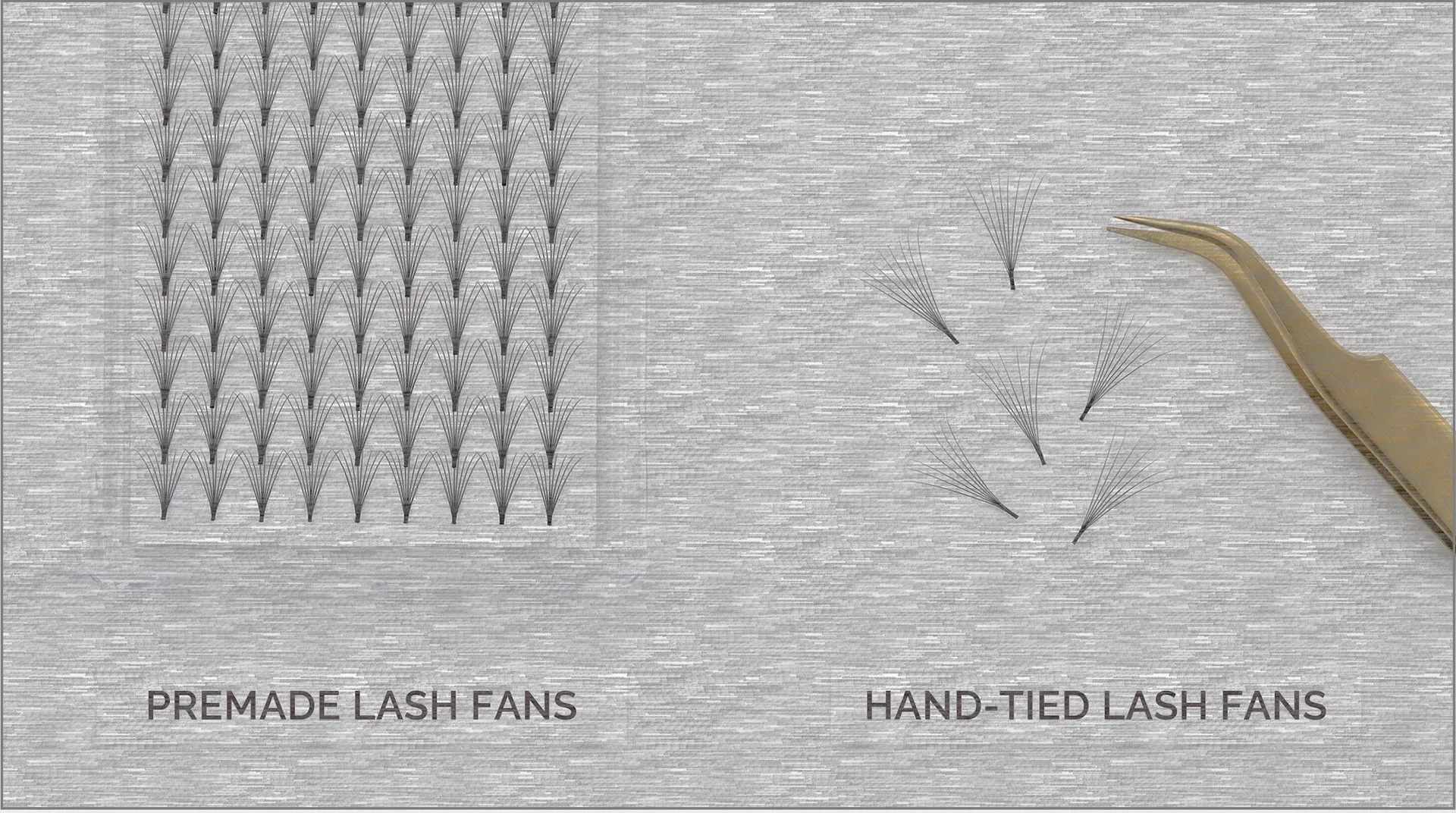
The lash extension industry is evolving rapidly, and one of the most significant shifts happening in 2026 is the widespread adoption of premade lash fans. According to Lashphemy’s 2026 industry trends report, premade lashes are no longer optional — they are becoming a standard part of professional lash artists’ toolkits. Yet the debate continues: should you use premade fans, stick with traditional hand-tied fans, or incorporate both methods into your practice? This comprehensive guide explores the advantages, disadvantages, and practical considerations of each approach to help you make informed decisions for your lash business.
Whether you are a beginner lash artist building your skills or an experienced professional optimizing your workflow, understanding when and how to use premade versus hand-tied fans is essential for delivering exceptional results while maintaining business efficiency. Let us dive into the details of each method and discover which approach — or combination of approaches — works best for your unique situation.
What Are Premade Lash Fans
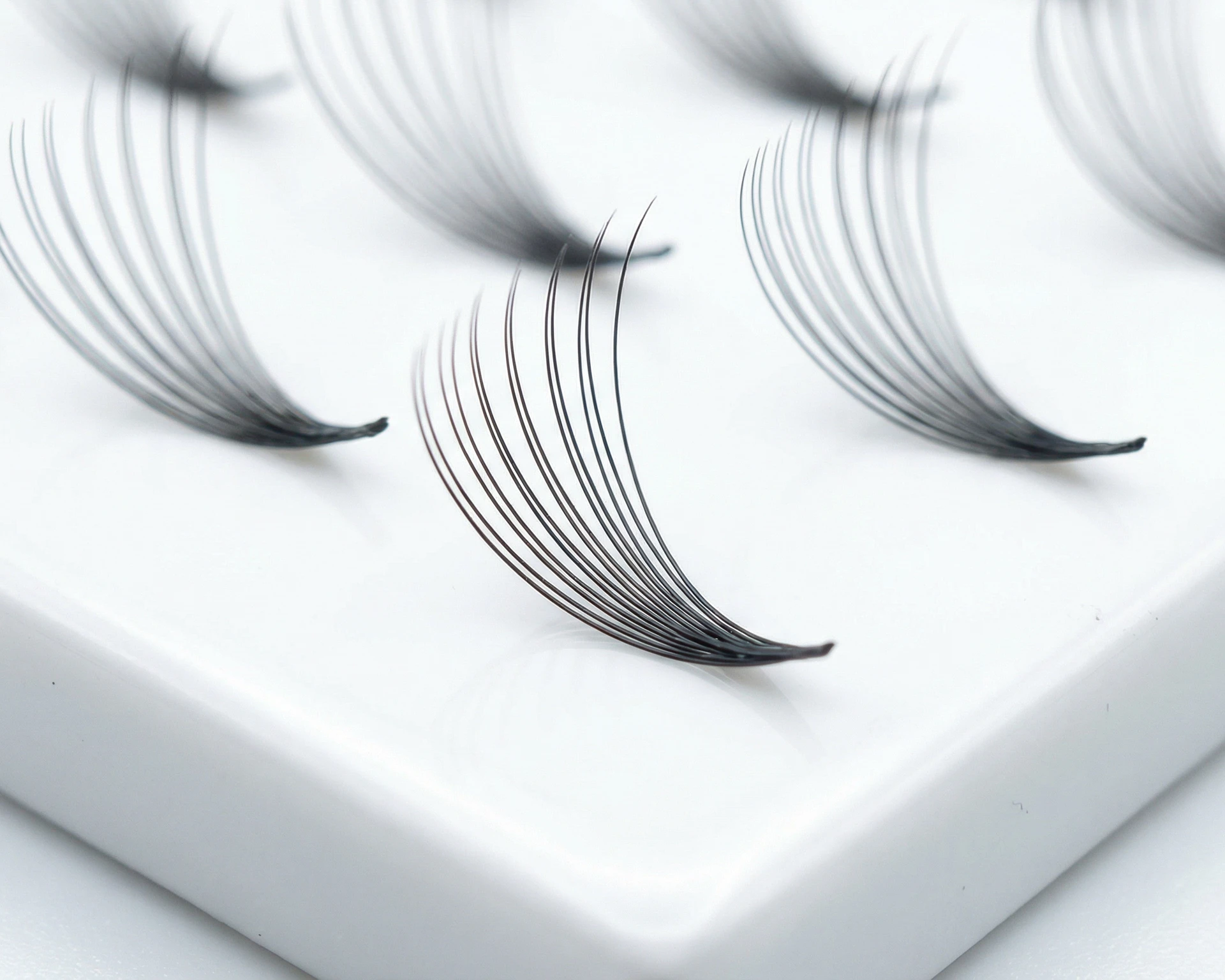
Premade lash fans are volume lash extensions that have been pre-fanned and bonded at the base by manufacturers. These fans come ready to use, eliminating the need for artists to manually create fans during application. Premade fans are available in various configurations, typically ranging from 2D to 10D or higher, with different lengths, curls, and thicknesses to suit diverse client needs and styling preferences.
The manufacturing process for quality premade fans involves precision machinery that creates uniform fan shapes with consistent spacing between individual lashes. The base of each fan is bonded with a small amount of adhesive, creating a stable structure that maintains its shape during application. High-quality premade fans feature thin, flexible bases that mimic the appearance and feel of hand-tied fans, while lower-quality options may have thick, stiff bases that create less natural results.
Premade fans come in several styles to accommodate different application techniques and desired effects. Standard premade fans work well for classic volume sets and provide reliable consistency. Narrow-base premade fans offer more flexibility and a lighter feel, making them ideal for clients with sensitive eyes or those seeking ultra-natural looks. Wide-base premade fans provide extra stability and are particularly useful for beginners still developing their application skills.
What Are Hand-Tied Lash Fans
Hand-tied lash fans are volume extensions created manually by the lash artist during the application process. The artist uses specialized tweezers to pick up multiple individual lash extensions, fans them out to create the desired shape and volume, and then applies the fan to the client’s natural lash. This traditional technique has been the foundation of volume lash extensions since the method was first developed.
Creating hand-tied fans requires significant skill, practice, and dexterity. Artists must master the coordination between their hands, learning to pick up the precise number of lashes, fan them evenly, and maintain the fan shape while dipping in adhesive and placing on the natural lash. The process demands consistent hand positioning, proper tweezer angles, and refined motor control. Many artists spend months perfecting their hand-tied fan technique before achieving the speed and consistency needed for professional volume work.
Hand-tied fans offer unparalleled customization potential. Artists can adjust the number of lashes in each fan based on the client’s natural lash thickness and the desired volume level. They can create asymmetrical fans for textured, wispy looks or perfectly symmetrical fans for classic volume aesthetics. The ability to modify fan size, shape, and density on the fly allows artists to respond to each client’s unique lash characteristics and create truly bespoke results.
Premade Fans: Advantages and Disadvantages
Time Efficiency and Speed
The most significant advantage of premade fans is the dramatic time savings they offer. Creating hand-tied fans during application adds considerable time to each appointment, with experienced artists typically spending 90 to 120 minutes on a full volume set. Premade fans eliminate the fan-making step entirely, allowing artists to complete the same set in 60 to 90 minutes. This efficiency gain means you can serve more clients per day, increasing your earning potential without extending your working hours or compromising quality.
For lash artists experiencing hand fatigue, carpal tunnel symptoms, or repetitive strain injuries, premade fans provide essential relief. The repetitive motion of creating hundreds of hand-tied fans during a single appointment places significant stress on hands, wrists, and fingers. Switching to premade fans reduces this physical strain, potentially extending your career longevity and preventing chronic pain conditions that force many artists to reduce their workload or leave the industry entirely.
Consistency and Uniformity
Premade fans deliver exceptional consistency that even highly skilled artists struggle to match with hand-tied methods. Each fan features identical spacing, symmetry, and structure, creating a polished, uniform appearance across the entire lash line. This consistency is particularly valuable for artists still developing their volume skills, as it ensures professional results while they continue building their hand-tied technique. Clients appreciate the predictable, reliable quality that premade fans provide, knowing they will receive the same beautiful results at every appointment.
Learning Curve and Accessibility
Premade fans significantly reduce the learning curve for new lash artists entering the volume lash market. Instead of spending months mastering hand-tied fan creation before offering volume services, beginners can start providing volume lashes much sooner using premade fans. This accessibility allows new artists to build their client base and generate revenue while simultaneously practicing and improving their hand-tied skills. For many artists, premade fans serve as a valuable stepping stone that makes volume lashes more approachable and less intimidating.
Limitations and Considerations
Despite their many advantages, premade fans do have limitations. The most significant is reduced customization flexibility. While premade fans come in various configurations, you are limited to the specific fan sizes, shapes, and volumes manufactured by your supplier. If a client needs a 7D fan but your supplier only offers 6D and 8D options, you must choose the closest match rather than creating the exact fan needed. This constraint can be frustrating when working with clients who have very specific lash characteristics or styling preferences.
Cost is another consideration. Quality premade fans are more expensive per fan than individual lash extensions used for hand-tied work. While the time savings often offset this increased material cost, artists working in price-sensitive markets or those with very high volume may find the expense challenging. Additionally, maintaining an adequate inventory of premade fans in all the lengths, curls, and volumes you might need requires more upfront investment and storage space than keeping individual lash extensions on hand.
Hand-Tied Fans: Advantages and Disadvantages
Unlimited Customization
The primary advantage of hand-tied fans is their infinite customization potential. You can create any fan configuration imaginable, adjusting the number of lashes, fan shape, and volume level to perfectly match each client’s natural lashes and desired aesthetic. Need a 7D fan for one lash and a 4D fan for the next? No problem. Want to create an asymmetrical, wispy fan for texture? Easily done. This flexibility allows you to deliver truly bespoke results that respond to each client’s unique characteristics rather than forcing their lashes to conform to predetermined fan options.
Hand-tied fans also enable you to adjust your approach based on the client’s natural lash condition. If you encounter a particularly thin natural lash, you can immediately create a lighter fan with fewer extensions. If the next lash is thicker and stronger, you can add more volume without switching products or reaching for different premade fans. This real-time adaptability ensures optimal lash health and retention while maximizing the visual impact of your work.
Artistry and Skill Expression
Many lash artists find deep satisfaction in the artistry of hand-tied fan creation. The ability to craft each fan manually, adjusting and perfecting the shape and structure, represents the pinnacle of lash extension technique. Clients who understand and appreciate this craftsmanship often specifically seek out artists who work primarily with hand-tied fans, viewing the method as a mark of expertise and dedication to the art form. For artists who take pride in their technical skills, hand-tied fans offer a way to distinguish themselves in a competitive market.
Hand-tied fans also provide opportunities for creative expression that premade fans cannot match. Techniques like creating textured, spiky fans for edgy looks or crafting ultra-wispy fans for soft, romantic aesthetics require the precision control that only hand-tying allows. If your artistic vision and brand identity center on creating unique, highly customized lash designs, hand-tied fans are essential tools for bringing that vision to life.
Cost Efficiency
From a pure material cost perspective, hand-tied fans are more economical than premade options. Individual lash extensions used to create hand-tied fans cost significantly less per fan than purchasing premade fans. For high-volume salons or artists completing many sets per week, these savings can be substantial over time. The lower material costs also provide more flexibility in pricing strategies, allowing you to maintain healthy profit margins even when offering competitive rates.
Challenges and Drawbacks
The most obvious disadvantage of hand-tied fans is the time investment required. Creating fans during application extends appointment times considerably, limiting how many clients you can serve per day. This time factor directly impacts your earning potential and may require you to charge higher prices to compensate for the additional labor involved. For artists with busy schedules or those trying to maximize their daily income, the time cost of hand-tied fans can be prohibitive.
Hand-tied fans also demand a high level of skill and consistency that takes significant time to develop. New artists often struggle to create uniform, symmetrical fans quickly enough to complete appointments in reasonable timeframes. Even experienced artists can experience variations in fan quality when fatigued, rushed, or working under less-than-ideal conditions. This consistency challenge means hand-tied results can vary more than premade results, potentially leading to client dissatisfaction if expectations are not properly managed.
Physical strain is another serious consideration. The repetitive motions required for hand-tied fan creation can lead to hand fatigue, wrist pain, and long-term injuries like carpal tunnel syndrome. Many experienced artists who built their careers on hand-tied techniques eventually transition to premade fans or hybrid approaches to preserve their physical health and extend their working years.
Quality and Consistency Comparison
When comparing quality between premade and hand-tied fans, the answer depends largely on the skill of the artist and the quality of the premade fans being used. High-quality premade fans from reputable manufacturers can match or exceed the quality of hand-tied fans created by most artists. These premium premade options feature thin, flexible bases, perfectly symmetrical fan shapes, and consistent spacing that creates beautiful, natural-looking results.
However, lower-quality premade fans with thick, stiff bases or uneven lash distribution can produce inferior results compared to well-executed hand-tied fans. The key is sourcing premade fans from trusted suppliers who prioritize quality and consistency. Read reviews, request samples, and test different brands to find premade fans that meet your standards before committing to large orders.
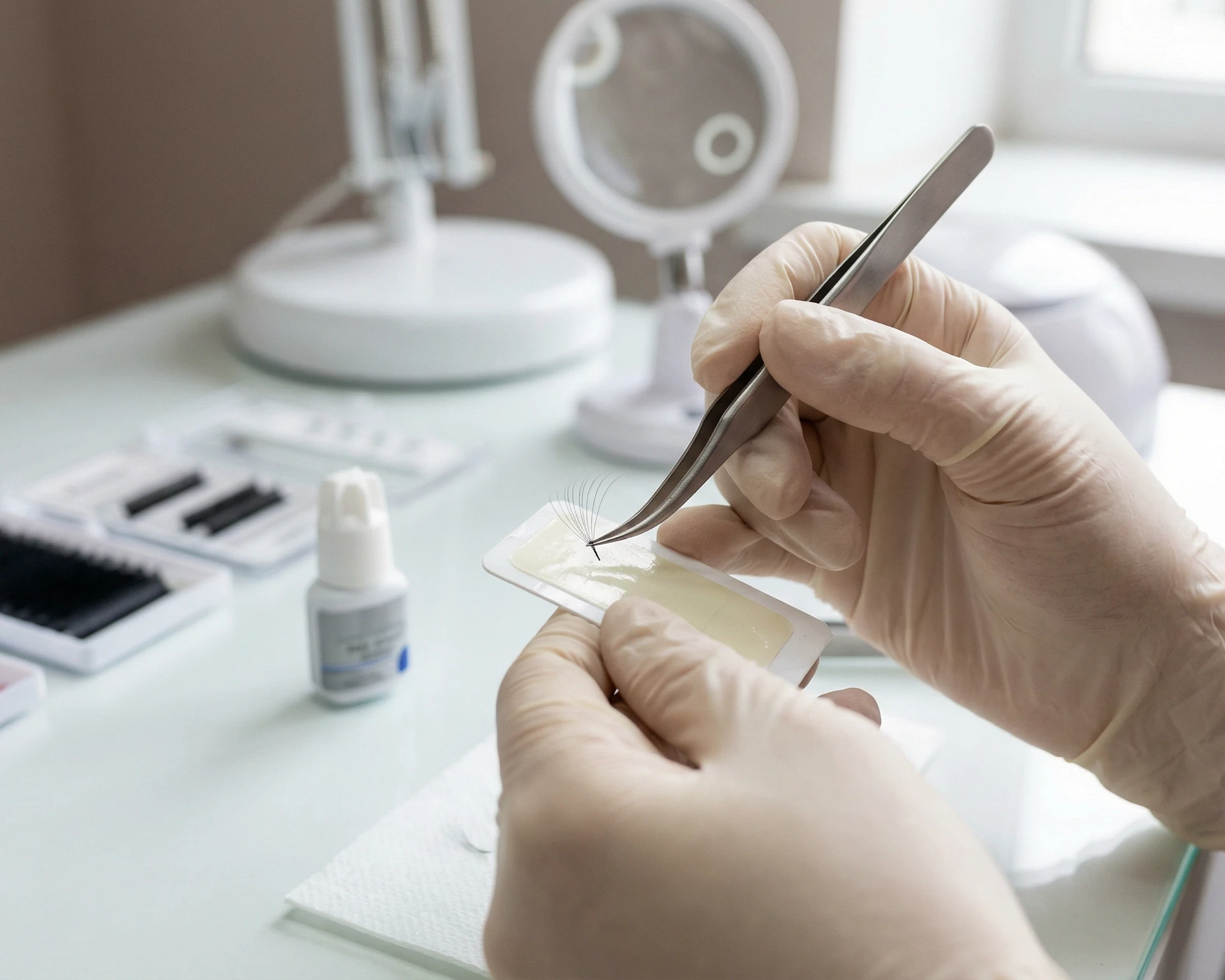
Hand-tied fan quality varies significantly based on artist skill level. Master lash artists with years of experience can create hand-tied fans that are indistinguishable from premium premade options, with perfect symmetry, ideal spacing, and lightweight bases. Less experienced artists or those working quickly may produce hand-tied fans with inconsistent shapes, uneven spacing, or bases that are too thick, resulting in less polished final results. The quality ceiling for hand-tied fans is extremely high, but reaching that ceiling requires substantial skill development and practice.
Consistency is where premade fans truly excel. Every premade fan from a quality manufacturer is virtually identical, ensuring uniform results across the entire lash set and between appointments. Hand-tied fans, even when created by skilled artists, show more variation. While this variation can add character and a handcrafted quality to the final look, clients who prefer perfectly uniform, symmetrical lashes may find premade fans more satisfying.
Time and Efficiency Analysis
The time difference between premade and hand-tied fans is substantial and directly impacts your business operations. A full volume set using hand-tied fans typically requires 90 to 120 minutes for experienced artists, with beginners often needing 120 to 180 minutes. The same set using premade fans can be completed in 60 to 90 minutes, representing a time savings of 30 to 60 minutes per appointment.
This efficiency gain translates to concrete business benefits. If you work eight-hour days, using premade fans allows you to complete four full sets instead of three, increasing your daily revenue by 33 percent without extending your hours. Alternatively, you can maintain the same number of appointments while reducing your working hours, improving work-life balance and reducing burnout risk. The time savings also create scheduling flexibility, allowing you to accommodate last-minute appointments or offer more convenient time slots to clients.
However, the time equation is not purely about speed. Some clients specifically value the time and attention involved in hand-tied application, viewing the longer appointment as a reflection of artistry and care. For these clients, the extended appointment time is a feature rather than a drawback. Understanding your target market and positioning your services appropriately is essential for leveraging time efficiency effectively.
Cost Considerations for Your Business
The cost analysis for premade versus hand-tied fans involves multiple factors beyond simple material costs. While premade fans cost more per fan than the individual lashes used for hand-tied work, the time savings they provide often results in higher overall profitability. Consider a scenario where premade fans cost an additional ten dollars in materials per set but save 45 minutes of labor time. If your hourly rate is 60 dollars or more, the time savings more than compensates for the increased material cost.
Inventory management also affects costs. Premade fans require maintaining stock in multiple lengths, curls, and volumes, necessitating higher upfront investment and more storage space. Hand-tied work requires only individual lash extensions in various specifications, which take up less space and require lower initial investment. However, premade fans have longer shelf lives and are less prone to damage during storage, potentially reducing waste and replacement costs.
Pricing strategy plays a crucial role in cost considerations. Many artists charge premium rates for hand-tied volume work, positioning it as a luxury service that justifies higher prices. Others charge the same rates for premade and hand-tied work, using premade fans to improve profit margins while maintaining competitive pricing. Your approach should align with your brand positioning, target market, and business goals. For insights on pricing strategies, explore our guide on lash extension pricing strategy for beginners.
Which Method Is Right for You
The choice between premade and hand-tied fans is not binary — most successful lash artists use both methods strategically based on specific situations and client needs. Understanding when to use each approach allows you to maximize efficiency while maintaining the flexibility to deliver customized results when needed.
Consider Premade Fans When
Premade fans are ideal for high-volume days when you have back-to-back appointments and need to maintain consistent quality while working efficiently. They are excellent for clients who prefer uniform, symmetrical lash sets and do not require extensive customization. Premade fans also work well for maintenance fills, where speed and consistency are priorities. If you are experiencing hand fatigue or physical discomfort, switching to premade fans for some or all appointments can provide essential relief while maintaining service quality.
New artists should strongly consider starting with premade fans to build confidence and client base while developing hand-tied skills. The reduced learning curve allows you to offer volume services sooner, generating revenue and gaining experience without the pressure of mastering hand-tied technique immediately. As your skills develop, you can gradually incorporate more hand-tied work into your practice.
Consider Hand-Tied Fans When
Hand-tied fans are essential when working with clients who have very specific customization needs that premade fans cannot address. They are ideal for creating highly textured, wispy looks that require asymmetrical or irregular fan shapes. Hand-tied fans also work well when you encounter unusual natural lash characteristics that require real-time adjustments to fan size and structure. If your brand identity centers on artisanal craftsmanship and bespoke service, hand-tied fans help communicate that positioning to clients.
Artists who enjoy the creative and technical aspects of hand-tied work may choose to use this method for premium services or signature styles, charging higher rates that reflect the additional time and skill involved. This approach allows you to differentiate your offerings and appeal to clients who value and are willing to pay for handcrafted artistry.
The Hybrid Approach
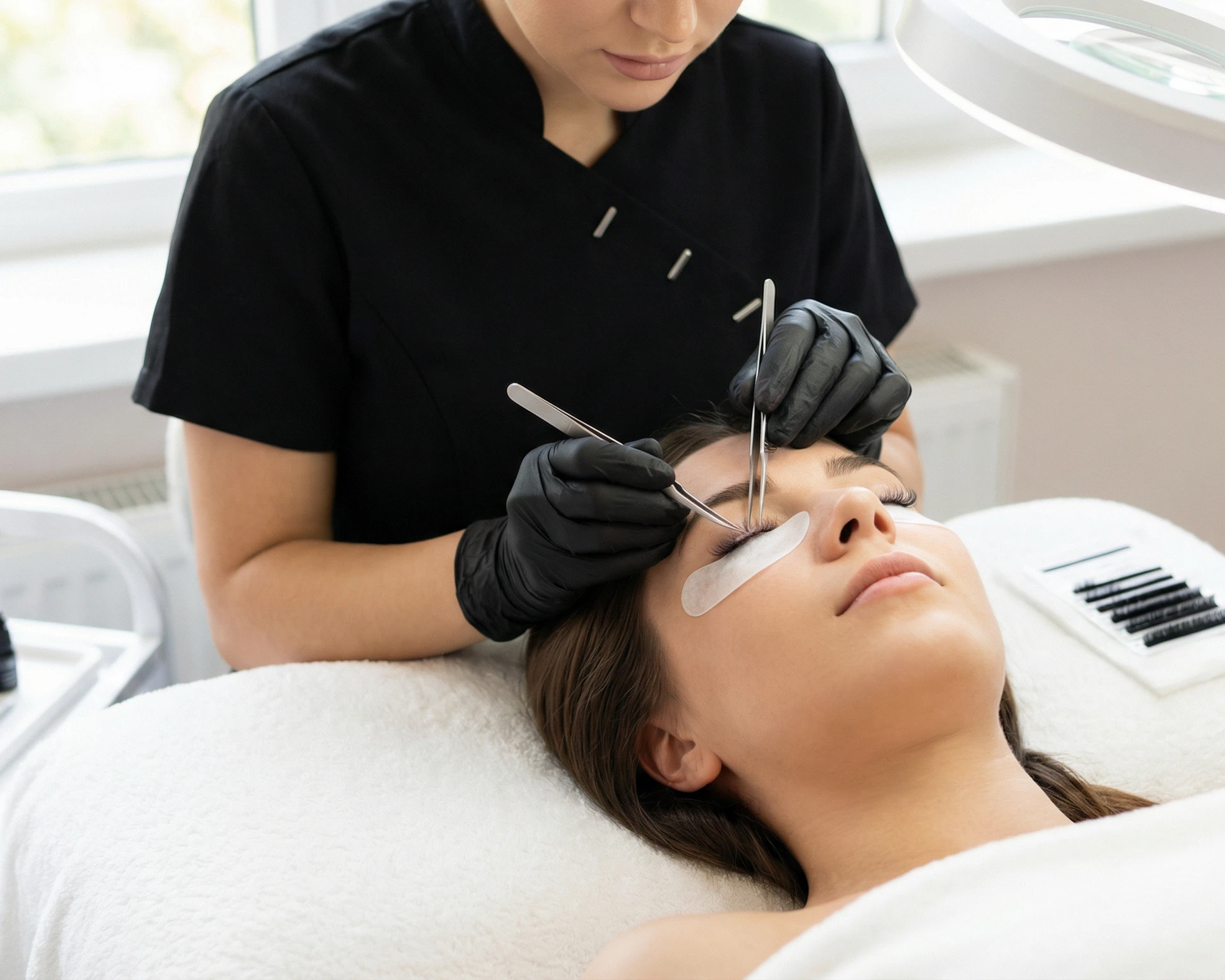
Many successful lash artists adopt a hybrid approach, using both premade and hand-tied fans within the same set. This strategy combines the efficiency of premade fans with the customization flexibility of hand-tied work. For example, you might use premade fans for the majority of the lash line where consistency is desired, then switch to hand-tied fans in specific areas like the outer corners where you want to create custom wispy effects or adjust for unique lash characteristics.
The hybrid approach also allows you to manage your energy and time effectively throughout the day. You might use premade fans for morning appointments when you are fresh and efficient, then reserve hand-tied work for afternoon appointments when you have more time and mental bandwidth for detailed customization. Alternatively, you could use premade fans for standard volume sets and reserve hand-tied techniques for premium services or special occasions.
For more information on advanced lash techniques that complement both premade and hand-tied work, check out our articles on lash volume stacking techniques and flat and cashmere lash extensions.
Making the Right Choice for Your Business
The premade versus hand-tied debate is not about choosing one method and abandoning the other — it is about understanding the strengths and limitations of each approach and using them strategically to serve your clients effectively while building a sustainable, profitable business. Both methods have valuable places in modern lash artistry, and the most successful artists are those who master both and know when to apply each.
As you develop your skills and grow your business, experiment with both premade and hand-tied fans. Pay attention to how each method affects your workflow, physical comfort, client satisfaction, and profitability. Gather feedback from clients about their preferences and experiences. Track your appointment times, material costs, and revenue to understand the true business impact of each approach. This data-driven perspective will help you make informed decisions that align with your goals and circumstances.
Remember that your choice can evolve over time. Many artists start with premade fans, transition to primarily hand-tied work as their skills develop, and then return to a hybrid approach as they prioritize efficiency and physical health. Your methods should adapt to your changing needs, skills, and business objectives. The key is remaining flexible, continuing to learn, and always prioritizing the quality of results you deliver to clients.
Whether you choose premade fans, hand-tied fans, or a combination of both, focus on continuous improvement and client satisfaction. Invest in quality products, refine your techniques, and stay informed about industry developments. For additional guidance on growing your lash business and attracting clients, explore our comprehensive resource on marketing your lash business in 2025.
The future of lash extensions is not about premade versus hand-tied — it is about skilled artists who understand both methods and use them intelligently to create beautiful, customized results efficiently and sustainably. Master both approaches, and you will be equipped to thrive in the evolving lash industry of 2026 and beyond.