If you have been thinking about waking up every morning with perfectly shaped, full brows — without touching a pencil — then you have probably already heard the words microblading and nano brows thrown around. Both are semi-permanent brow techniques that can genuinely change your life and your routine. But they are not the same thing, and choosing the wrong one for your skin type can lead to results that fade too fast, blur over time, or simply do not look the way you hoped.
In 2026, the conversation has shifted significantly. More clients are asking specifically about nano brows as the go-to technique for natural, realistic, long-lasting results — and for good reason. This guide breaks down everything you need to know about nano brows versus microblading, from how each one works to which skin types they suit best, so you can walk into your next brow appointment fully informed.
What Are Nano Brows?
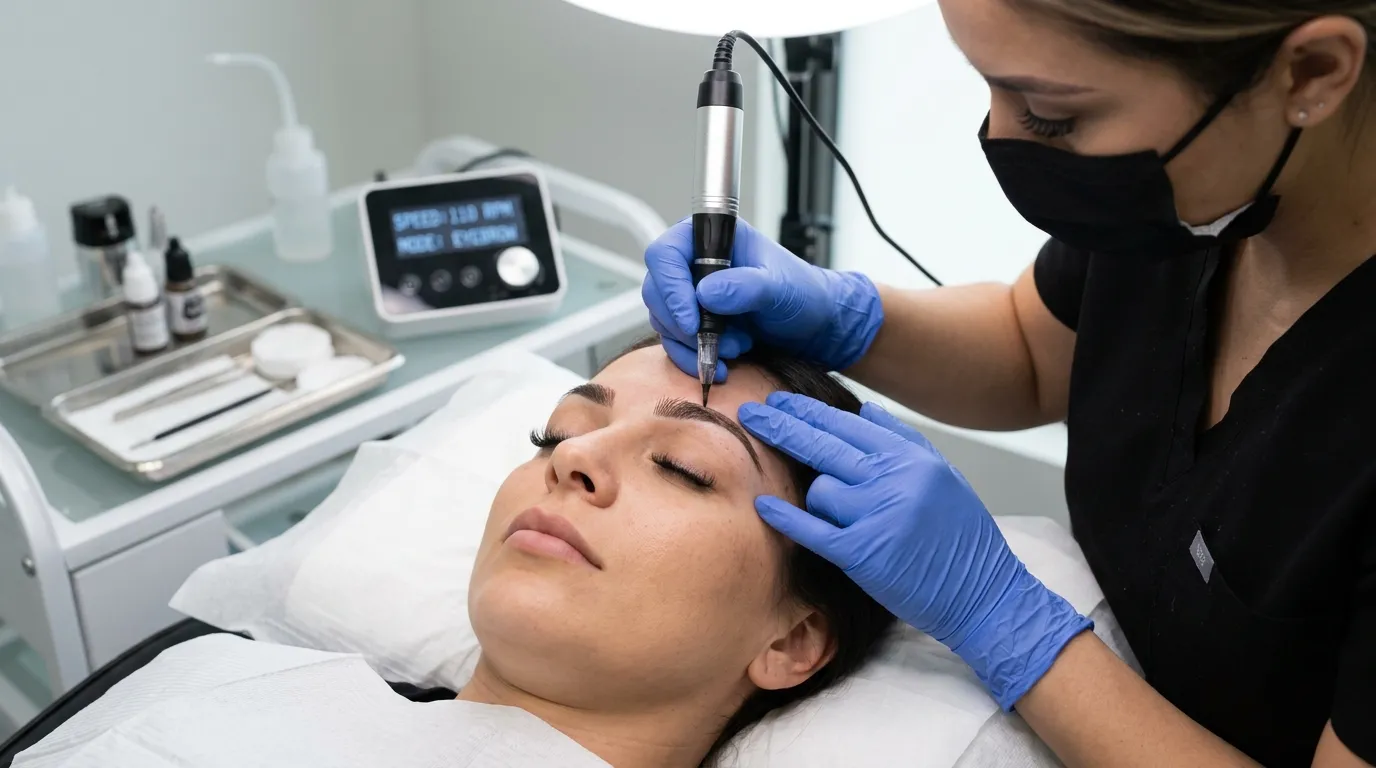
Nano brows — sometimes called machine hairstroke brows or nanoblading — are a semi-permanent brow technique that uses a digital PMU (permanent makeup) machine fitted with a single ultra-fine needle to deposit pigment into the skin. The machine creates controlled micro-punctures rather than cuts, allowing the artist to implant pigment at a precise, consistent depth with every stroke.
The result is a series of hair-like strokes that are incredibly fine, soft, and natural-looking. Because the needle is so small and the machine controls the depth mechanically, the strokes tend to heal more evenly and maintain their definition longer than manual techniques. The finished look mimics how real brow hairs grow — with variation in thickness and direction — rather than producing the sharp, uniform lines that can look artificial over time.
How the Procedure Works
A nano brows appointment typically begins with a brow mapping consultation, where the artist measures your facial symmetry and maps the ideal brow shape for your face structure. A numbing cream is applied before the procedure begins. The artist then uses the PMU machine to draw each hair stroke individually, building shape, density, and dimension across the brow. A full session usually takes between two and three hours. A follow-up touch-up appointment is scheduled four to eight weeks later to refine any areas where pigment may not have retained evenly during the initial healing process.
How Long Do Nano Brows Last?
Nano brows typically last between one and a half to three years, depending on your skin type, sun exposure, skincare routine, and how well you follow aftercare instructions. Annual color-boost touch-ups are recommended to keep results looking fresh and defined. Because the technique is gentler on the skin, pigment tends to fade more evenly and softly over time rather than blurring into indistinct patches.
What Is Microblading?
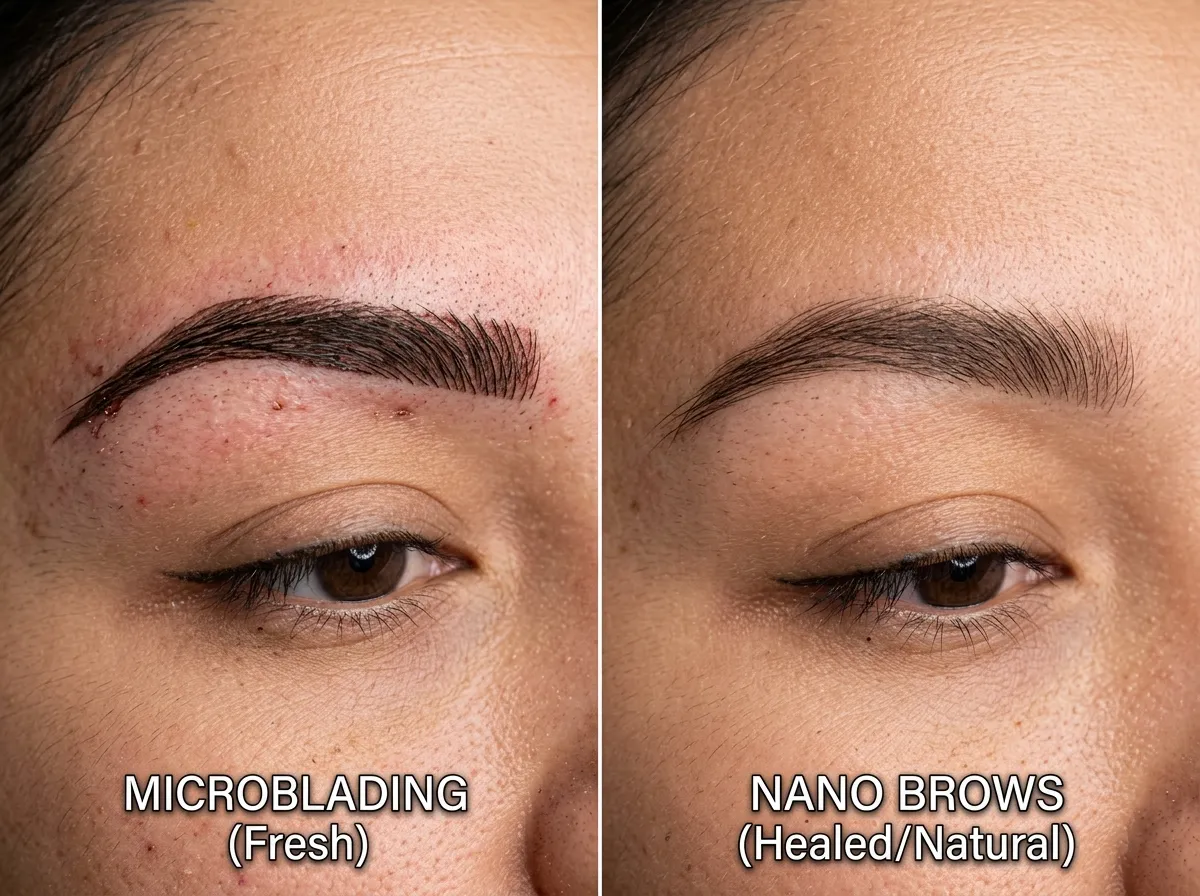
Microblading is the technique that put semi-permanent brows on the map globally. It uses a small handheld tool made up of several tiny needles arranged in a blade formation to manually create fine cuts in the upper layers of the skin, depositing pigment as it goes. The strokes it creates are crisp, sharp, and defined when freshly done — which is part of why it became so popular so quickly.
Microblading is a manual technique, meaning the depth and pressure of each stroke depend entirely on the artist’s hand and skill level. On the right skin type, it can produce stunning, natural-looking results. On the wrong skin type, however — particularly oily, mature, or sensitive skin — the strokes can blur, fade unevenly, or lose definition within months.
Who Is Microblading Best For?
Microblading tends to work best for clients with normal to dry skin who are looking for defined, fuller brows with a noticeable enhancement. It is a great option for people with sparse brows who want visible structure and do not mind slightly bolder results. The technique is also widely available and often more accessible in terms of pricing compared to nano brows, which require more advanced equipment and a longer application time.
One important caveat: microblading is not recommended for clients with very oily skin, large pores, mature or thinning skin, or anyone who has previously had brow tattooing done that has not fully faded. In these cases, machine-based techniques like nano brows tend to deliver significantly better outcomes.
Nano Brows vs. Microblading — The Key Differences
Understanding the real differences between these two techniques helps you have a more productive conversation with your brow artist and set realistic expectations for your results.
Tool and Technique
The most fundamental difference is the tool. Microblading uses a manual blade to make small incisions in the skin. Nano brows use a digital machine with a single fine needle that punctures rather than cuts. This distinction matters because cutting creates more surface trauma, more bleeding potential, and a less consistent depth than machine-controlled punctures. The machine used in nano brows stabilizes depth and speed mechanically, which is why the results are often more precise and predictable across different skin types.
Skin Trauma and Healing
Because microblading involves incisions rather than punctures, it is considered more traumatic to the skin. Healing typically takes four to five weeks, and some clients experience more redness, scabbing, and sensitivity during recovery. Nano brows, by contrast, cause less surface trauma, which generally means a shorter, smoother healing process — usually around four weeks — with less scabbing and a lower risk of pigment migration or scarring over time.
For clients interested in the science behind how lash and brow services interact with the skin at a deeper level, our post on lash microbiome and hygiene science offers a fascinating look at how the delicate eye and brow area responds to professional treatments.
Suitability Across Skin Types
This is where nano brows clearly have the upper hand. Microblading works best on dry to normal skin. On oily skin, the natural oils in the skin can break down the pigment faster and cause strokes to blur or feather outward over time. Nano brows, because the pigment is deposited more precisely and at a more controlled depth, perform well across virtually all skin types — including oily skin, mature skin, sensitive skin, and even skin that has had previous brow tattooing done.
According to Ellebrow Studio’s detailed comparison guide, nano brows use digital precision for a more shallow and precise depth of pigment placement, making them gentler and less traumatic to the skin — which is especially important for clients with sensitivity concerns.
Longevity and Fading
Microblading typically lasts between one and two years, with some variation depending on skin type and aftercare. Nano brows generally last longer — up to three years — and tend to fade more gracefully. Rather than the strokes breaking apart or becoming blurry, nano brow results usually lighten evenly and softly, making the grow-out process look more natural. This is one of the main reasons more clients and artists are choosing nano brows as the preferred technique in 2026.
Nano Brows in 2026 — Why the Industry Is Shifting
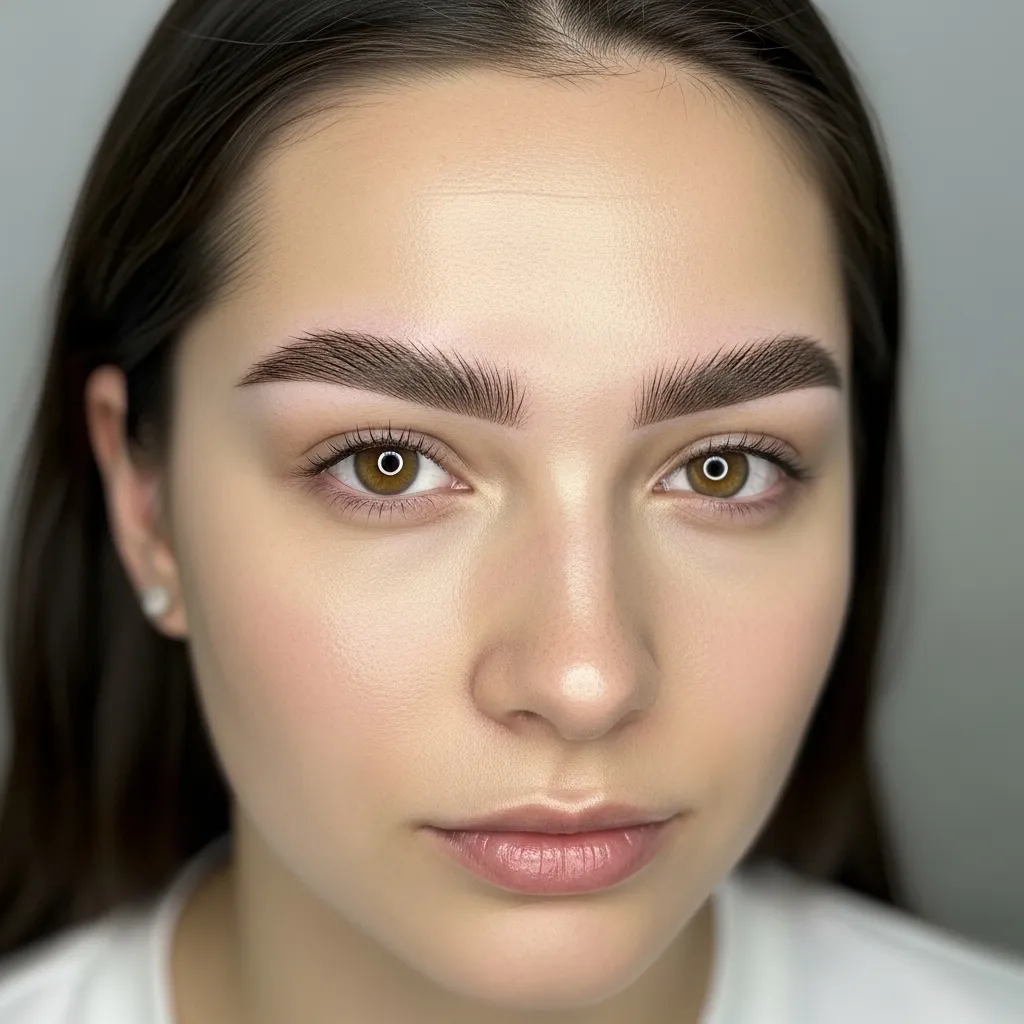
The brow industry has been moving away from heavy, dramatic, overly-filled looks for a while now. In 2026, the dominant aesthetic is what professionals are calling “your brows, but better” — soft, natural density with visible texture, rather than a solid block of color or a uniform arch. Nano brows align almost perfectly with this direction because of the precision and softness they can achieve.
There is also a growing awareness among clients about skin health and long-term results. People are asking better questions about what goes into their skin, how techniques affect healing, and what the results will look like in two or three years — not just the day after the appointment. Nano brows, because they cause less surface trauma and fade more predictably, fit naturally into this skin-first, results-focused mindset.
This same care-first philosophy is something we explore in our post on lash extension comfort and weight science — the idea that the best beauty treatments are those that prioritize long-term health and not just immediate impact.
What to Look for in a Nano Brows Artist
Not every brow artist offers nano brows, and not every artist who offers nano brows has the same level of experience with the technique. When searching for a provider, look for artists who specialize specifically in PMU and machine work, who can show you healed photos of their results (not just fresh work), and who offer a thorough consultation before touching a needle to your skin. Healed results matter far more than fresh results when it comes to semi-permanent brow techniques.
Training and certification matter too. Organizations like the American Academy of Micropigmentation maintain professional standards for PMU artists, including documented training hours and bloodborne pathogen education. Choosing a certified professional is one of the most important decisions you will make in this process.
Aftercare for Nano Brows
Proper aftercare is essential for getting the best results from your nano brow procedure. The first two weeks are the most critical part of the healing process. During this time, keep the brow area dry — avoid swimming, sweating heavily, or applying skincare products directly to the brows. Do not pick at any flaking or scabbing that forms, as this can pull pigment out of the skin and create uneven results.
Avoid direct sun exposure on the treated area during healing, as UV rays can cause pigment to fade prematurely. Once fully healed, applying a broad-spectrum SPF to the brow area regularly will help extend the life of your results significantly. Most artists recommend a color-boost touch-up appointment every twelve to eighteen months to keep your nano brows looking fresh and defined.
Which One Should You Choose?
If you have dry or normal skin, want defined and fuller brows, and are looking for a more accessible entry point into semi-permanent brows, microblading can still be a great option — especially with a skilled and experienced artist.
If you have oily, sensitive, or mature skin, if you want the most natural and realistic results possible, or if you are concerned about long-term skin health and how techniques age on the skin, nano brows are the stronger choice in 2026. They offer more precision, suit a wider range of skin types, tend to last longer, and align with the current direction of the beauty industry toward softer, more natural, skin-first enhancements.
Either way, the most important step is booking a proper consultation with a certified, experienced professional who can assess your specific skin type, existing brow hair, and aesthetic goals before recommending the right technique for you. Your brows frame your entire face — they deserve the time and care of a truly personalized approach.
If you are exploring other low-maintenance brow and lash enhancement options, our guide on Korean lash lift with cysteamine is a great read — it covers a similarly gentle, results-focused technique that is taking over the lash world for exactly the same reasons nano brows are winning in the brow space.