
If you are wondering how to wear red eyeliner without looking tired, start with a narrow line on the upper lid, a shade that contrasts with your skin, and defined lashes. Burgundy or brick can be an easier introduction than bright scarlet. Keep the lower lash area clean and let the liner provide the color.
Red eyeliner can look polished rather than costume-like. The difference often comes down to where you place it and what surrounds it. This guide covers wearable shades, a simple application routine, and ways to balance the look for daytime or evening.
Why Red Eyeliner Can Look Like Redness
A sheer pink-red smudge close to the lower rim can resemble the natural pinkness around the eyes. A defined upper-lid line reads more clearly as an intentional makeup choice, especially when lashes provide a darker outline.
In Allure’s October 2026 report on red eyeliner, makeup artist Karol Rodriguez recommends keeping the color on the top lid for an everyday approach. The report highlights celebrity interpretations, but you do not need a dramatic waterline look to enjoy the trend.
Start above the upper lashes, not inside the lower rim. This is a styling preference, not a way to hide actual irritation. If your eyes feel uncomfortable or inflamed, pause the makeup rather than trying to disguise it.
Choose a Red That Looks Deliberate
Burgundy and Berry for Soft Definition
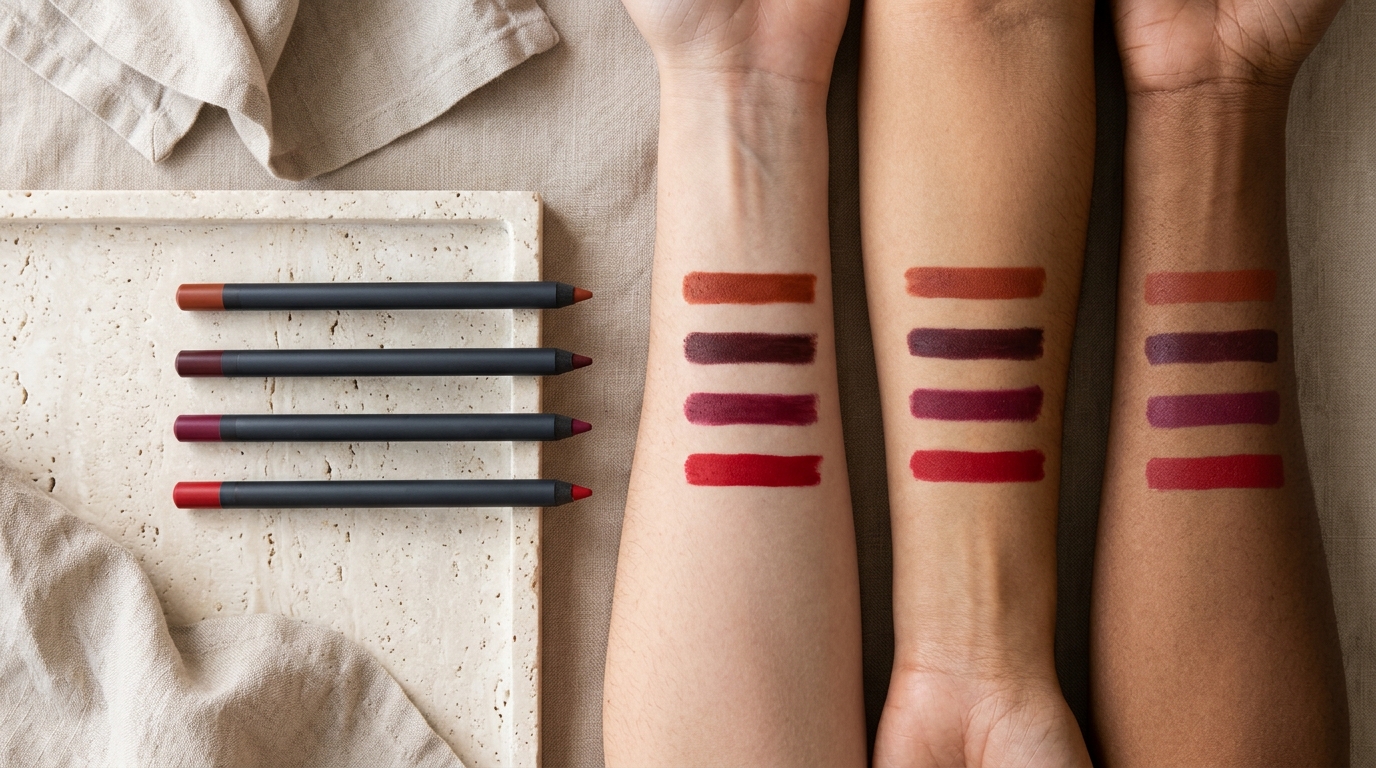
Burgundy and wine shades offer depth similar to a brown or plum liner, with a red undertone. Try them when bright red feels too strong. Berry can add a cooler accent, but choose enough pigment that it looks like liner rather than a faint pink stain.
Rust and Brick for a Warmer Look
Rust, terracotta, and brick work well with beige or bronze lids. If a warm shade blends too closely with your natural skin redness, try a deeper brick or switch to burgundy. Swatch in daylight before deciding.
True Red for a Clear Statement
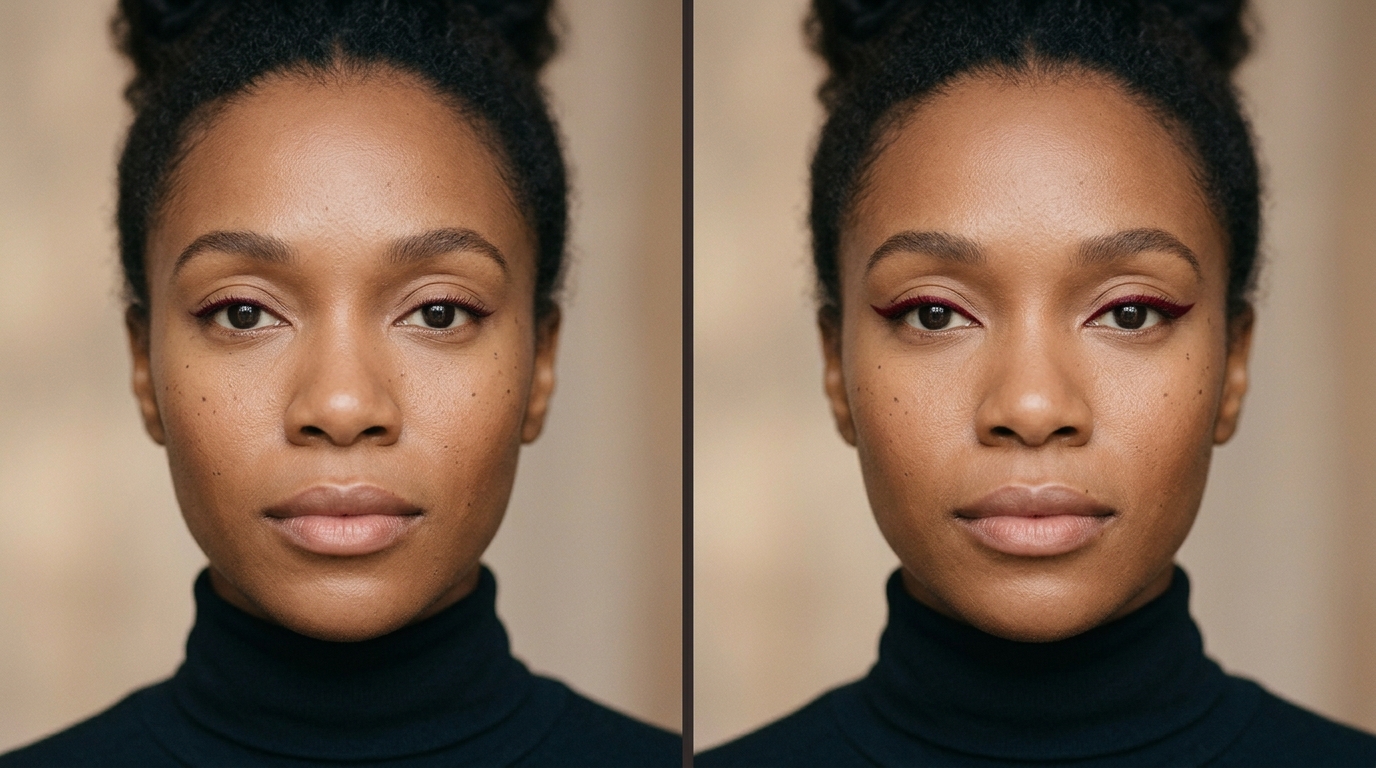
Scarlet and crimson make a more graphic statement. On deeper skin, an opaque formula can help the red stay visible; on lighter skin, a very thin line can control the contrast. Treat these as starting points, not rules. The best shade is one you enjoy against your own coloring.
How to Apply Red Eyeliner Step by Step
Prepare a Light Neutral Base
Let skincare absorb, then apply a thin layer of your usual eye primer if you use one. Keep the lid bare or add a skin-toned, taupe, or beige shadow. Avoid a broad pink wash on your first attempt because it can blur the distinction between liner and surrounding skin.
A soft pencil is useful for a gently blended finish. Liquid or gel can create a sharper edge. Choose a formula intended for eye use and follow its instructions.
Build a Narrow Upper-Lid Line
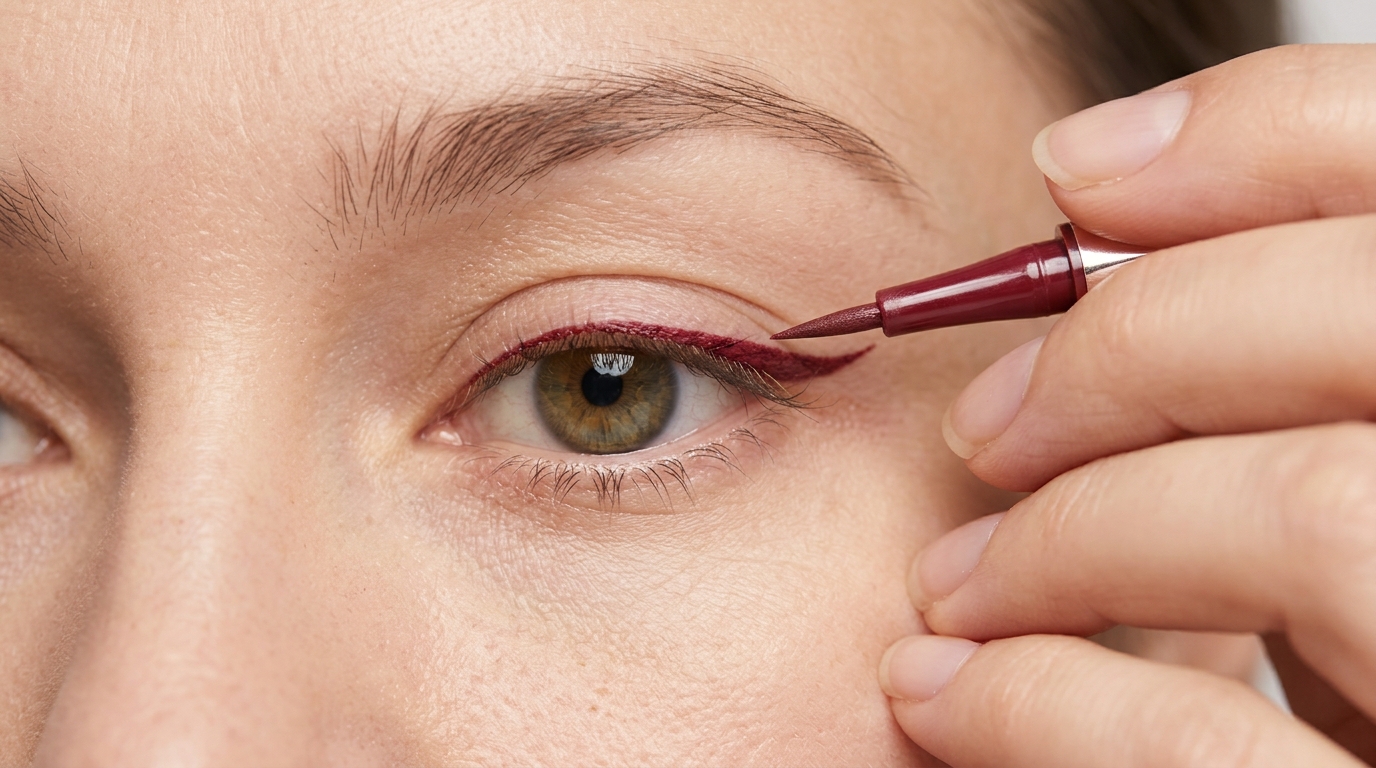
Rest your elbow on a steady surface. Use short strokes on the skin just above the upper lashes, starting around the middle and working outward. Keep the inner section thin or leave it bare. You can stop at the outer corner or add a small flick.
Look straight ahead between strokes, especially if you have hooded lids. Our winged eyeliner guide for different eye shapes explains how to adapt the outline. Here, the goal is a controlled red accent, not the biggest possible wing.
Clean the Edge and Let It Set
Use a clean cotton swab lightly moistened with an eye-appropriate remover to tidy mistakes without rubbing. For a softer finish, blend only the outer edge before a pencil sets. Avoid spreading the red downward beneath the eye. Allow the liner to dry according to its directions before adding mascara.
Balance Red Liner With Lashes and Face Makeup
Add a Darker Lash Frame
Black mascara gives bright red a clear outline, while deep brown can soften rust or burgundy. Apply a light, separating coat to natural upper lashes instead of building thick clumps. Our brown versus black mascara comparison explores the difference in contrast.
If you wear extensions, their existing definition may be enough. Skip extra mascara unless your lash artist confirms it suits your set. Avoid packing liner into adhesive bonds.
Keep Blush and Lips Proportional
Try a sheer rose or muted berry blush rather than a strong flush directly beneath the eyes. A neutral lip lets the liner stand out. You can still wear a red lip, but consider making either the lip or the liner softer so both remain distinct.
Use concealer selectively where you want to even out darkness. Heavy coverage is not necessary for red eyeliner, and a bright white under-eye patch can make the overall makeup look less balanced.
Try Easy Daytime and Evening Variations
A Subtle Daytime Accent
Choose a fine burgundy or brick line on the outer half of the upper lid. Pair it with a neutral shadow, groomed brows, and brown or black mascara. Check the result at normal mirror distance; you want the color to be noticeable without needing a wide stripe.
A Sharper Evening Wing
Switch to crimson or deepen your burgundy flick. Keep most of the lid neutral, or add a restrained bronze sheen away from the liner edge. Increase one element rather than adding red shadow, red lower liner, and heavy lashes all at once.
Red Eyeliner Questions and Mistakes to Avoid
Why Does My Red Liner Look Smudged?
Product transfer can turn a crisp accent into a pink haze. Use thin layers, let them set, and remove stray color rather than covering it with more liner. For persistent transfer, read our guide to keeping eye makeup in place in heat and humidity.
Can I Use Red Lip Liner Around My Eyes?
No. The FDA’s eye cosmetic safety guidance advises using only products intended for the eye area and specifically warns against substituting lip liner. Wash your hands, keep tools clean, and do not share eye cosmetics. Stop using a product if it irritates your eyes; seek medical advice if irritation persists.
Which Red Eyeliner Is Best for Beginners?
A blendable burgundy pencil is a practical first option because the deeper color offers definition and small mistakes are easier to soften. Start with a short upper-lid line and leave the lower lashes bare. Once you like the placement, experiment with brighter red or a longer flick.