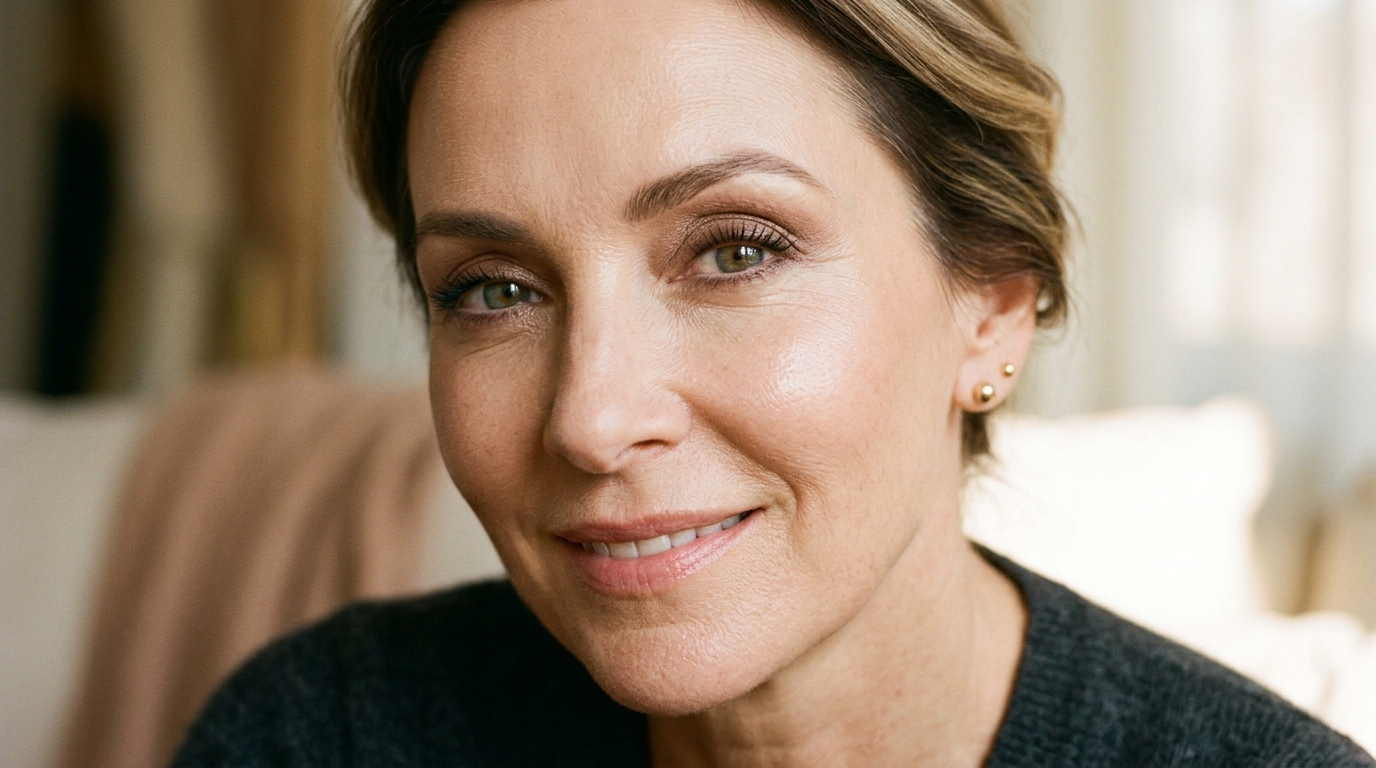
The eye makeup advice that most beauty content offers is written with one face in mind — a face in its twenties or thirties with a smooth, tight lid, minimal visible hooding, and skin that holds product without creasing, migrating, or emphasizing texture. For women over 40, this advice does not just fail to translate — it actively produces results that look worse than wearing no makeup at all. Heavy eyeshadow that creases into the lid within an hour. Liner that migrates under the eye by midday. Mascara that clumps onto sparse lashes and draws attention to the gaps rather than filling them. The problem is not the woman’s face — it is advice that was never designed for it.
Eye makeup for mature skin requires a genuinely different approach — different product formulas, different application techniques, different priorities, and a different understanding of what flattering actually means at this life stage. This guide covers all of it — from the specific changes that happen to the eye area after 40, through the product and technique adjustments that work with those changes rather than against them, to the complete approach that makes eye makeup at 40, 50, and beyond genuinely beautiful rather than merely adequate.
Understanding How the Eye Area Changes After 40
Effective eye makeup for mature skin starts with understanding what has actually changed in the eye area and why conventional techniques produce the results they do. These changes are not failures — they are natural structural shifts that require a different approach rather than more product or more effort.
Lid Hooding and Loss of Lid Space
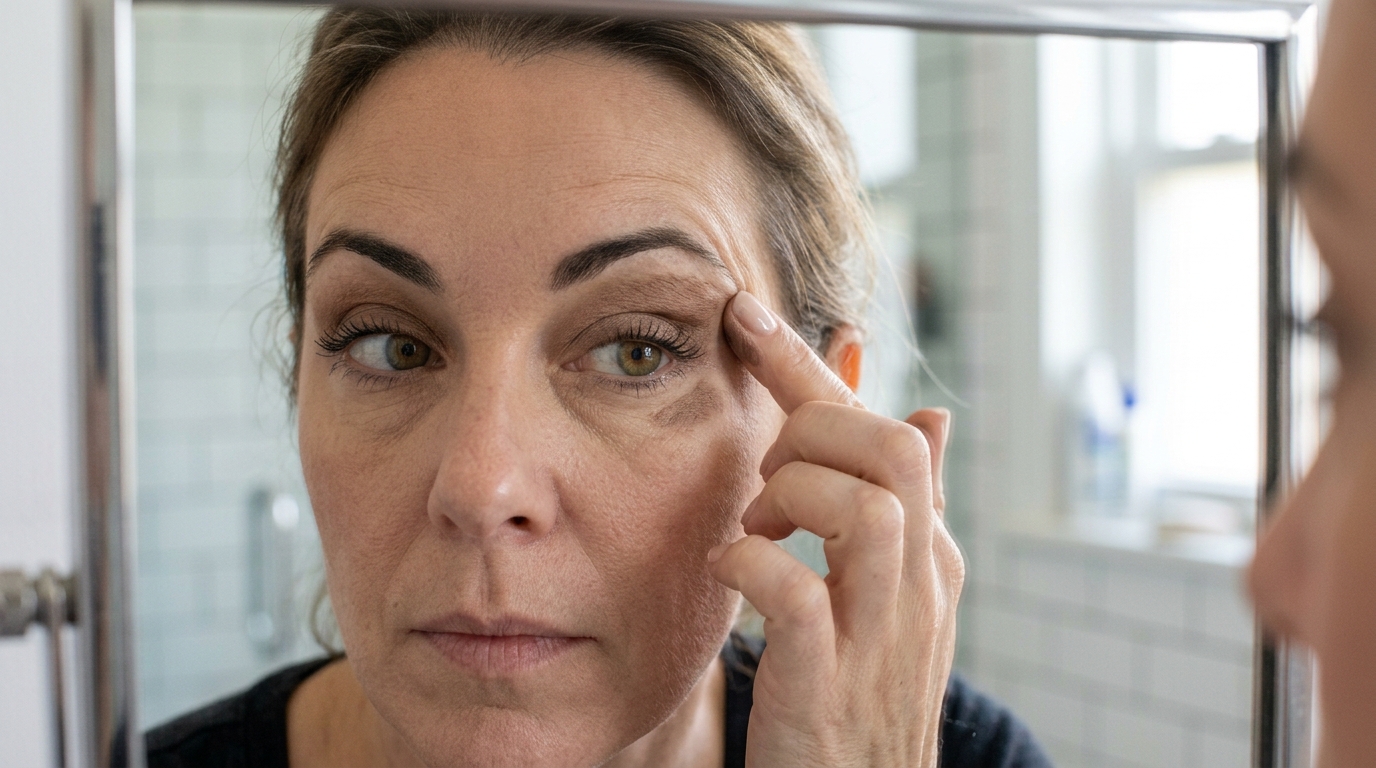
One of the most universal eye area changes after 40 is the gradual descent of the upper lid skin — the combination of collagen loss, reduced skin elasticity, and subtle orbital fat redistribution that creates a more pronounced hooding effect on the upper lid. This hooding reduces the visible lid space that most eye makeup tutorials assume will be available, causing eyeshadow applied on the lid to disappear when the eye is open and liner drawn along the lash line to transfer onto the upper lid as it contacts the hood.
Adapting to this change requires the same principle adjustments covered in the comprehensive guide on eye makeup for hooded eyes — placing shadow above where the natural crease sits, drawing liner with eyes open rather than in a relaxed mirror position, and choosing curl profiles in lash extensions that clear the hood to remain visible. The specific application adjustments for hooded lids are among the most impactful changes a woman over 40 can make to her eye makeup approach — and they produce results that look better than any amount of additional product applied using conventional techniques.
Creasing and Fine Lines on the Lid
The thinning of lid skin that occurs progressively after 40 creates a surface that is significantly more vulnerable to creasing than younger skin — eyeshadow formulas that sit smoothly on a youthful lid migrate into fine lines and create uneven, aged-looking results on mature lids within an hour of application. This creasing is not a primer issue alone — it is a formula issue. Many eyeshadow formulas are designed for the smooth, even skin of younger lids and simply do not behave well on the more textured surface of mature skin regardless of what is applied beneath them.
Under-Eye Texture and Darkness
The under-eye zone becomes progressively more challenging after 40 — the combination of accumulated UV damage, reduced collagen, and the orbital hollowing that occurs as facial fat redistributes creates a zone that shows darkness, texture, and fine lines more prominently than before. Concealers that settled into a smooth, even finish on younger skin settle into creases and emphasize texture on mature skin — particularly when the formula is too thick, too dry, or set with too much powder. The under-eye approach requires the lightest possible coverage with the most skin-like possible finish.
Lash Thinning and Reduced Density
Natural lash thinning is one of the most consistent eye area changes after 40 — driven by the hormonal changes of perimenopause and menopause that shorten the lash growth cycle, alongside the cumulative effects of mascara wear and in many cases years of extension wear. Mascaras applied to sparse natural lashes can clump between the remaining lashes and draw attention to the gaps rather than creating the impression of fullness. The complete picture of why lash thinning occurs and what can be done about it is covered in the guide on what causes sparse lashes after 40 — directly relevant context for understanding the lash-specific challenges that mature eye makeup must address.
Foundation Principles for Eye Makeup on Mature Skin
Before getting into specific product recommendations and application techniques, several foundational principles apply across every element of mature eye makeup and should govern every product choice and technique decision.
Less Product, More Precision
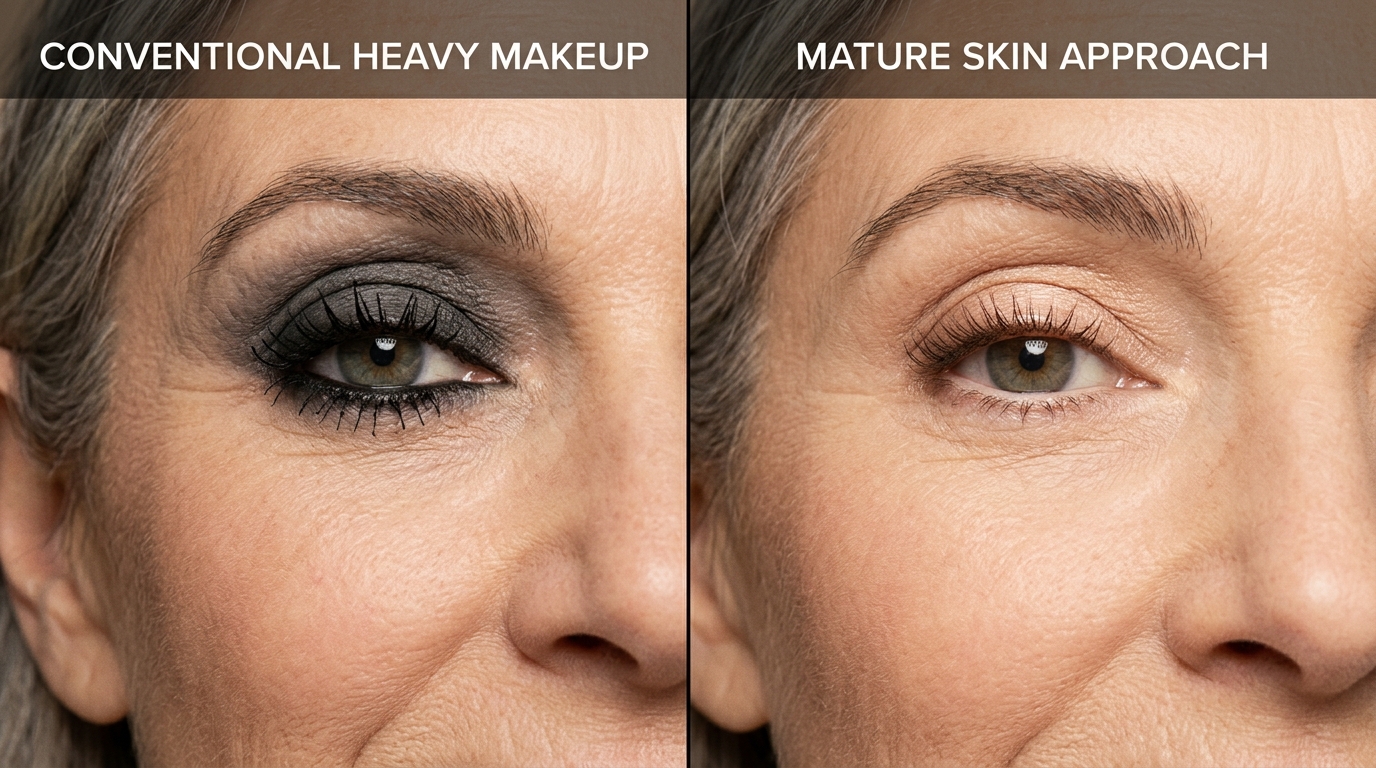
Mature skin amplifies product — a small amount of eyeshadow that would look subtle on younger skin can look heavy and aging on skin with more texture and less elasticity. Less product applied with more precision consistently produces better results than more product applied broadly. This principle applies to every product in the eye makeup routine — shadow, liner, mascara, and concealer all perform better in smaller amounts on mature skin.
Avoid Matte Finishes on the Lid
Matte eyeshadow emphasizes texture and creates a flat, aging effect on mature lids — the absence of light reflection draws attention to fine lines and uneven texture rather than the color itself. Soft satin, pearl, and subtle shimmer finishes reflect light in ways that minimize the appearance of texture and create the luminous, dimensional lid appearance that a matte finish actively prevents. This does not mean heavy glitter or foil — it means choosing shadows that have some light-reflective quality rather than a flat, chalky matte finish.
Warm Tones Over Cool Ones
Cool, grey, and blue-toned shadows and liners can read as harsh and ageing against mature skin — particularly around the eye area where skin tone changes after 40 may introduce more sallowness or unevenness. Warm, brown, bronze, and champagne tones complement the natural warmth of mature skin, create flattering depth without harshness, and produce a more youthful, glowing result than cooler alternatives in the same depth range. This does not mean avoiding all cool tones — but it means warm tones should be the default and cool ones the deliberate exception rather than the other way around.
Specific Techniques for Every Eye Makeup Element
The following section covers each element of a complete eye makeup routine with the specific adjustments that produce genuinely flattering results on mature skin — replacing the conventional advice that fails for this skin type with approaches that actually work.
Eyeshadow Application for Mature Lids
Placement — Above the Natural Crease
As covered in the hooded eye section, the most critical placement adjustment for mature lids is to apply shadow above where the natural crease appears in a relaxed mirror — so that the shadow remains visible when the eye is fully open. Check placement with eyes fully open at a mirror held at eye level rather than looking down into a close-up mirror, which gives a misleading view of how much visible lid space is available. The shadow should be visible as a band of color above the lash line when the eye is open — not sitting on the hidden portion of the lid beneath the hood.
Formula — Cream Over Powder
Cream eyeshadow in a long-wear or waterproof formula is the most reliable shadow type for mature lids — it adheres to the skin surface without the powder float that causes matte powders to settle into fine lines, and its formula blends seamlessly without the dragging that occurs when dry powder is worked over a textured lid surface. Apply cream shadow with a fingertip — the warmth of the finger softens the product and encourages seamless blending — and allow it to partially set before adding any powder shadow over the top if additional definition is desired.
Color — Neutral Depths with Warm Accents
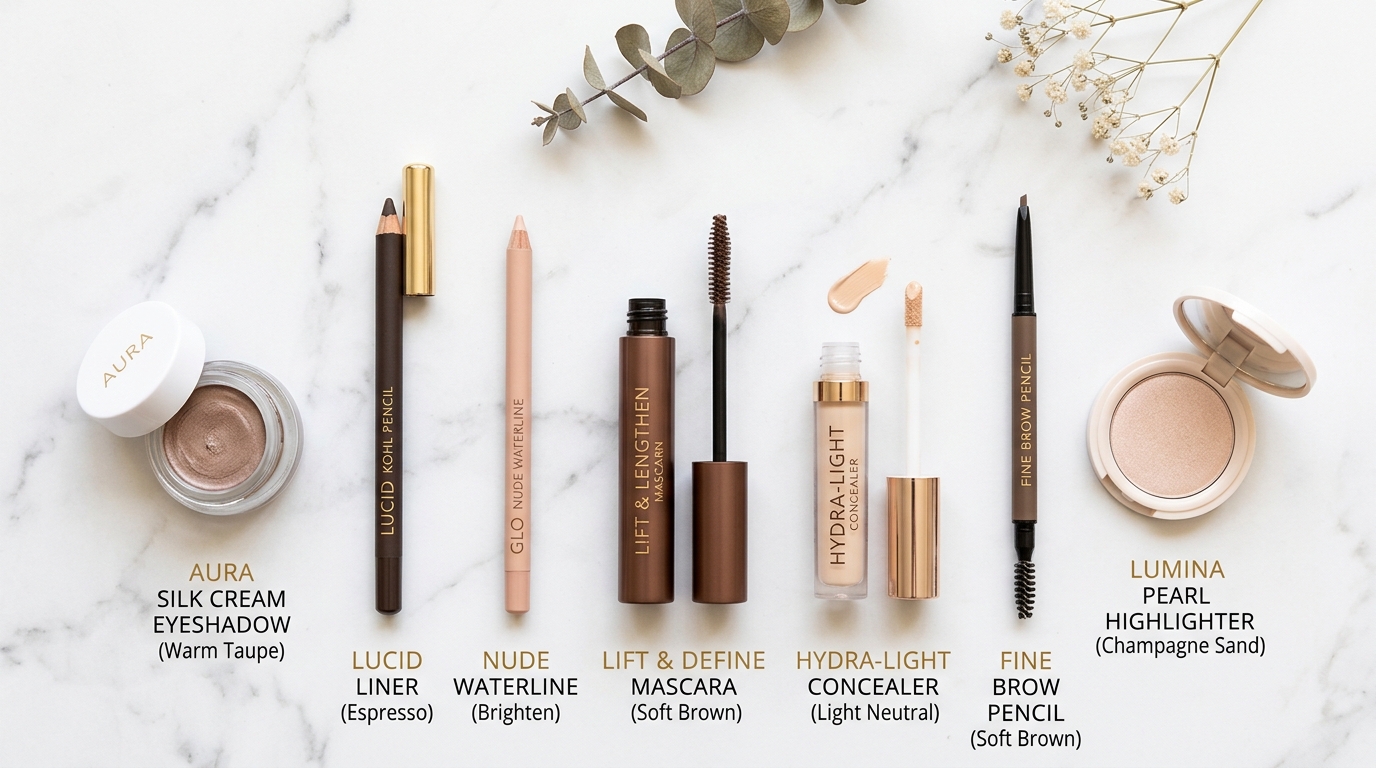
A warm taupe or soft brown across the lid as a base, deepened at the outer corner with a slightly richer brown or bronze, and highlighted at the inner corner and brow bone with a champagne or soft gold creates a dimensional, flattering eye look that complements mature coloring without the heaviness of a full smoky eye. This warm neutral approach is the most universally flattering eye shadow approach for women over 40 and the most resistant to the creasing and aging effects that more heavily pigmented or more complex shadow approaches produce on mature skin.
Eyeliner for Mature Eyes
Skip the Full Upper Lid Line
A liner drawn along the entire upper lash line from inner to outer corner frequently disappears under the hood on mature eyes — and even when visible, a strong upper lid line can make the eye appear smaller rather than more defined. The most effective liner approach for mature eyes is tightlining — filling in the upper waterline with a dark pencil so the lashes appear to emerge from a defined, dark base rather than pale skin. This technique adds definition that remains visible regardless of hooding and avoids the transfer and migration issues that upper lid liner commonly causes on mature skin. The complete guide to tightlining your waterline for bigger-looking eyes covers the technique in full — it is one of the single most impactful adjustments a woman over 40 can make to her eye makeup routine.
Avoid Dark Lower Liner
A dark liner drawn along the lower lash line — particularly close to or on the lower waterline — makes the eye appear smaller and draws attention to any darkness or texture in the under-eye zone. For mature eyes, replacing lower liner with a nude or white pencil on the lower waterline opens and brightens the eye dramatically — creating the wide-awake, luminous effect that dark lower liner actively prevents. If some lower definition is desired, a very soft, warm brown shadow pressed along the outer third of the lower lash line and blended downward creates definition without the closing-in effect of a hard liner line.
Mascara for Sparse Mature Lashes
Choosing the Right Formula
For sparse natural lashes, the most important mascara characteristic is a formula that creates the impression of fullness without clumping between lashes or drawing attention to gaps. A lengthening and separating formula — rather than a volumizing one — produces cleaner, more defined lashes on sparse natural lashes by elongating individual hairs rather than coating them with heavy product that bundles together in the gaps. Fiber mascaras can add apparent length effectively, but require careful application to avoid the fiber-buildup between lashes that creates a spidery, aged appearance.
Application for Maximum Coverage
Apply mascara in two thin coats rather than one heavy coat — allowing the first to partially dry before adding the second. Focus the second coat on the outer lashes specifically, fanning them outward to create the widening effect that makes sparse lashes appear fuller across the full lash line rather than concentrated in the center. A brown mascara rather than black frequently produces a more flattering result on mature lashes — the softer contrast reads as natural lash color enhanced rather than artificially darkened, and the warmth complements the skin tone changes that occur after 40 more harmoniously than stark black. The complete guide to brown mascara vs. black mascara covers the specific shade selection that works best for different coloring profiles — directly applicable for women over 40 reassessing their mascara choice.
Under-Eye Concealer for Mature Skin
Formula — Hydrating and Skin-Toned
The most important concealer characteristic for mature under-eye skin is a hydrating, skin-like formula — one that sits on the skin surface without settling into fine lines and creates coverage that reads as skin rather than product. Avoid dry, full-coverage formulas and powdery-finish concealers — these settle into creases and emphasize the texture they are intended to conceal. A hydrating serum concealer or a tinted eye cream in a skin-tone match provides the most natural, line-resistant coverage for mature under-eye skin.
Application — The Minimum Effective Amount
Apply the minimum amount of concealer that provides adequate coverage — tapped on with a fingertip or a damp beauty sponge using pressing rather than rubbing motions. Set only the innermost under-eye zone — where creasing is most likely to occur — with the lightest possible translucent powder pressed gently with a small brush. Leave the outer under-eye zone without powder, which allows natural skin luminosity to remain visible and prevents the cakey, aged appearance that powder-setting the entire under-eye creates on mature skin. The glass skin approach to the under-eye covered in the guide on glass skin for the eye area provides the complete framework for achieving the most luminous, skin-like under-eye finish appropriate for mature skin.
Brows — The Frame That Makes Everything Work
Brows become progressively more important as an eye makeup element after 40 — because the structural changes in the lid and the reduction in natural lash density that occur with age mean the brow is doing more of the work of framing the eye than it did in younger years. Well-groomed, softly defined brows that follow the natural arch with visible hair texture consistently produce more flattering results on mature faces than heavy, filled, or over-shaped brows — which can look incongruously young or harsh against the surrounding mature skin.
The 2026 soft defined brow approach is ideally suited to mature brow needs — natural hair texture visible, sparse areas filled with fine hair strokes in a perfectly matched shade, and no heavy product or gel that creates an artificial quality. The guide on soft defined brows for the 2026 brow trend covers the complete technique that produces the most naturally flattering brow for mature faces.
A Complete Mature Eye Makeup Routine — Quick Reference
Bringing all of the elements above together into a practical daily sequence that accounts for the specific characteristics of mature eye skin:
- Skincare first — lightweight eye serum or gel applied to the orbital bone, absorbed fully before makeup begins
- Under-eye correction — peach or salmon color corrector on darkest zones if needed, followed by a minimum amount of hydrating skin-toned concealer tapped on with a fingertip
- Lid preparation — a thin layer of eye primer applied and set with the lightest possible dusting of translucent powder on the lid only
- Cream shadow base — a warm neutral cream shadow blended across the lid and slightly above the natural crease, applied with a fingertip
- Depth at the outer corner — a slightly richer warm brown pressed at the outer corner and blended upward and outward
- Tightlining — a soft dark pencil pressed into the upper waterline for lash root definition
- Lower waterline brightening — nude or white pencil on the lower waterline
- Inner corner highlight — a soft pearl or champagne pressed into the inner corner
- Mascara — two thin coats of a lengthening formula in warm brown or black, concentrated on the outer lashes
- Brows — spoolie groomed, sparse areas filled with fine hair strokes, no gel
Eye Makeup After 40 Can Be Your Most Beautiful Yet
The most empowering shift available to women navigating eye makeup after 40 is not a new product or a new technique — it is the realization that the goal has changed. The goal is no longer to replicate what the face looked like at 25 using the techniques designed for that face. The goal is to understand the face as it is now — its specific characteristics, its particular strengths, and the approaches that genuinely flatter its current structure — and to apply makeup in service of that understanding rather than in denial of it.
Women who make this shift consistently report that they look better with their mature approach than they ever did trying to apply young-face techniques to an older face — and that is not a consolation. It is the truth that the best eye makeup at 40, 50, and beyond looks genuinely beautiful in a way that is specific to this life stage and impossible to achieve at any other. For the most comprehensive and regularly updated editorial guidance on eye makeup techniques for mature skin from professional makeup artists and beauty editors, the Byrdie guide to makeup tips for mature women is one of the most respected and thorough references available — covering face, eye, and lip approaches for women over 40 with input from professional makeup artists who specialize in this client group. For authoritative dermatologist-informed guidance on how skin changes after menopause and what skincare and makeup approaches are most appropriate, the American Academy of Dermatology guide to skin care during menopause provides the clinical foundation that underpins many of the makeup recommendations covered in this guide.