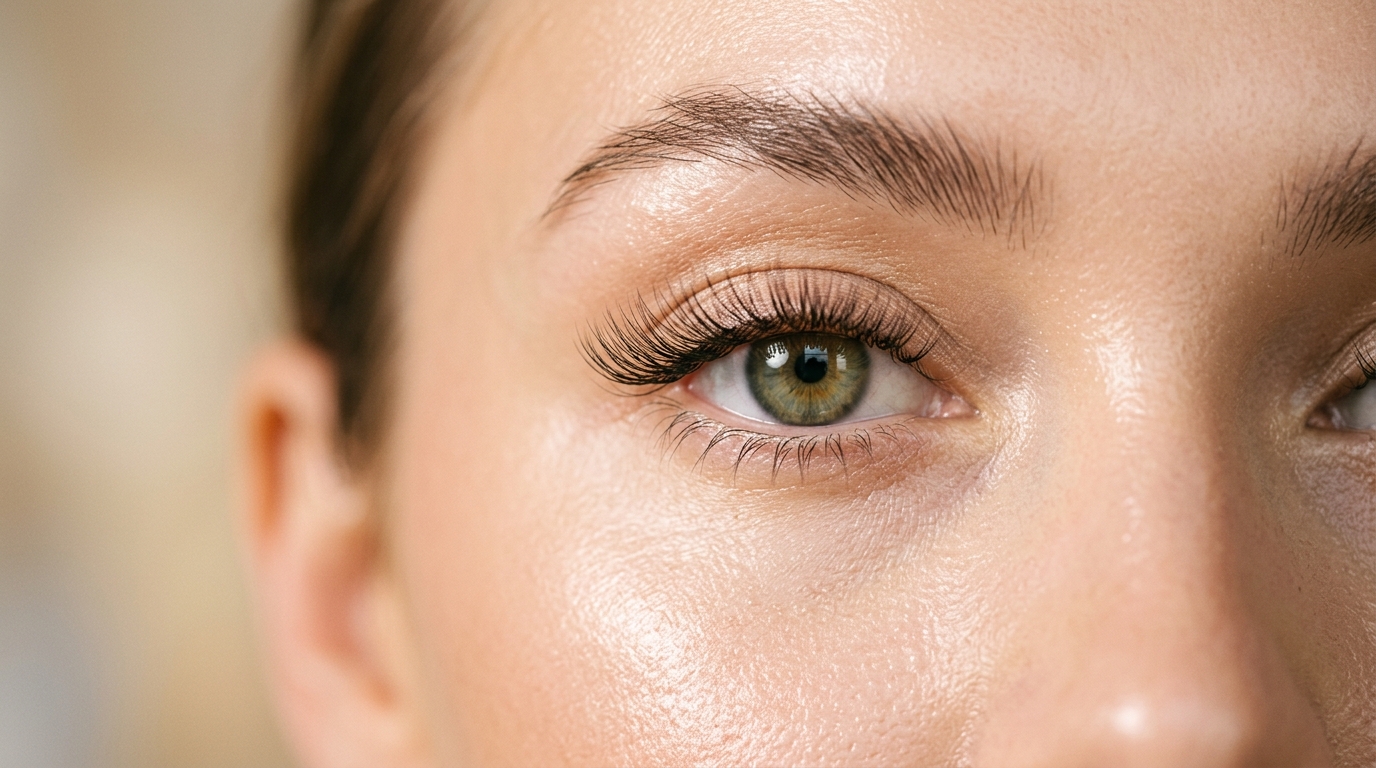
For several years, the lash extension industry was defined by volume — bigger fans, more density, longer lengths, and increasingly dramatic results that announced themselves the moment you walked into a room. In 2026, the pendulum has swung decisively in the opposite direction. The most requested lash look of the year is not a mega-volume set or a dramatic cat eye. It is a featherweight lash extension set — ultra-lightweight, airy, and natural-looking, designed to enhance rather than transform, and to feel so comfortable that most wearers forget they are wearing extensions at all.
Featherweight extensions represent the intersection of two of the dominant beauty values of 2026 — the prioritization of natural lash health and the shift toward effortless, understated luxury over visible effort and obvious enhancement. This guide covers everything you need to know about this trend — what featherweight extensions actually are, why they are gaining momentum so rapidly, how they differ from traditional volume sets, and how to talk to your lash artist about getting the look right for your specific lash type and lifestyle.
What Are Featherweight Lash Extensions?
Featherweight lash extensions are not a single, standardized product — they are a philosophy of application that prioritizes minimal weight, maximum natural appearance, and long-term lash health above drama or density. In practice, a featherweight set is characterized by the use of ultra-fine diameter lash fibers — typically 0.03 mm to 0.05 mm — applied in light, airy fans or as individual classic extensions, using a mapping approach that enhances the natural lash line without adding visible density that reads as extensions rather than natural lashes.
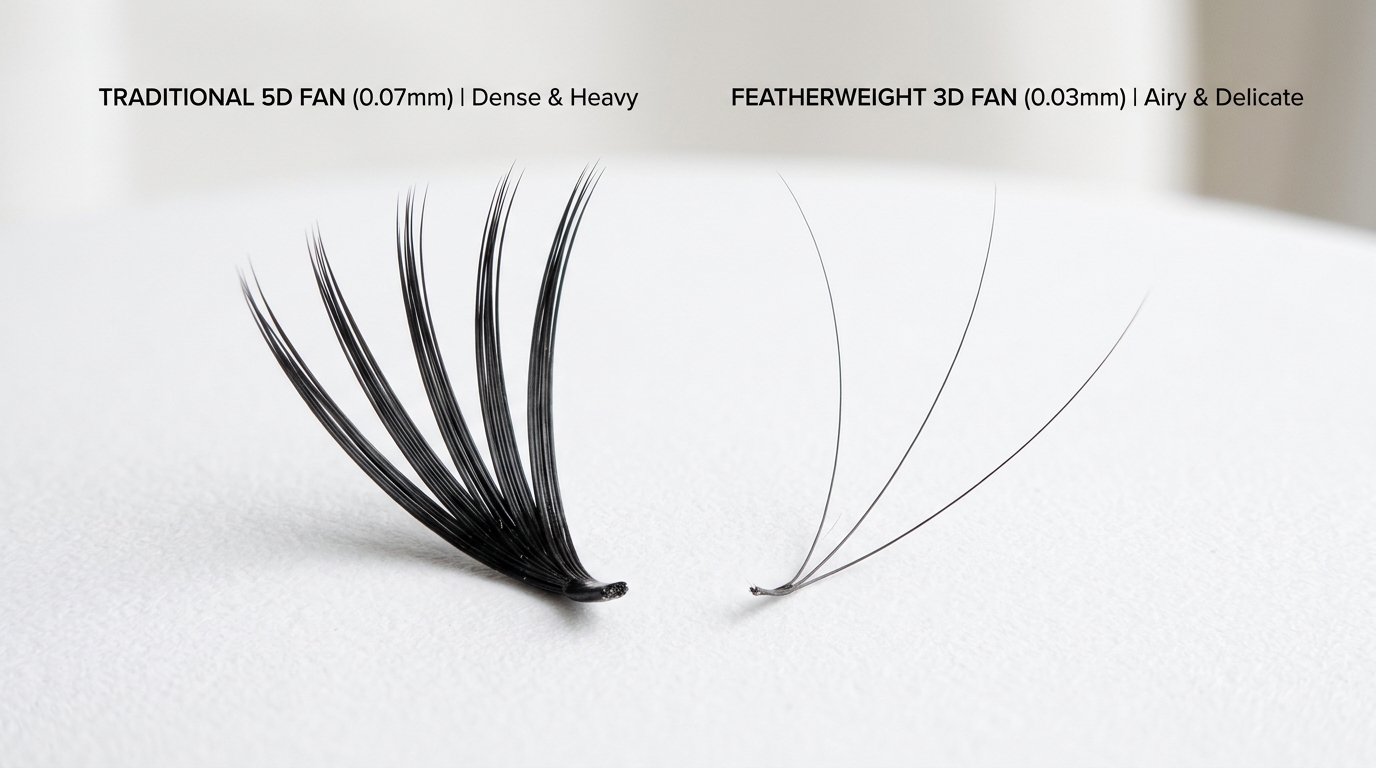
The term featherweight refers specifically to the weight load placed on each natural lash — the total mass of adhesive and extension fiber that each individual natural lash must support throughout the wear period. Traditional volume sets using 0.07 mm fans or classic sets using 0.10 mm to 0.12 mm diameters place a measurable load on each natural lash that accumulates over months and years of wear. Featherweight sets reduce this load to the absolute minimum while still producing a visible enhancement — protecting the natural lash follicle environment while delivering a result that clients actually want to wear every day.
The Difference Between Featherweight and Traditional Volume
Traditional volume extensions use multiple fine fibers fanned together — typically 3D to 10D — to create density and fullness that is visibly greater than natural lash density. The lashes look full, dramatic, and clearly enhanced. Featherweight sets use fewer fibers per fan — typically 2D or 3D — in the finest available diameters, applied with deliberate spacing that allows light to pass between the lashes rather than creating a solid, opaque lash line. The result looks full and defined from a normal viewing distance but airy and natural up close — a distinction that defines the aesthetic difference between the two approaches.
The practical difference is in how the set feels during wear. A full volume set has a perceptible weight that most clients adapt to over time but never fully stop noticing. A well-executed featherweight set has no perceptible weight at all — the extensions feel like a natural part of the lash rather than an addition to it. This comfort quality is one of the primary reasons featherweight sets are driving so much client demand in 2026 — once clients experience the comfort of a truly lightweight set, returning to heavier alternatives becomes increasingly unappealing.
Why Featherweight Extensions Are Dominating 2026
The timing of the featherweight trend is not accidental. It reflects several converging shifts in how clients approach beauty, lash health, and the value they assign to different aspects of their lash service experience.
The Natural Beauty Movement
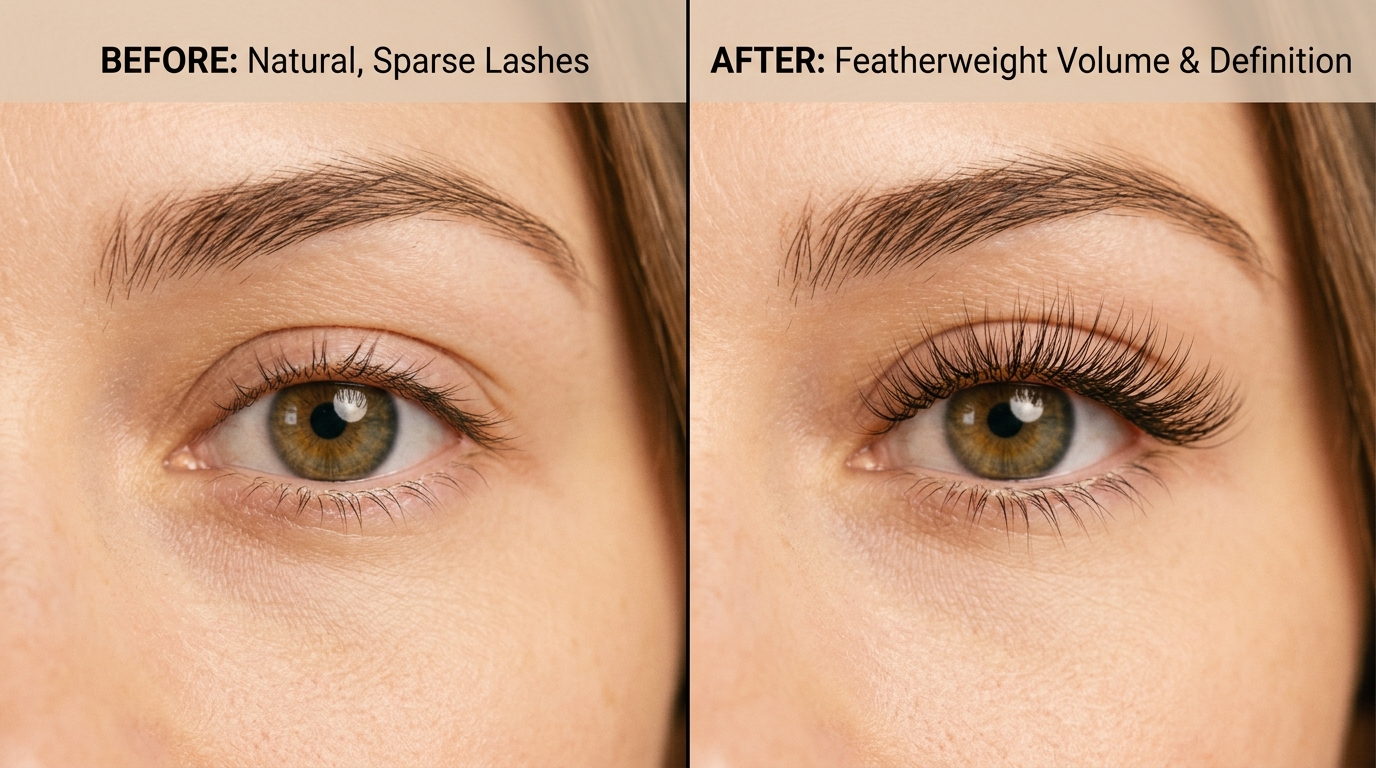
The dominant beauty aesthetic of 2026 is built around enhancement rather than transformation — the “your lashes but better” philosophy that has replaced the maximalist approach of previous years. Clients who once requested the fullest, longest, most dramatic set available are now asking for something that makes their own lashes look extraordinary rather than something that replaces them with a different lash identity entirely. Featherweight extensions are the perfect technical expression of this philosophy — they make natural lashes look like the best version of themselves without the visible artificiality that heavy volume sets can produce.
Growing Awareness of Lash Health
Client education about natural lash health has accelerated significantly in recent years — and that education has changed what clients are willing to accept in the name of a dramatic lash result. More clients now understand that heavy extensions applied repeatedly over months and years can cause cumulative stress on natural lash follicles, and they are actively seeking alternatives that deliver beautiful results without compromising the long-term health of their natural lashes. Featherweight extensions directly address this concern by minimizing the physical load on each natural lash — making them the preferred choice for health-conscious clients who want both enhancement and longevity. Understanding the science of lash extension weight and comfort provides the technical context that explains exactly why diameter and fan size matter so much for natural lash health — essential reading for anyone who wants to understand what makes featherweight sets genuinely different from lighter-marketed traditional sets.
The Low-Maintenance Lifestyle Factor
Featherweight sets retain significantly longer than heavy volume sets for most clients — not because the adhesive is different, but because the reduced load on each natural lash means the bond is under less mechanical stress throughout the wear cycle. Less stress on the bond means less premature fallout, which means longer intervals between fills and a lower overall maintenance commitment. For busy clients who value the look of extensions but struggle to maintain the fill schedule that heavy volume sets require, featherweight extensions offer a genuine solution — beautiful lashes with less frequent salon visits and a lower cumulative annual cost.
The Technical Elements of a Featherweight Set
Understanding the specific technical choices that create a featherweight result helps you have a more informed conversation with your lash artist and ensures the set you receive genuinely delivers the lightweight, natural result the trend promises rather than simply being marketed as featherweight while using traditional materials.
Diameter — The Most Important Variable
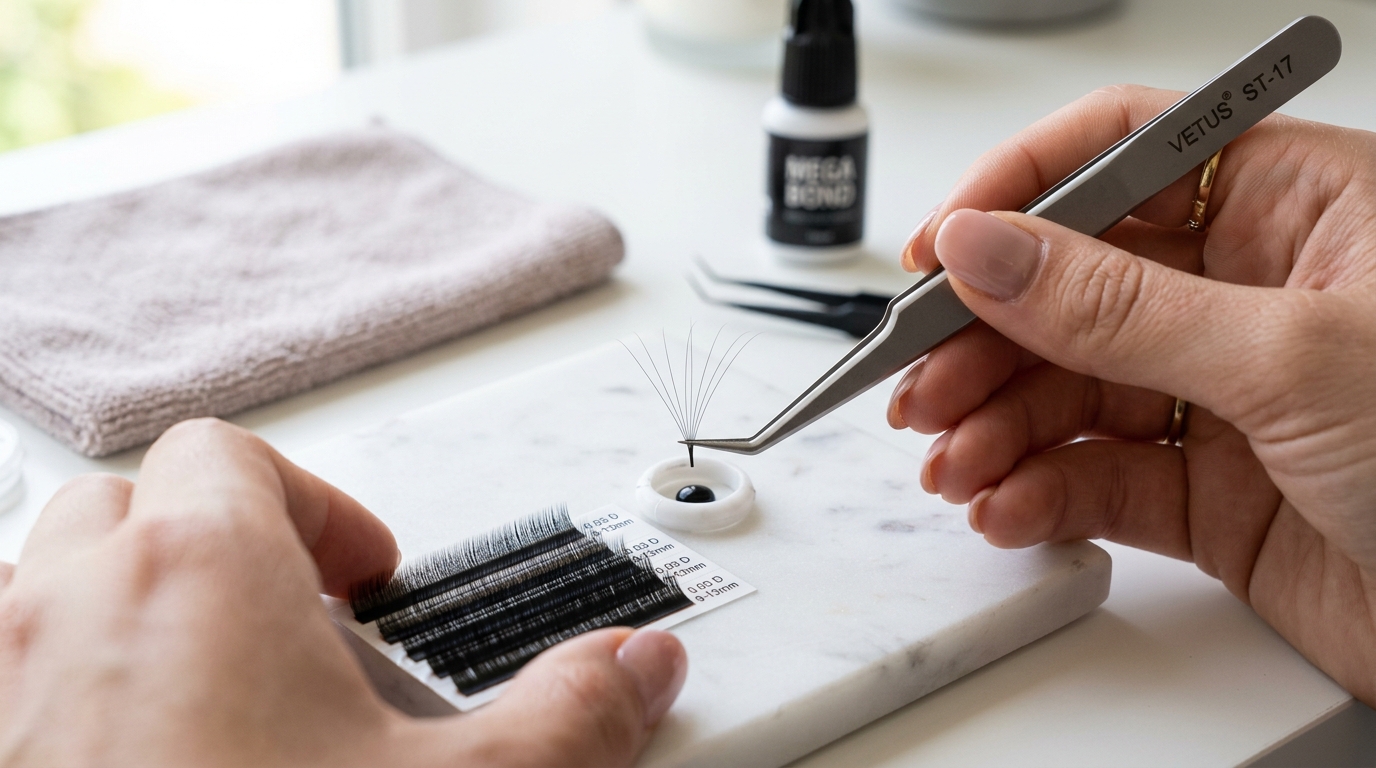
Diameter is the single most impactful variable in determining the weight of an extension set. 0.03 mm and 0.05 mm fibers are the gold standard for featherweight application — these ultra-fine diameters are light enough that even a 3D or 4D fan built from them weighs less than a single classic extension in a 0.12 mm diameter. When discussing a featherweight set with your lash artist, asking specifically about the fiber diameter being used is the most reliable way to confirm that the set will genuinely be lightweight rather than simply styled to look natural while using standard volume diameters.
Fan Construction — Loose and Airy Over Dense and Closed
Beyond diameter, the construction of the fan itself determines how the set looks and feels. Featherweight fans should be open and airy rather than tightly closed — the fibers should fan out with visible space between them rather than bundling together into a dense spike. Open fans distribute the weight of the adhesive across a wider base and create a softer, more natural lash texture that blends with the surrounding natural lashes rather than sitting as a distinct added element. Asking your lash artist to show you examples of their fan construction before the appointment — or reviewing their portfolio specifically for the featherweight aesthetic — is the best way to confirm their technical approach aligns with the result you want.
Mapping for a Featherweight Result
The lash map used for a featherweight set prioritizes natural eye shape enhancement over dramatic transformation. Rather than the pronounced cat-eye or doll-eye maps that maximize outer or center lengths, featherweight mapping typically follows the natural lash line closely — using lengths that are one to three millimetres beyond the natural lash rather than the five to eight millimetres common in dramatic sets. This conservative length approach is not a compromise — it is the element that creates the believably natural quality that defines the featherweight aesthetic. The foundational principles of bespoke lash mapping for every eye shape cover the approach underpinning a well-executed featherweight set — with the understanding that conservative, eye-shape-specific mapping is the starting point for a natural result, rather than a generic template applied regardless of the client’s features.
Curl Selection for a Natural Effect
Curl selection for featherweight sets typically favors a B or C curl — the softer curl profiles that sit closest to the natural lash curve. Aggressive curls like D and CC can look beautiful in heavier sets where the curl adds lift and drama, but in a featherweight set designed to appear completely natural, an aggressive curl can be the element that breaks the natural illusion — the curl reads as artificial even when everything else about the set reads as natural. A B or C curl on fine diameter extensions creates a softly enhanced lash that appears to be the client’s own natural lash at its most beautiful — which is precisely the featherweight aesthetic goal.
Who Are Featherweight Extensions Best Suited For
Featherweight extensions are not exclusively for clients with sparse or fragile natural lashes — they are appropriate and appealing across a wide range of natural lash types and client lifestyles. However, certain profiles gain the most specific benefit from this approach.
Clients with Fine or Sparse Natural Lashes
For clients whose natural lashes are fine in diameter or sparse in density, featherweight extensions are not just an aesthetic preference — they are often the only appropriate technical option. Heavier extensions placed on fine natural lashes cause accelerated bond failure and can contribute to traction-related lash loss over time. Featherweight extensions on fine natural lashes produce a beautiful, full result while maintaining the bond integrity and follicle health that allows the client to continue wearing extensions long-term. The guide on flat and cashmere lash extensions as lightweight luxury options covers related lightweight extension materials that work synergistically with the featherweight application approach for clients with the finest natural lashes.
Clients Returning After a Lash Break
For clients returning to extensions after a recovery break — particularly those who have experienced lash thinning, damage, or follicular stress from previous extension wear — featherweight sets are the ideal reintroduction to the service. The minimal load allows the natural lashes to support extensions comfortably while they continue recovering, and the natural aesthetic of the featherweight result means the set still looks beautiful even on lashes that have not yet fully returned to their pre-extension density. The guide on avoiding and fixing lash damage after extensions covers the recovery protocol that should precede any return to extension wear after a period of lash stress — providing the context for when natural lashes are ready to support even a featherweight set.
Clients Over 40 with Thinning Natural Lashes
As natural lashes thin and become more delicate with age and hormonal change, featherweight extensions become the most technically appropriate option for clients who want to continue wearing extensions through their forties and beyond. The reduced diameter and weight of featherweight sets places significantly less stress on the finer, more fragile follicular environment that characterizes lash thinning in this age group — allowing continued extension wear without the cumulative damage risk that heavier traditional sets carry for this client profile.
How to Ask for a Featherweight Set at Your Next Appointment
Walking into a lash appointment and simply requesting a featherweight set may not produce the result you are envisioning if your lash artist interprets the term differently than you do. A few specific talking points ensure the conversation produces a shared understanding of the goal before any product touches your lashes.
Bring Reference Images
Visual references are the most effective communication tool in a lash consultation. Bring two or three images that capture the specific quality of the featherweight aesthetic you want — airy, natural-looking sets where the extensions appear to be the client’s own natural lashes at their best. Avoid images that show any visible heaviness, density, or obvious extension character — the reference images should capture the result, not the process.
Ask Specifically About Diameter
Ask your lash artist what diameter fibers they use for lightweight natural sets. The answer should be 0.03 mm or 0.05 mm for a genuine featherweight result. If the answer is 0.07 mm or above, the set will be heavier than a true featherweight regardless of how it is described or marketed.
Discuss Length Conservatively
Ask for lengths that are one to three millimetres beyond your natural lash length rather than requesting a specific millimetre number that may not be calibrated to your natural lash. Conservative length relative to your natural lash is what creates the natural quality of a featherweight result — extensions that are significantly longer than the natural lash will always look like extensions regardless of how fine the diameter is.
Featherweight Extensions Are the Future of Lash Wear
The shift toward featherweight extensions is not a temporary trend driven by a single aesthetic moment — it is a fundamental repositioning of what clients value in a lash service. Comfort, lash health, natural appearance, and sustainable long-term wear are the qualities that 2026 clients are prioritizing, and featherweight extensions deliver all of them simultaneously. For lash artists who master the technical requirements of fine-diameter, open-fan, conservative-mapping application, and for clients who understand what to ask for and why it matters, featherweight extensions represent the most exciting and most enduring development in professional lash extension services in years.
For the most current editorial coverage of the featherweight and natural lash extension trend as it continues to evolve through 2026, the Allure complete guide to lash extensions offers authoritative and regularly updated guidance from professional lash artists and beauty editors — a reliable reference for both clients and artists navigating the evolving landscape of extension styles and techniques. For anyone interested in the sustainable and health-conscious dimension of the featherweight movement — which intersects with the growing demand for vegan and eco-conscious lash materials — the guide on sustainable and vegan lash extensions covers how material choices and application ethics are shaping the direction of the lash industry alongside the featherweight aesthetic shift.