
Hair color and lash color have always been connected — but it is a connection that most beauty routines address inconsistently if at all. The default assumption for most women is that black is the correct lash tint or mascara color regardless of hair shade, skin tone, or the specific tonal qualities of their current hair color. That assumption works reasonably well for women with dark brown or black hair — the high contrast of black lashes against dark hair reads as naturally cohesive. But for the millions of women who wear highlighted, balayaged, ombré, or any lightened hair color, the question of whether their lash color should match or contrast with their hair is one worth thinking about deliberately rather than defaulting to black out of habit.
In 2026, with brown lash extensions, brown lash tints, and warm-toned mascara all experiencing a significant moment driven by the natural beauty movement, the conversation about matching lash color to hair color has moved from a niche beauty consideration to a mainstream one. This guide covers exactly how to approach lash tint color selection when you have highlighted hair — explaining the principles behind why lash and hair color harmony matters, how to choose between brown and black for your specific hair tone, and what the most flattering lash tint approach looks like for every major highlighted hair type.
Why Lash Color and Hair Color Are More Connected Than You Think
The relationship between lash color and hair color is about tonal harmony — the same principle that guides complementary color choices in hair coloring, makeup, and fashion. When the colors present in a beauty look are tonally related, the overall impression is cohesive and natural. When they are tonally disconnected, something reads as slightly off even when it is impossible to identify exactly what.
The Contrast Principle
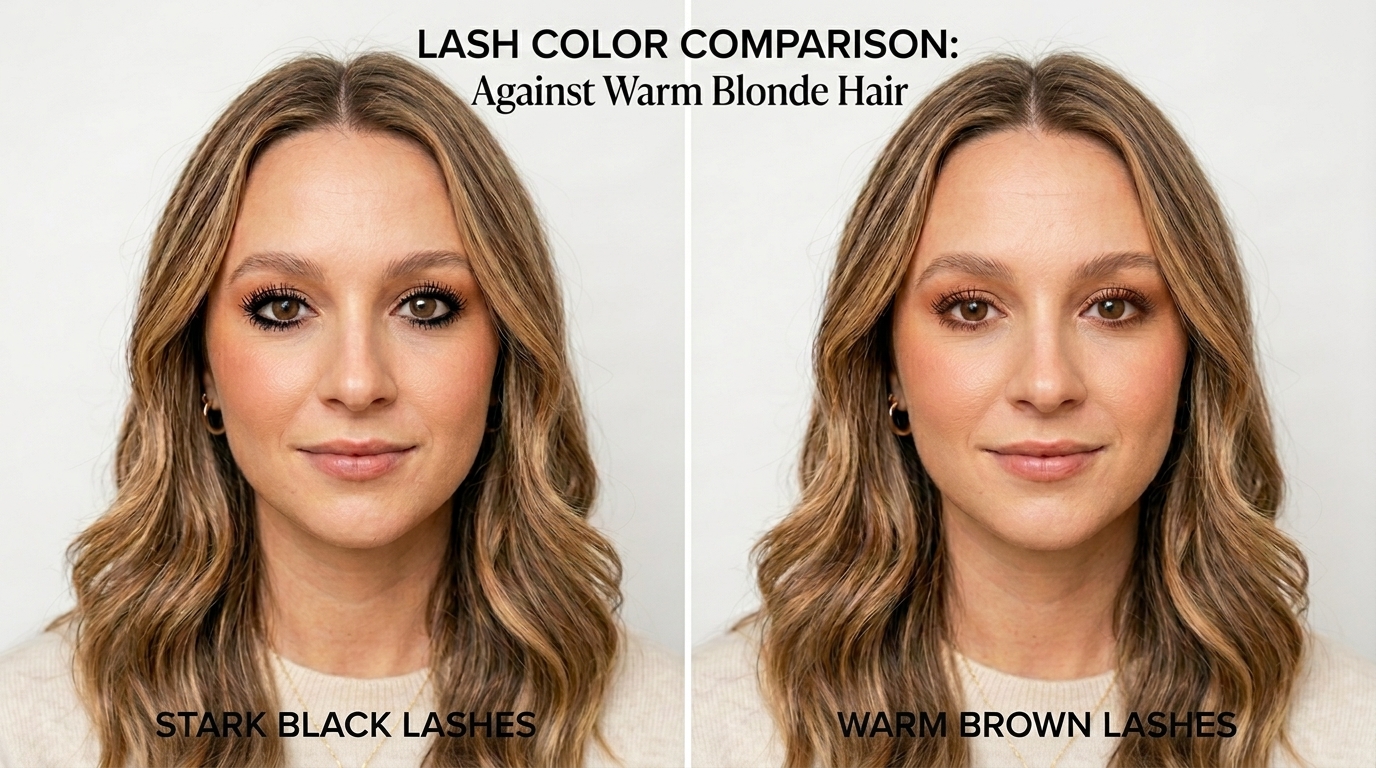
Lash color creates contrast against the skin of the eye area and against the surrounding hair. When the lash color is significantly darker than the hair color — as black lashes on platinum blonde highlighted hair inevitably are — the contrast between the two creates a visual disconnection at the eye area. The lashes draw attention not just to themselves but to the fact that they are a different color family entirely from the hair surrounding the face. This is not inherently wrong — high contrast between lash and hair color can be a deliberate, beautiful aesthetic choice — but it is worth making that choice consciously rather than arriving at it by default.
Why Highlighted Hair Changes the Calculation
Natural dark hair and naturally dark lashes exist in the same tonal family — the darkness of both is a function of the same melanin profile. When hair is highlighted, balayaged, or lightened, however, the hair color moves into a lighter, warmer, or more varied tonal range that the lashes — whether natural or artificially darkened — no longer automatically complement. The hair has changed color; the lash expectation has not. This is the origin of the “should my lashes match my hair” question — highlighted hair creates a genuine tonal mismatch with the black lash default that did not exist before the color service.
The degree of tonal mismatch depends on the type and extent of the highlighting. Subtle highlights close to the natural hair base color create less disconnect than dramatic platinum or heavily lightened balayage. Understanding the specific type of highlighting you have — and where it sits on the lightness spectrum — is the first step in identifying the most flattering lash color approach. For an in-depth understanding of the difference between balayage and traditional highlights and how each creates a different tonal result in the hair, the guide to balayage vs. highlights explains the technical and visual differences between these two popular lightening techniques — directly relevant context for understanding where your hair sits on the spectrum and what lash tint approach will complement it most effectively.
Brown vs. Black Lash Tints — Understanding the Difference
Before applying the harmony principle to specific highlighted hair types, it helps to understand what the practical difference between brown and black lash tints actually looks like in person — because the distinction is more nuanced than a simple dark versus light comparison.
What Black Lash Tint Delivers
A black lash tint creates the maximum possible contrast between the lash and the surrounding skin and eye area. Lashes appear as dark as their natural pigment allows — typically a very deep brown-black rather than a true optical black, but visually reading as black in most lighting conditions. The effect is defined, dramatic, and unmistakable — black tinted lashes frame the eye with strong visual weight and create a clearly delineated lash line that is visible and prominent against any background.
Black tint lasts the longest of any lash tint shade — the density of the pigment deposits more molecules per application, and those molecules are more resistant to UV-induced fading than lighter shades. For clients who want maximum color longevity from their tint, black consistently outperforms brown regardless of hair color.
What Brown Lash Tint Delivers
Brown lash tints exist on a spectrum — from soft, barely-there warm taupe through rich espresso and near-black chocolate. The warm undertones in brown tints — which range from reddish-amber through golden-brown to cool ash-brown — are what create their harmonizing effect with highlighted hair. Rather than creating a stark contrast at the lash line, brown tints integrate with the surrounding hair color and skin tone in a way that reads as natural lash color enhanced rather than artificially darkened.
The practical effect of a brown tint on most people is lashes that appear naturally defined and colored rather than clearly tinted — a quality that the 2026 natural beauty aesthetic prizes specifically. The tradeoff is that brown tints fade somewhat faster than black, and lighter brown shades on very pale lashes may require more frequent retreatment to maintain visible definition. The full breakdown of how brown and black tints and mascaras interact with different features and aesthetics is covered in the guide on brown mascara vs. black mascara — the same principles of tonal harmony that apply to mascara shade selection apply equally to lash tint color choice.
Choosing Between Brown and Black for Your Highlighted Hair Type
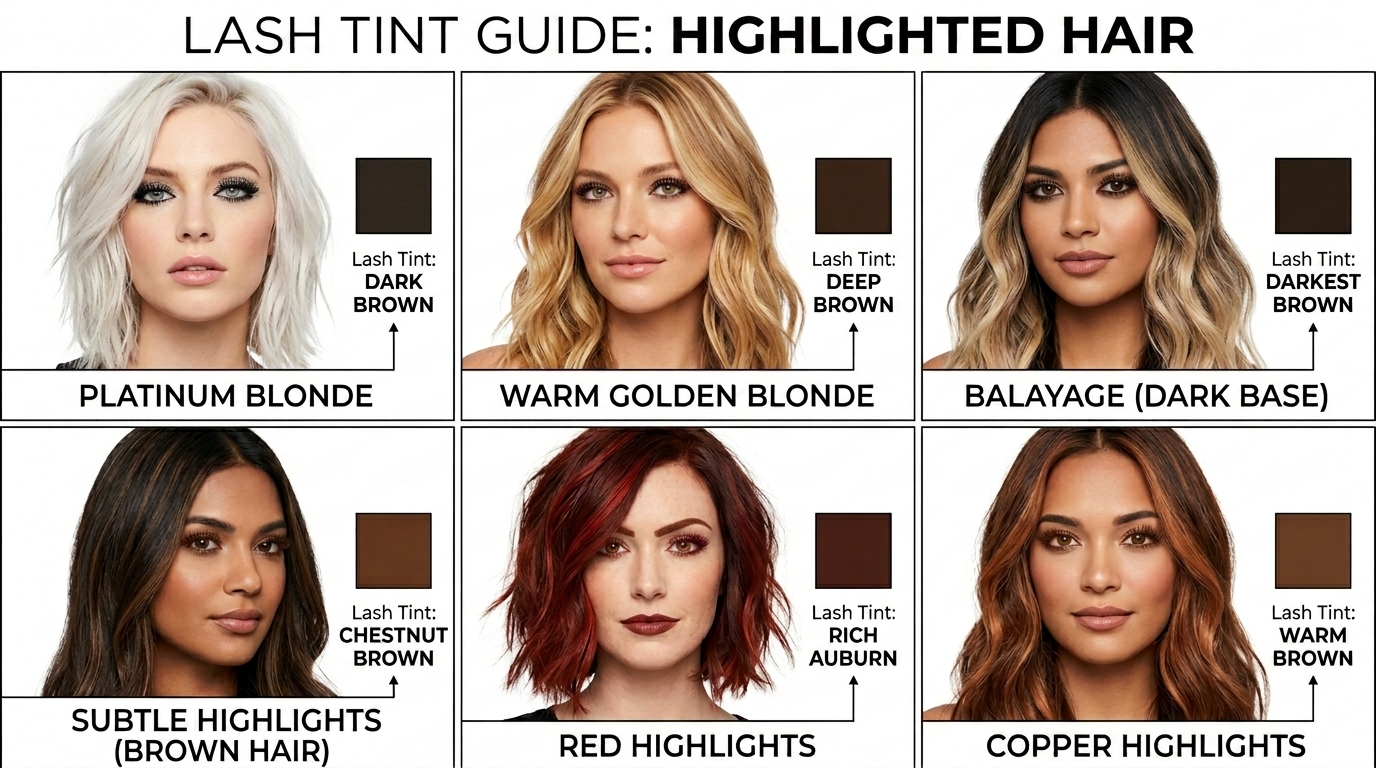
The most flattering lash tint choice for highlighted hair depends on three intersecting factors — the lightness of the highlights, the tone of the highlights (warm versus cool), and the client’s natural base color and skin tone. The following framework covers the most common highlighted hair profiles and the lash tint approach that produces the most harmonious result for each.
Platinum and Very Light Blonde Highlights
For hair that has been highlighted to platinum, ice blonde, or a very light cool blonde — particularly when the highlights cover the majority of the visible hair — the contrast between black lash tint and the surrounding hair is at its greatest. Black tinted lashes on platinum hair can look striking and intentional when that high-contrast editorial aesthetic is the goal, but for clients who want a more naturally cohesive look, a cool-toned ash brown or a warm taupe lash tint sits significantly closer to the tonal range of the hair and creates a much more harmonious result. The cool undertone in ash brown specifically complements the cool, silvery quality of platinum and ice blonde highlights without the stark contrast that black creates.
Warm Golden and Honey Blonde Highlights
Warm golden blonde and honey-toned highlights — the most common result of traditional foil highlighting on brown or dark blonde bases — are beautifully complemented by warm brown lash tints in the golden-brown to chestnut range. The amber and golden undertones in a warm brown tint echo the warmth of the highlight tones and create the kind of cohesive, sun-kissed quality that makes the whole look feel effortlessly coordinated. Black tint on warm golden highlights creates a cooler contrast at the eye area that can feel slightly disconnected from the warmth of the hair — technically fine but missing the tonal harmony that a well-chosen brown tint achieves naturally.
Balayage and Ombré with a Dark Base
Balayage and ombré styles that feature a dark natural base graduating into lighter highlights at the mid-lengths and ends occupy a unique middle ground — the roots and base color may be dark enough that black lash tint harmonizes with the overall hair color, while the lighter ends and highlights suggest that a brown tint might complement the lighter dimension of the style. For this hair type, the most flattering approach is typically a dark espresso or deep mocha brown rather than true black — a shade dark enough to read as defined and prominent against the dark base but warm enough to complement the highlighted dimension rather than conflicting with it. A deep brown tint in this scenario often reads as richer and more dimensional than true black because its warmth activates against both the dark base and the lighter highlights simultaneously.
Subtle Highlights on Medium Brown Hair
Subtle highlights woven through medium brown hair — the kind that add dimension and movement without dramatically lightening the overall color — typically sit close enough to the natural hair tone that either black or brown lash tint is genuinely flattering. The tonal gap between the highlights and the base color in this type of coloring is small enough that black lash tint does not create the jarring contrast it produces on platinum or dramatically lightened hair. For clients in this category, the choice between brown and black lash tint comes down to personal aesthetic preference — black for more impact, brown for more naturalness — rather than a clear tonal harmony consideration either way.
Red and Copper Highlights
Red and copper highlights — whether natural or color-treated — have the strongest tonal character of any highlighted hair type and benefit most specifically from the right lash tint choice. Warm brown lash tints with reddish or copper undertones — sometimes marketed as auburn brown or chestnut — create extraordinary harmony with red and copper highlighted hair, complementing the warm intensity of the hair color in a way that black tint completely misses. Black tint on red or copper hair creates a cool, stark contrast that can make the hair appear even more intensely warm by contrast — sometimes a desirable effect, but more often a disconnection that the right warm brown tint resolves beautifully.
Applying the Same Principles to Lash Extensions
The tonal harmony principles that guide lash tint color selection apply equally to lash extension color choices — and the growing availability of brown, warm brown, and multi-tonal lash extension sets in 2026 makes it entirely possible to apply these principles to professional extension wear as well as to tinting.
Brown Extensions for Highlighted Hair
Brown lash extensions — particularly in the warm mocha, chestnut, and espresso shades that have become increasingly available from professional lash suppliers in 2026 — create the same tonal harmony with highlighted hair as brown tints do, with the added dimension of the extension length and volume enhancement. A warm brown extension set on highlighted blonde or balayaged hair produces a result that looks remarkably natural — the eye reads the warm brown lash color as consistent with the overall warm tonal palette of the hair rather than as a contrasting added element. The dedicated guide on brown lash extensions covers the full range of brown extension shades available and how to choose the most flattering option for different natural coloring profiles — directly applicable for highlighted hair clients considering an extension color change.
When Black Extensions Still Work Best
Despite all the harmony arguments for brown lash options with highlighted hair, there are specific scenarios where black extensions or black tint remain the superior choice even on lightened hair. Clients who want a deliberately high-contrast, editorial eye look — where the stark definition of black lashes against lightened hair is the intentional aesthetic — will always achieve that effect more powerfully with black than with any brown alternative. For formal occasions, photography, and any situation where maximum lash impact is the priority over natural integration, black consistently delivers the most dramatic and impactful result regardless of hair color.
Practical Tips for Getting the Right Shade
Whether you are choosing a lash tint shade for a professional appointment or selecting a mascara that harmonizes with your highlighted hair on a daily basis, a few practical principles help translate the tonal harmony framework above into specific real-world decisions.
Bring a Hair Reference to Your Lash Appointment
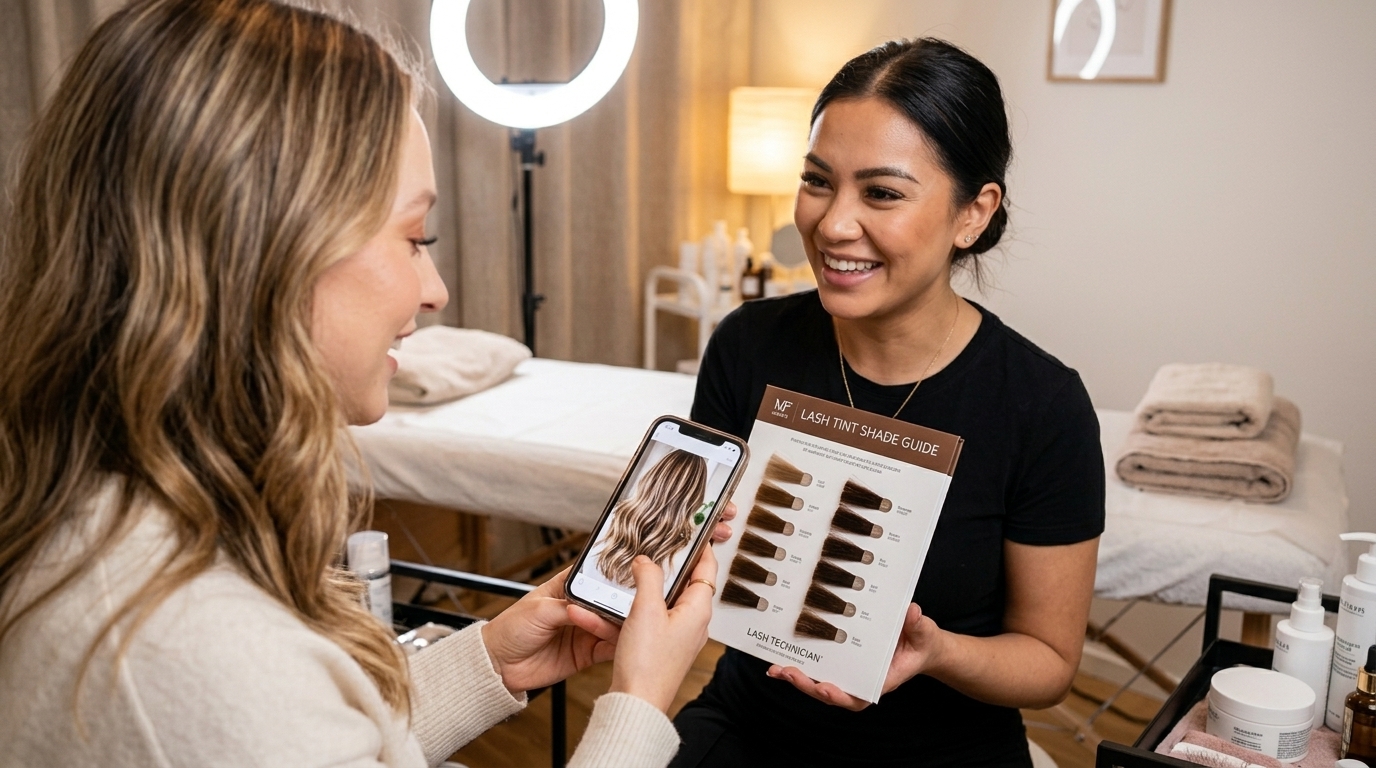
When booking a lash tint or requesting brown extensions at a salon, bring a clear photograph of your current hair color — ideally in natural daylight rather than artificial lighting — so your lash technician can assess the specific tone of your highlights and recommend the most harmonious tint shade. Hair color looks significantly different under salon lighting than it does in natural conditions, and a daylight photo gives the technician the most accurate reference for tonal matching.
Test Mascara Shades Before Committing to a Tint
If you are uncertain whether brown or black lash color will suit your specific highlighted hair better, experimenting with brown mascara before committing to a semi-permanent tint is a low-risk way to assess the harmony in your own lighting conditions and daily context. The guide on choosing between brown and black mascara covers exactly how to evaluate the result in different lighting and makeup contexts — a useful framework for assessing which tint direction will work best before the semi-permanent commitment is made.
Consider the Full Look — Not Just the Lashes in Isolation
The most flattering lash tint choice is always evaluated in the context of the complete look — hair color, skin tone, eye color, and typical makeup style all contribute to whether a specific lash tint shade reads as harmonious or disconnected. A warm brown tint that looks perfectly integrated in a natural, minimal makeup context may look slightly underpowered alongside bold eye makeup where stronger definition is needed. A black tint that looks slightly harsh against platinum hair on a bare face may look perfectly proportionate when paired with a full eye look that uses the strong contrast deliberately. Evaluate lash color choices in the context of how you actually wear your makeup — not in isolation against a bare face.
Your Lashes and Your Hair Should Tell the Same Story
The question of whether your lashes should match your hair does not have a single universal answer — but it does have a principle: the most cohesive, naturally beautiful results come from lash colors that are tonally related to the hair color surrounding the face rather than in stark contrast with it. For most highlighted hair clients, that principle points toward a warm or neutral brown lash tint rather than defaulting to black — and the difference in how the completed look reads is consistently described by clients who make the switch as more natural, more harmonious, and more effortlessly put-together than anything they achieved with black lash color on their lightened hair.
For anyone who wants to explore the full range of natural lash tinting options available in 2026 — including how professional lash tinting compares to at-home alternatives and which approach suits different lifestyles and budgets — the complete guide to brow tinting at home vs. professional covers the decision framework for semi-permanent tinting services in a way that applies equally to lash tinting considerations. For the most authoritative editorial guidance on choosing lash and eye makeup colors that complement different hair tones, the Byrdie guide to choosing mascara color for your hair color offers expert makeup artist insights that pair directly with the tonal harmony principles covered in this guide.