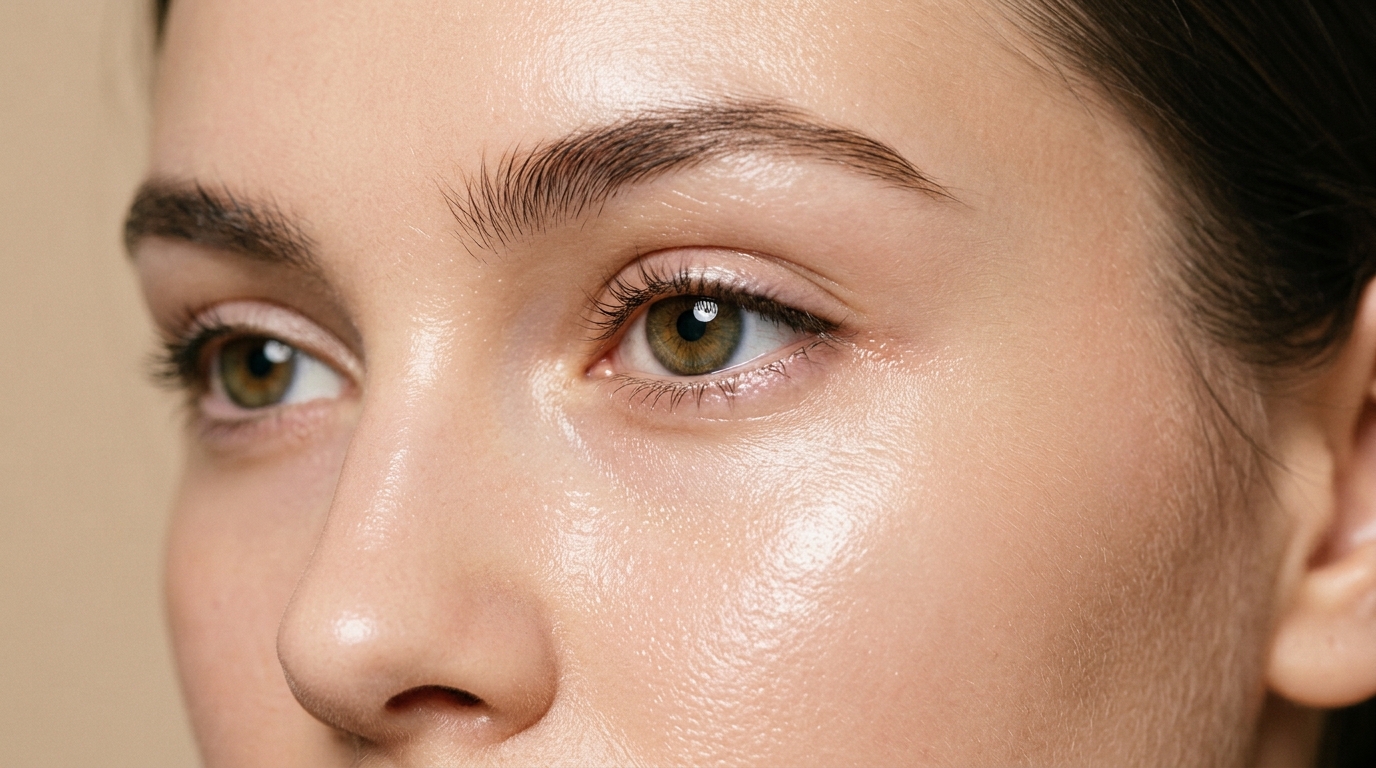
Glass skin — the Korean beauty concept of skin so flawlessly hydrated, smooth, and luminous that it appears almost translucent — has been one of the defining aesthetic goals of the past several years in beauty. But while most glass skin guides focus on the cheeks, forehead, and overall complexion, the under-eye and orbital zone is both the most challenging area to achieve this effect and the most visually impactful when it is achieved. Luminous, dewy, glass-like skin around the eye transforms the way the entire face reads — it makes dark circles appear less prominent, fine lines less defined, and the eye itself more vivid and awake.
In 2026, with the natural beauty movement driving demand for skin that looks genuinely healthy rather than heavily made-up, achieving glass skin around the eye area has become one of the most sought-after beauty goals. The challenge is that the periorbital zone — the skin immediately surrounding the eye — has unique characteristics that make standard glass skin approaches either insufficient or inappropriate. This guide covers the specific techniques, ingredients, and product approaches that create genuine luminosity and dewiness in the eye area — from the skincare foundation through to the finishing makeup touches that seal the look.
Understanding Why the Eye Area Needs Its Own Glass Skin Approach
The glass skin effect relies on three simultaneous skin qualities — deep hydration that creates plumpness and smoothness, a refined surface texture that reflects light evenly, and a translucent quality that allows the underlying skin tone to show through without opacity or dullness. Achieving all three in the eye area requires a different approach from the rest of the face because the periorbital skin has fundamentally different characteristics.
The Unique Challenges of Periorbital Skin
Periorbital skin is approximately 0.5 millimetres thick — one of the thinnest skin zones on the entire face. This thinness means it dehydrates faster than other facial zones, shows structural changes — fine lines, hollowing, darkness — more readily, and responds more sensitively to both skincare actives and environmental stressors. Standard glass skin approaches that work beautifully on the cheeks — layering multiple hydrating products, using stronger actives, applying more generous amounts of serum and moisturizer — can overwhelm the delicate periorbital skin or cause the product migration issues that extension wearers specifically need to avoid.
The under-eye zone has an additional challenge — the combination of thin skin, underlying vascularity, and the shadow created by orbital hollowing creates the dark circle effect that is the most common complaint about this area and the one that conflicts most directly with the glass skin ideal of luminous, clear, light-reflecting skin. Achieving glass skin in the eye area requires addressing this darkness while building the hydration and surface smoothness that create the luminous quality.
Why Dewiness Reads Differently Around the Eye
On the cheeks and forehead, dewiness reads as healthy and radiant — a slight shine or glow that communicates well-hydrated, well-nourished skin. Around the eye, however, excessive product or moisture can migrate — catching under fine lines and emphasizing texture, transferring onto extensions or glasses, or simply looking slightly greasy rather than luminous by midday. The glass skin effect for the eye area requires a more controlled dewiness — the appearance of luminosity without the surface moisture that causes migration and product transfer. This distinction between genuine glass skin dewiness and the controlled luminous quality appropriate for the eye area is what most glass skin guides fail to address — and it is what this guide specifically targets.
The Skincare Foundation for Eye Area Glass Skin
Glass skin in the eye area is primarily a skincare achievement rather than a makeup one — the luminous, plump, smooth quality that defines the look comes from consistently well-hydrated, well-nourished periorbital skin rather than from products applied on top. The makeup techniques covered later in this guide work significantly better — and look significantly more natural — when the skin underneath is genuinely healthy and hydrated.
Layered Hydration — The Core Protocol
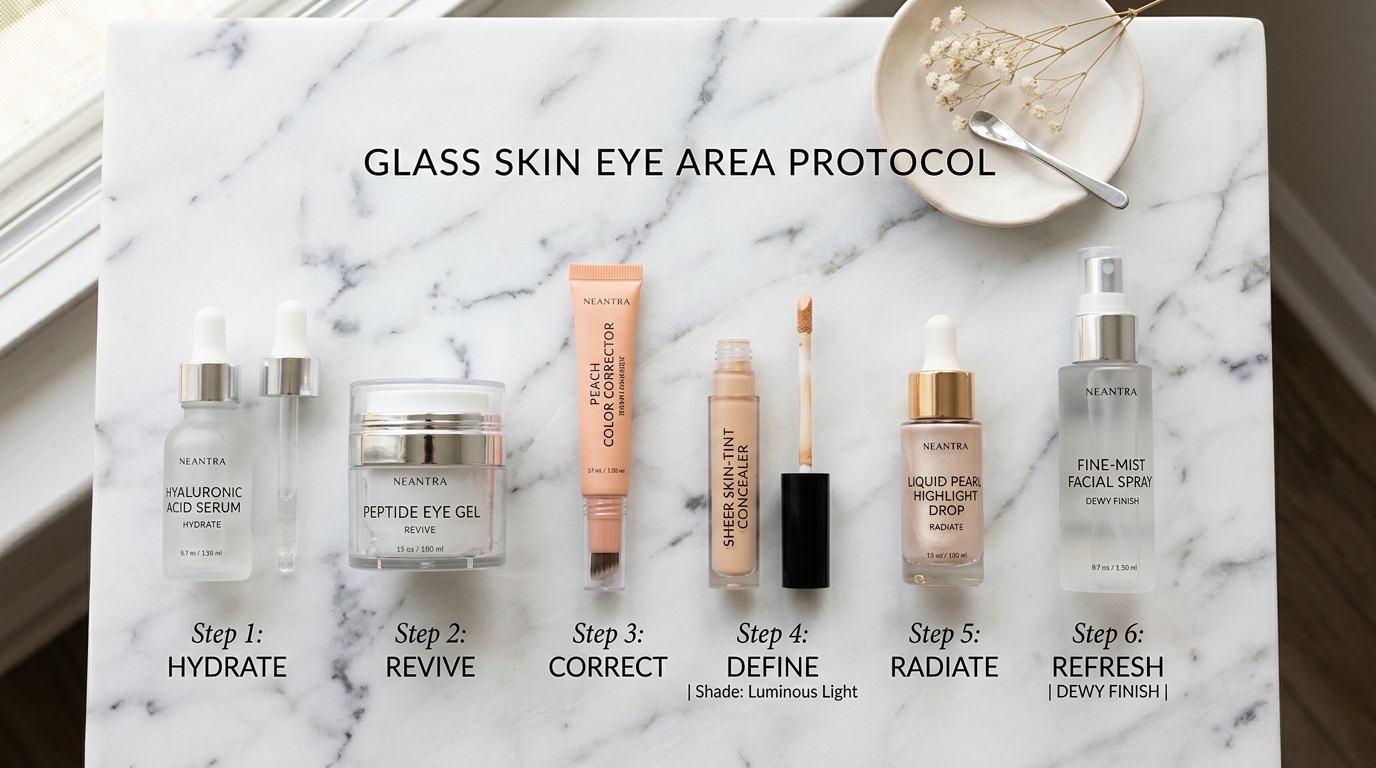
The glass skin approach to hydration is built on the principle of layered lightweight hydrating products rather than one heavy moisturizer — a thin layer of hyaluronic acid serum followed by a lightweight gel or water cream rather than a single occlusive eye cream. Each layer builds hydration at a different level within the skin — the serum attracts water into the deeper layers of the epidermis, the gel cream seals that moisture in while adding surface smoothness, and the combination creates the plumped, glass-like quality that a single heavy product cannot replicate as effectively.
For the eye area specifically, the layering sequence should use the lightest, fastest-absorbing formulas available in each category — water serums, gel-texture hyaluronic acid products, and lightweight eye gels rather than rich creams — to prevent the product buildup and migration that causes problems in this zone. Allow each layer to absorb for thirty to sixty seconds before applying the next, and apply everything with gentle tapping motions using the ring finger rather than rubbing, which disrupts the layering effect and can pull the delicate periorbital skin over time.
Peptides and PDRN for Structural Luminosity
The deepest, most enduring luminosity in the eye area comes not from surface dewiness but from structural skin health — collagen density, dermis thickness, and cellular hydration at a level below the surface that creates the plumpness and translucency that make glass skin look genuinely healthy rather than artificially moisturized. Peptide serums and PDRN treatments address this structural dimension of eye area luminosity by stimulating collagen synthesis, reducing periorbital inflammation, and improving the cellular hydration mechanisms that determine long-term skin quality. The guide on PDRN skincare for the eye area covers the specific regenerative mechanism that makes this ingredient one of the most significant for achieving genuine structural luminosity in the periorbital zone — and the guide on peptide eye creams and lash-line skincare covers the peptide complexes that support collagen synthesis most effectively as a complement to PDRN in an advanced eye area routine.
Caffeine and Circulation for Under-Eye Brightness
The darkness that conflicts most directly with the glass skin ideal in the under-eye zone has two primary causes — vascular darkness from the underlying blood vessels showing through thin skin, and shadow darkness from orbital hollowing and volume loss. Caffeine-based eye products address the vascular component by constricting blood vessels and reducing the pooling that makes the under-eye appear darker — particularly effective in the morning when overnight fluid accumulation is at its greatest. The comprehensive guide to caffeine eye care for dark circles and puffiness covers the full evidence base for caffeine in the under-eye context — an important component of the glass skin skincare protocol for anyone whose primary under-eye concern is darkness rather than texture or dryness.
Makeup Techniques That Create Glass Skin in the Eye Area
Once the skincare foundation is in place, specific makeup techniques translate the hydrated, healthy skin underneath into the visible glass skin effect — adding luminosity, correcting darkness, and creating the smooth, even surface that the look requires without the heaviness or opacity that defeats the natural, skin-like quality glass skin depends on.
Color Correction Before Concealer
For the glass skin approach to work in the under-eye zone, the darkness beneath the skin surface must be addressed before any luminosity-creating products are applied — otherwise the darkness shows through the thin, sheer products that glass skin makeup requires and undermines the luminous effect entirely. A peach or salmon color corrector applied in the lightest possible layer to the darkest under-eye zones neutralizes the blue-purple tone of vascular darkness without adding opacity. The corrector should be applied with a fingertip using the lightest possible tapping motion — the goal is the thinnest functional layer, not complete coverage.
Skin-Toned Concealer — Less Is More
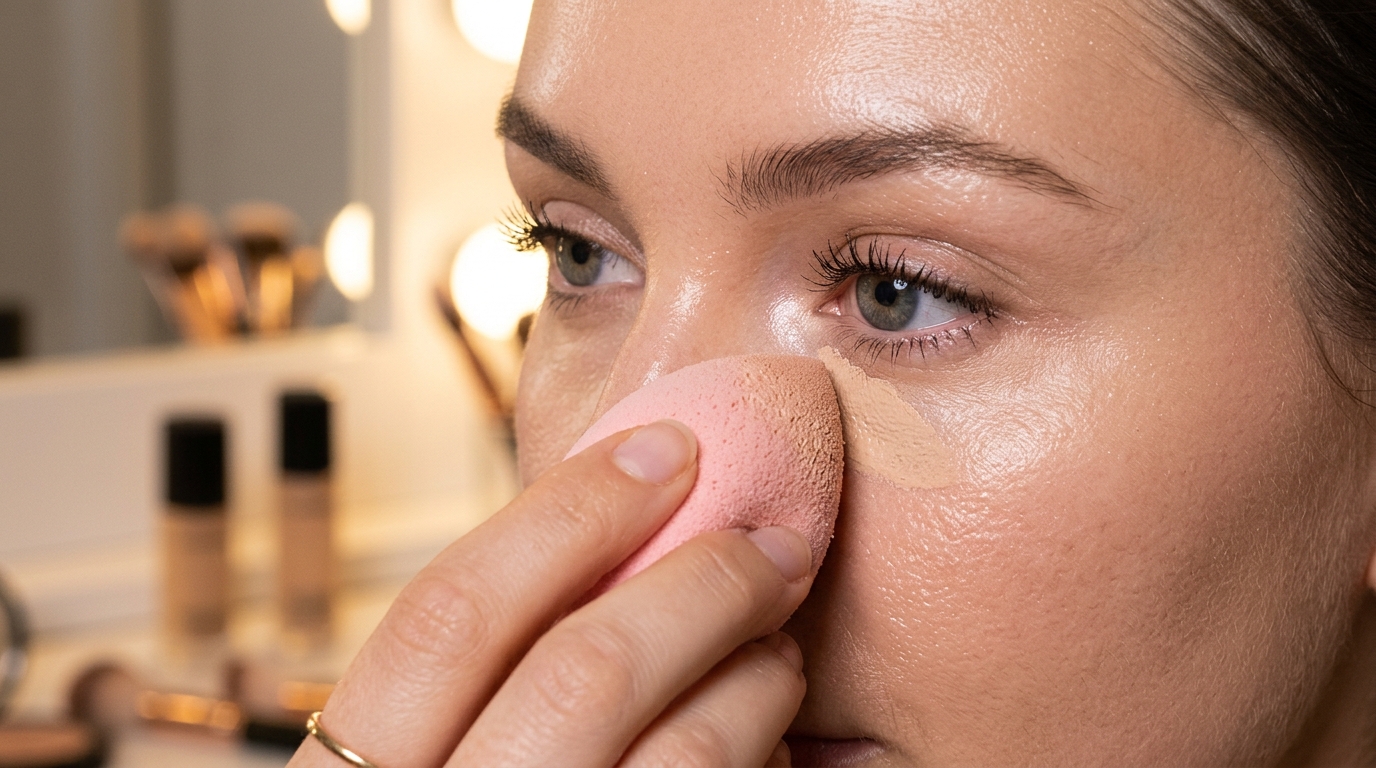
The concealer approach for glass skin eye area is fundamentally different from conventional under-eye concealing. Rather than applying a full coverage concealer across the entire under-eye zone to achieve maximum brightness, the glass skin approach uses a sheer to medium coverage concealer in an exact skin-tone match — or at most one shade lighter — applied only to the specific zones where darkness or unevenness remains after color correction. The concealer should be sheer enough that the skin texture beneath it remains visible — this is the quality that creates the glass skin appearance rather than the matte, covered appearance of heavier coverage.
Apply with a damp beauty sponge using a stippling motion rather than a dragging or sweeping motion — stippling deposits the concealer on the skin surface without pushing it into fine lines where it would crease and disrupt the smooth, luminous surface. Use the absolute minimum amount of product that achieves adequate coverage — building coverage in thin layers rather than applying one thick layer is the technique that produces the most skin-like, glass-like result.
The Inner Corner Highlight — The Key Luminosity Technique
The single most impactful makeup technique for creating the glass skin effect in the eye area is the inner corner highlight — a small amount of a finely milled, pearl or champagne highlight pressed precisely into the inner corner of the eye where the upper and lower lash lines meet. This placement catches light at the exact point where natural luminosity is most expected and most flattering — drawing light to the brightest natural point of the eye area and creating the glass-skin impression of light coming from within the skin rather than being reflected off a product surface.
The product choice for this highlight is critical — a finely milled, skin-adhering formula with a pearl or satin finish creates the glass skin luminosity effect. Chunky glitter or loose shimmer particles create a sparkle effect that reads as product rather than skin. A liquid or cream highlight formula applied with a fingertip — which sheers it further and warms it to skin temperature for a more natural finish — consistently outperforms pressed powder highlights for this specific application in terms of how skin-like and luminous the result appears.
Setting Without Mattifying
The most common point of failure in achieving glass skin around the eye area is the setting step — applying too much setting powder or using a formula that is too matte, which immediately eliminates the dewy luminosity that all the previous steps created. The glass skin approach to setting the eye area uses a finely milled translucent powder pressed very lightly — with a small, dense brush — only into the crease areas where concealer is most likely to crease, not across the entire under-eye zone. The rest of the under-eye area is left without powder, which allows the natural luminosity of the well-hydrated skin and the sheer concealer to remain visible.
For extension wearers who need good longevity from their eye area makeup in humid or warm conditions — where skipping powder creates a migration risk — a fine setting powder applied in the very thinnest possible layer is preferable to skipping the step entirely. The comprehensive guide to making eye makeup last all day in heat and humidity covers the balance between setting for longevity and maintaining luminosity — directly relevant for anyone trying to sustain the glass skin effect through a full day in challenging conditions.
Products That Support Glass Skin in the Eye Area
Beyond the technique approach, specific product characteristics consistently produce better glass skin results in the eye area than others — regardless of brand or price point.
What to Look for in an Eye Area Glass Skin Product
For skincare products — look for formulas that contain hyaluronic acid in multiple molecular weights (allowing hydration at both surface and deep skin levels), niacinamide for barrier support and luminosity, and either peptides or PDRN for structural collagen support. Avoid heavy occlusive ingredients — petrolatum, mineral oil, beeswax — in the closest-to-lash-line zone, as these prevent the light, layered hydration approach from functioning as intended and can migrate toward extension bonds.
For makeup products — look for concealers described as skin-tint, serum concealer, or hydrating formula rather than full coverage, long-wear, or matte. These descriptors consistently align with the texture and coverage weight that produces glass skin results. For highlights, look for formulas described as liquid light, illuminating drops, or pearl finish rather than shimmer, glitter, or metallic — the first category produces the skin-like luminosity the look requires, the second produces the product-visible sparkle that undermines it.
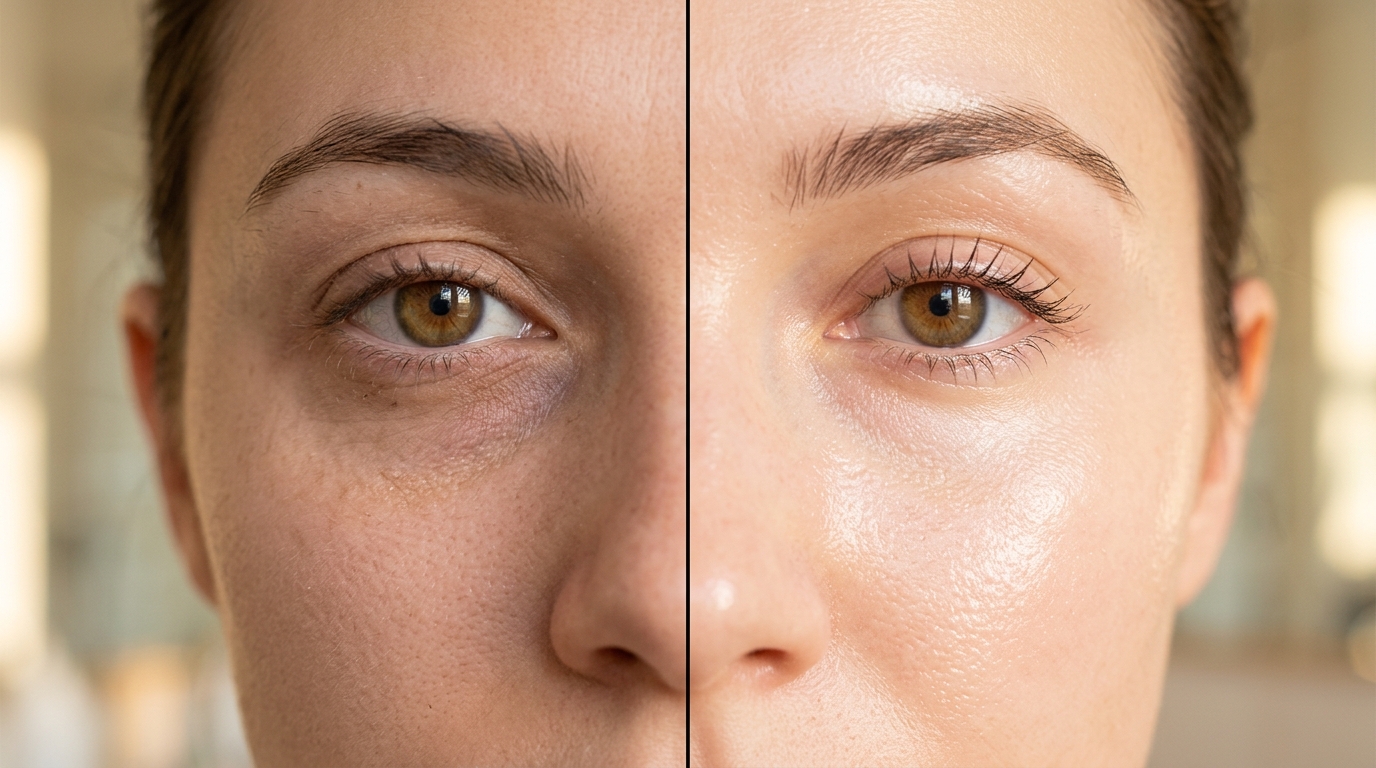
Maintaining the Glass Skin Effect Through the Day
The glass skin eye area look requires specific maintenance practices to sustain its luminous quality through a full day, particularly for extension wearers and those in warmer or more humid climates where product migration is a consistent challenge.
Midday Hydration Refresh
A fine-mist facial spray applied at midday — held at arm’s length and misted lightly across the eye area with eyes closed — refreshes the surface hydration that creates the dewy quality without disrupting any makeup or extension bonds beneath. This thirty-second midday refresh can restore the glass skin luminosity that naturally diminishes over the course of a morning as skin loses surface moisture to evaporation and environmental exposure. Look for a facial mist that contains glycerin or hyaluronic acid rather than simply water — these humectants actively attract moisture to the skin surface rather than simply adding water that immediately evaporates.
Avoiding Touch and Friction
The glass skin eye area is more vulnerable to touch-related disruption than a matte, heavily set eye look — any rubbing, pressing, or friction displaces the thin product layers and disrupts the smooth, even surface that creates the luminous effect. This is an additional reason why extension wearers find the glass skin approach compatible with their lash care requirements — the no-touch principle that protects extension bonds also protects the delicate surface finish of the glass skin eye look throughout the day.
Glass Skin Around the Eye Is a Long Game Worth Playing
The most convincing glass skin eye area — the kind that reads as genuinely extraordinary skin rather than as well-applied makeup — is built over months of consistent skincare investment rather than achieved in a single morning routine. The hydration, collagen density, and surface smoothness that create the structural foundation of genuine luminosity in the periorbital zone develop gradually through the consistent application of the right ingredients in the right sequence. The makeup techniques covered in this guide work immediately — but they work significantly better as the skin quality beneath them improves over time.
For anyone who wants to build a complete, science-informed protocol for improving eye area skin quality over the long term — combining the hydration approach of glass skin with the regenerative support of the most evidence-backed periorbital actives available in 2026 — the guide on exosome skincare for the eye area covers the regenerative layer that most directly supports the structural luminosity this look requires at its most exceptional. For the most authoritative editorial coverage of glass skin techniques and products from professional makeup artists and skincare experts, the Byrdie complete guide to glass skin offers comprehensive, regularly updated guidance that pairs naturally with the eye-area-specific approach covered in this post. For expert-tested product recommendations across the skincare categories most relevant to achieving glass skin luminosity, the Allure guide to glass skin provides rigorous editorial testing and product guidance from their beauty team and contributing dermatologists.