Brow growth serums can be worth considering if you want better-conditioned, healthier-looking brows, but they are not a promise of new hair. Before buying one in 2026, decide what you actually want to change: dry hairs, a sparse tail, or light hairs that barely show up. Those are different concerns. A cosmetic serum may improve how existing hairs feel or look without filling a bare patch, and a product name alone cannot tell you what results to expect.
What brow growth serums can realistically do
Conditioning is not the same as regrowth
Conditioning formulas aim to improve the feel and appearance of hairs already there. Brows might feel softer, look smoother, or become easier to groom. Depending on the formula, reducing dryness may help limit breakage. That is a useful cosmetic benefit, but it does not demonstrate that a product has increased the number of hairs growing from follicles.
Clinically demonstrated drug-driven growth is a different category of claim. Research on a prescription medicine such as bimatoprost does not establish that an unrelated cosmetic brow serum works. Medical treatments have specific risks and uses that belong in a clinician’s discussion. Do not treat a cosmetic conditioner as a replacement for diagnosing hair loss.
Read ingredients as clues, not proof
Panthenol, glycerin and hyaluronic acid commonly appear in moisturizing or conditioning formulas. Peptides, biotin and botanical extracts often feature in growth-focused marketing. Their presence does not tell you whether the finished serum has demonstrated new brow growth. An ingredient’s role in hair biology is not the same as evidence that applying it in this particular product will fill your gaps.
Look for evidence behind the finished formula
When a brand says its serum is clinically tested, check what was measured. Was the outcome softer hairs, a fuller-looking brow, or an objectively measured increase in hair density? Ask whether participants simply reported satisfaction or whether researchers assessed standardized photographs. Also check the number of participants, the study length and whether there was a comparison group.
These details matter even when a headline sounds impressive. In Allure’s dermatologist-informed brow-serum guide, dermatologist Angela Sanfilippo Casey notes that one brand’s study involved just 30 participants and did not make the size of the reported density improvement clear. That is a reason to examine the evidence, not a reason to assume every serum is useless.
Before-and-after pictures also need context. Different lighting, brow gel, tinting or brushing can change apparent fullness. Look for bare brows photographed consistently. Testimonials and editorial favorites may help you understand texture or convenience, but they cannot guarantee your result. Choose a claim you can realistically assess rather than the most dramatic promise on the box.
Use brow-specific directions and track fairly
Check the intended application area
Choose a product explicitly labeled for eyebrows, or for both lashes and brows. A lash-only serum is not automatically suitable for your brows. If you are browsing our natural lash serum guide too, keep the application areas separate: lash instructions are not brow instructions.
Follow the exact amount, frequency and application method on your chosen product. Do not borrow a twice-daily schedule from another serum or assume that more product means faster progress. Follow any allergy-testing instructions, while remembering that a negative patch test cannot guarantee you will never react.

Make a simple baseline record
Before your first application, take a clear photo of clean, dry brows without pencil, gel or tint. Use the same mirror location, lighting, camera distance and brushing direction for later photos. Record the start date and any changes in grooming or makeup so you do not accidentally credit the serum for a different routine.
A weekly photo is a practical way to avoid inspecting every hair each morning; it is not a promised results schedule. Compare changes in the same small area, such as the tail, and separate softer texture from apparent density. Your record can show what happened for you, but it cannot prove that the serum caused every change.
There is no reliable universal deadline for cosmetic brow growth serums. A brand’s study window applies to that study, not everyone who buys the bottle. Review progress against the product’s stated expectations, and do not keep repurchasing indefinitely because an advertisement says transformation is always just ahead.
Give brows definition without waiting for growth
If your main goal is looking more polished tomorrow, makeup offers a more direct option. A fine-tip pencil can add a few hairlike strokes to visible gaps, while a light coat of tinted gel makes existing hairs easier to see. Neither creates hair, but both let you control the immediate appearance without relying on a serum timeline.
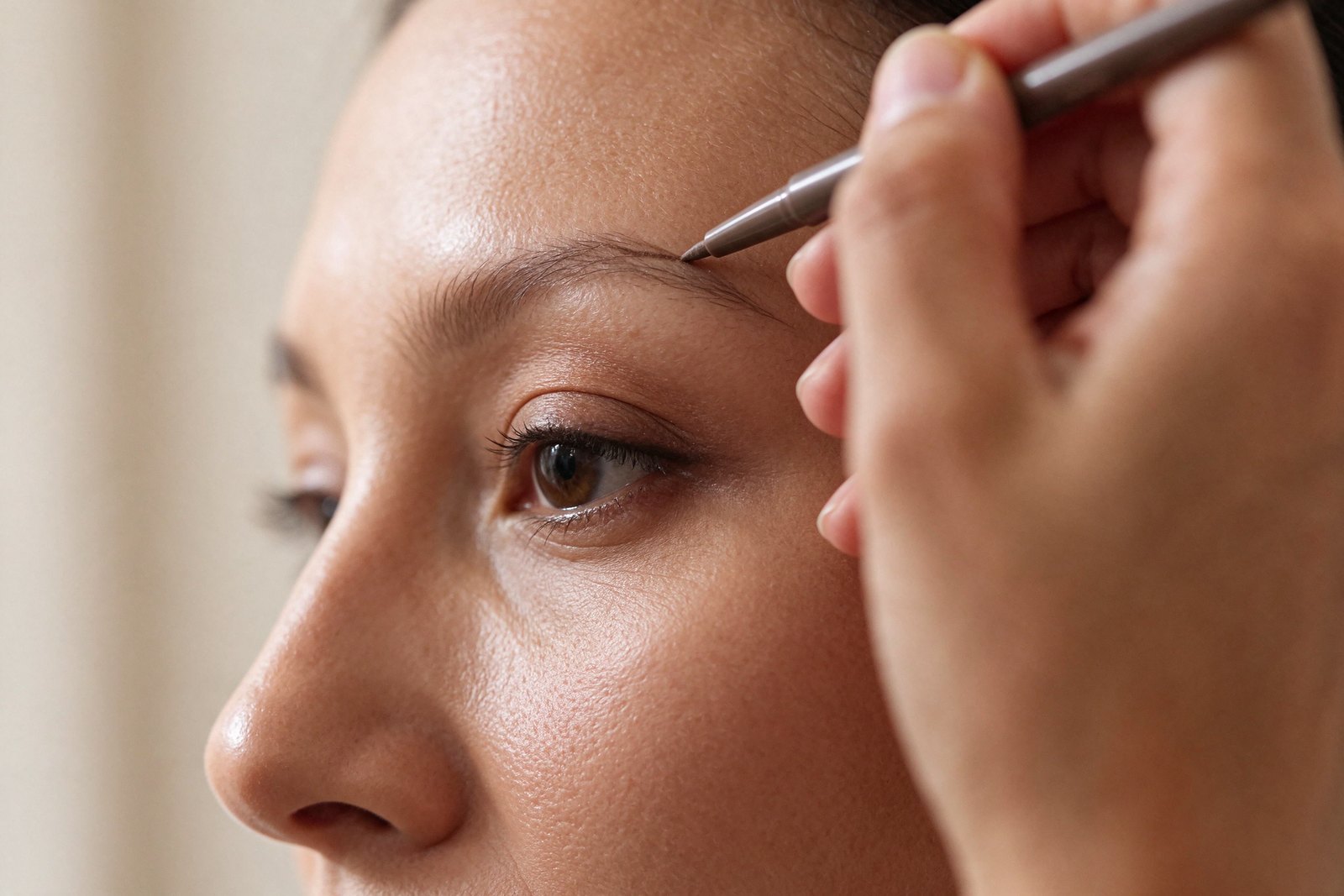
For a fuller application tutorial, our soft defined brows guide explains how to keep that finish light rather than drawing a solid block. Choose your makeup based on the brows you have now, not the brows a product advertisement suggests you should eventually have.
If light-colored hairs are your biggest concern, tinting changes visibility rather than growing new hairs. Our home versus professional brow tinting comparison covers the separate decision. Tinting cannot supply missing hair, and it brings its own safety considerations. Keep tinted and bare-brow photos separate when evaluating a serum so a color change does not look like regrowth.
Know when to stop shopping and see a dermatologist
Sudden thinning, new bald patches, ongoing shedding or skin changes deserve a dermatologist’s assessment instead of a stronger serum. In Cleveland Clinic’s eyebrow-regrowth guidance, dermatologist Shilpi Khetarpal explains that repeated plucking can damage follicles and that underlying health conditions can affect brow growth. A cosmetic product cannot identify the cause.
Stop using a serum if it causes burning, persistent redness, swelling or other irritation, and seek medical advice. Products containing prostaglandin analogues warrant particular caution because irritation and pigmentation changes have been reported; this guide does not recommend them. Do not put scalp hair-growth medicines on your brows without clinician guidance.
The sensible goal is comfortable skin and an honest assessment of your brows. A clearly labeled conditioner with believable evidence may fit your routine. Choosing makeup instead, or deciding not to buy a serum, is equally reasonable.