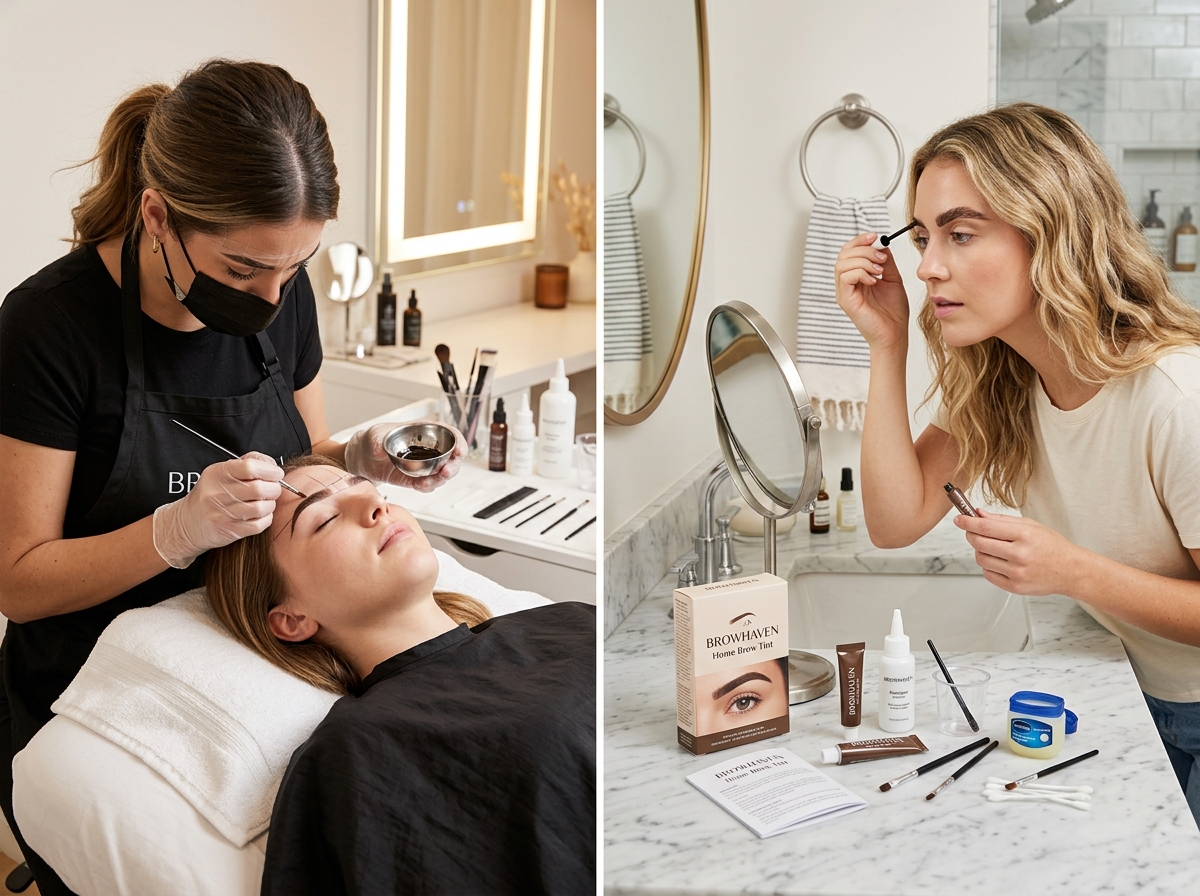
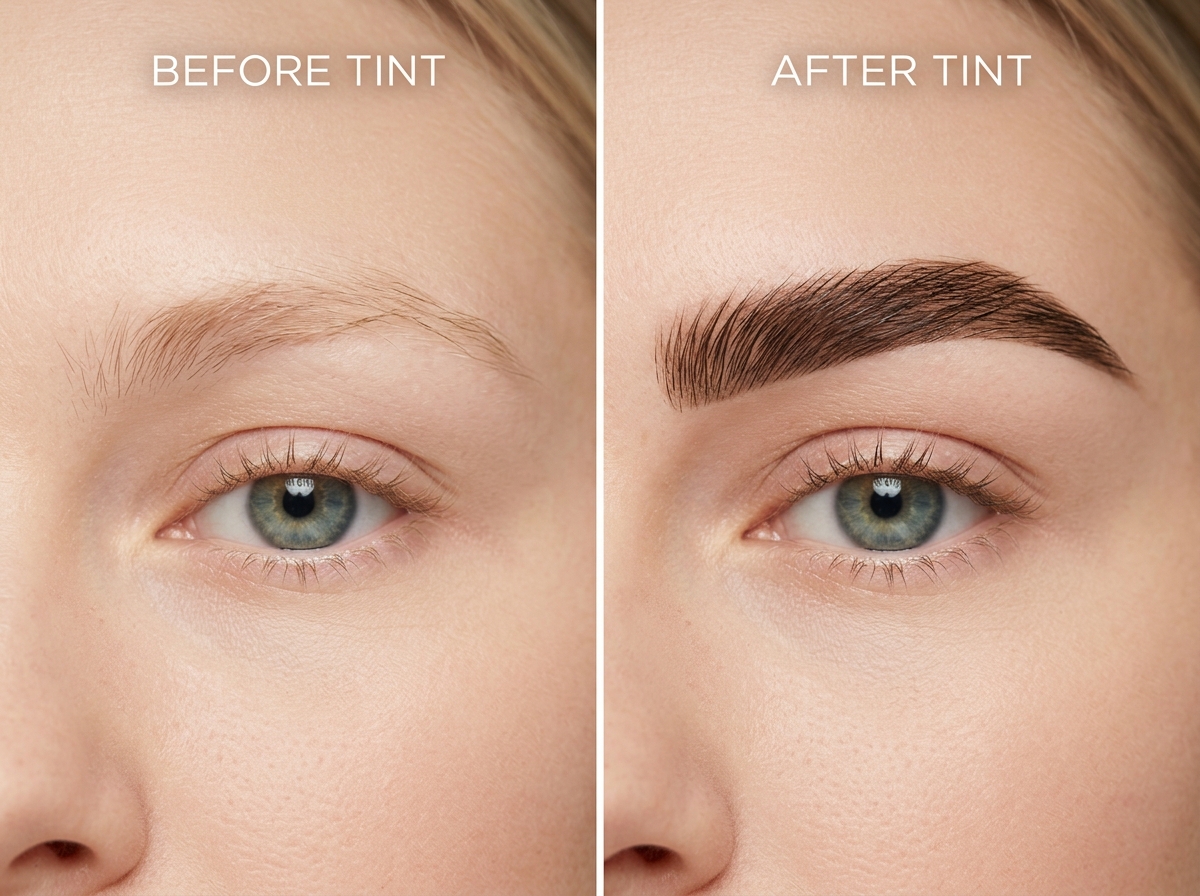
Brow tinting is having one of its biggest moments in years. As the 2026 beauty landscape shifts decisively toward natural enhancement over heavy makeup application, the appeal of waking up with visibly defined, colored brows — without reaching for a pencil, gel, or powder — has never been stronger. A brow tint darkens each individual brow hair to its maximum visible depth, creates the impression of greater brow density without any product application, and defines the brow shape in a way that looks completely natural because it is working with the actual hair rather than on top of it.
The question that most people considering brow tinting face is not whether to do it — the results speak for themselves — but whether to have it done professionally or to do it at home. Both options exist, both are widely practiced, and both produce genuinely good results in the right hands with the right products. The difference between them is not as simple as professional equals better and at-home equals risky. It is a nuanced comparison that involves cost, convenience, result quality, safety considerations, and individual skill level — all of which this guide covers in full so you can make the choice that genuinely fits your situation.
What Brow Tinting Actually Does
Before comparing the two approaches, understanding what brow tinting achieves — and what it cannot do — ensures the decision is based on accurate expectations rather than marketing claims.
How the Tinting Process Works
Brow tinting uses a semi-permanent dye — typically a vegetable-based, henna, or oxidative tint formula — to deposit color into the cortex of each brow hair. The tint is mixed with a developer that opens the hair cuticle and allows the color molecules to penetrate the hair shaft, where they are fixed as the cuticle closes during rinsing. The result is brow hairs that are colored from within rather than coated on the outside — which is why a tinted brow maintains its color through washing, sweating, and daily life in a way that pencil or powder products cannot replicate.
The color deposited by tinting is semi-permanent — it fades gradually over three to six weeks as the tinted hairs grow out and shed naturally, and as the color molecules are slowly displaced by water and UV exposure. Darker tints generally last longer than lighter ones, and coarser hair textures retain color longer than fine ones.
What Tinting Cannot Do
Tinting colors the hairs that are already present — it does not create new hairs, increase density, or change the growth direction of the brow. Clients with genuinely sparse brows will see an improvement in color intensity and definition after tinting, but the gaps where no hairs exist will remain. For clients whose primary concern is sparse density rather than color, tinting works best as a complement to other interventions — a soft defined brow makeup technique applied on top of a tinted base, or a semi-permanent treatment for clients who want to address density more fundamentally. The guide on nano brows vs. microblading covers the semi-permanent options for clients whose brow density needs go beyond what tinting can address.
Professional Brow Tinting — What to Expect
A professional brow tinting service performed by a trained beauty therapist or brow specialist typically takes fifteen to thirty minutes and involves a consultation, skin preparation, tint mixing, application, processing, and removal — followed by any additional shaping or styling the client requests alongside the tint.
The Advantages of Going Professional
The most significant advantage of professional brow tinting is the expertise of color selection and application. An experienced brow technician assesses the client’s natural brow hair color, skin tone, and desired outcome and mixes a custom tint shade that produces a natural, flattering result on that specific client. This color calibration is genuinely skilled work — the wrong shade of tint on the wrong skin tone or hair color can produce brows that look harsh, artificial, or unbalanced in a way that is difficult to correct quickly given that the tint is semi-permanent. A professional who has tinted hundreds of brows brings a level of color judgment and technical precision to the service that is difficult to replicate on a first or second at-home attempt.
Professional technicians also have access to higher-quality tint formulas — oxidative dyes with richer pigment, more precise color range, and more reliable processing characteristics than most consumer-grade at-home kits. The difference in color depth, longevity, and consistency between a professional oxidative tint and a standard consumer kit is measurable and visible — professional tints typically last four to six weeks, while home kits often produce results that fade noticeably within two to three weeks, particularly on fine or light brow hair.
The Disadvantages of Professional Tinting
The primary disadvantage of professional brow tinting is cost and scheduling. At anywhere from $25 to $60 per session depending on location and salon, professional tinting every four to six weeks adds up to a meaningful recurring beauty expense. Scheduling availability can also be a barrier — fitting a brow appointment into a busy week, particularly at short notice when the tint has faded before the next scheduled appointment, requires a level of planning that not everyone can reliably maintain.
At-Home Brow Tinting — What to Expect
At-home brow tinting has improved significantly in recent years — the consumer-grade tint kits available in 2026 are substantially more sophisticated than the early iterations that gave the category a mixed reputation, and the technique required to achieve good results at home is genuinely learnable with a few practice applications.
The Advantages of At-Home Tinting
The most obvious advantage of at-home brow tinting is cost and convenience. A quality at-home tint kit costs approximately $15 to $30 and contains enough product for multiple applications — making the per-use cost significantly lower than a professional appointment. The convenience of tinting at home on your own schedule — without booking, commuting, or waiting — is equally significant for people with demanding lifestyles who struggle to maintain a consistent salon appointment schedule.
At-home tinting also allows for gradual color building through repeated short applications — a technique that professional appointments do not typically use but that is highly effective for achieving a very natural result on light or fine brows. By applying a milder developer and a shorter processing time across two or three sessions rather than one full-strength application, at-home users can build color incrementally until the perfect shade is reached without the risk of over-darkening in a single session.
The Disadvantages and Risks of At-Home Tinting
The primary disadvantage of at-home brow tinting is the risk of skin staining and allergic reaction without the professional guidance and patch testing that a trained technician would conduct. Brow tint formulas contain oxidative dye chemicals — typically para-phenylenediamine (PPD) or similar compounds — that can cause allergic contact dermatitis in sensitive individuals. Allergic reactions to brow tint range from mild skin irritation to severe swelling and can be significantly more serious when the reaction occurs near the eye area. A professional brow service always includes a patch test performed forty-eight hours before the appointment — at-home users must replicate this step themselves and must not skip it, regardless of how many previous tinting sessions they have completed without incident. Allergic sensitization can develop at any point and a negative patch test from a previous session does not guarantee safety for future sessions.
The FDA’s guidance on eye cosmetics specifically notes that coal tar hair dyes used near the eye area — which includes brow tinting products — carry sensitization risks that consumers should be aware of before home application. Reading and following all product safety instructions is non-negotiable for anyone tinting brows at home.
At-Home Technique Considerations
Achieving a clean, professional-looking result at home requires a few specific technique principles that are not always clearly explained in at-home kit instructions.
Skin Protection
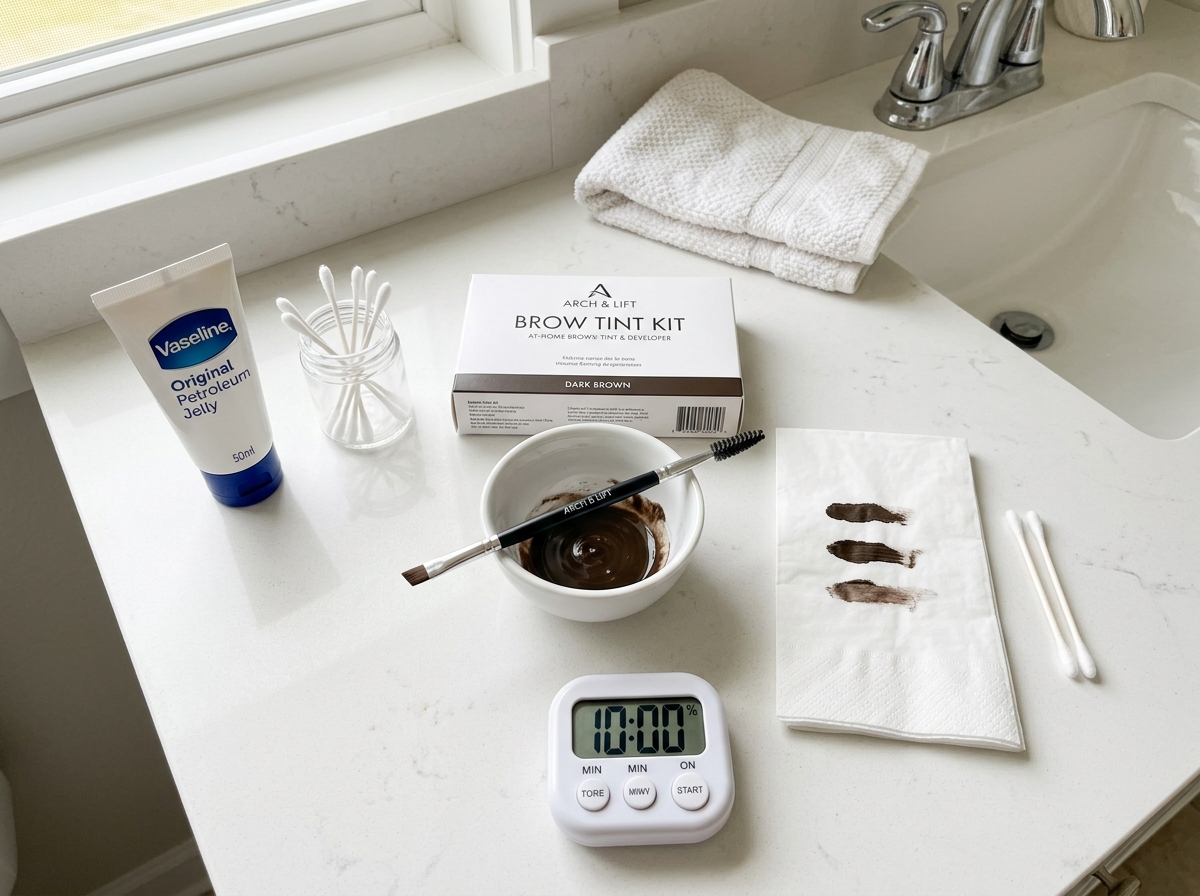
Apply petroleum jelly or a thick barrier cream along the skin immediately surrounding the brow — above the upper edge and below the lower edge — before applying any tint. This barrier prevents the tint from staining the skin around the brow, which is the most common cause of the harsh, tattooed appearance that gives poorly executed at-home tints their reputation. Apply the barrier carefully with a cotton swab, ensuring complete coverage of the brow perimeter without getting petroleum jelly on the brow hairs themselves — which would prevent the tint from adhering to the hairs in that zone.
Processing Time
At-home kit processing times are the most critical variable to control precisely. Under-processing produces patchy, uneven color that fades within days. Over-processing produces a dark, unnatural result that reads as dyed rather than natural. Start with the minimum recommended processing time — typically five to ten minutes depending on the formula — and assess the color on a piece of white tissue before rinsing, which gives a more accurate read of the color achieved than assessing it on the skin. Build processing time in subsequent sessions if more depth is needed rather than extending it in the first session.
Shade Selection
Choose a shade that matches your natural brow color or goes only one shade darker — never the darkest shade available unless your natural brow hairs are already very dark. The most natural-looking tint results come from enhancing the existing brow color rather than dramatically changing it. For blonde or auburn brows, a warm taupe or soft brown produces a more natural result than a true brown or near-black shade regardless of the look you are trying to achieve.
Which Option Is Right for You
The honest answer is that the right choice depends on your individual priorities — and both options are genuinely viable for different people in different situations.
Choose Professional Tinting If
- You are tinting your brows for the first time and want expert color guidance before developing your own preferences
- You have sensitive skin or a history of allergic reactions to hair dye products and want professional monitoring during the service
- You want the longest-lasting result with the richest, most professionally calibrated color
- You receive other professional brow or lash services — tinting is easily added to an existing appointment with minimal additional time
- Precision matters more than cost — particularly if your brow shape is a key feature of your overall appearance that you prefer to have managed by an expert
Choose At-Home Tinting If
- You are experienced with the product and have completed at least two to three previous sessions with no adverse reaction
- Cost and scheduling are significant constraints and you are willing to invest the time to learn the technique correctly
- Your brow color needs are relatively simple — enhancing existing hair color rather than significantly changing it
- You prefer the flexibility of being able to touch up your tint on your own schedule without salon dependency
- You have completed a patch test within forty-eight hours and had no adverse reaction
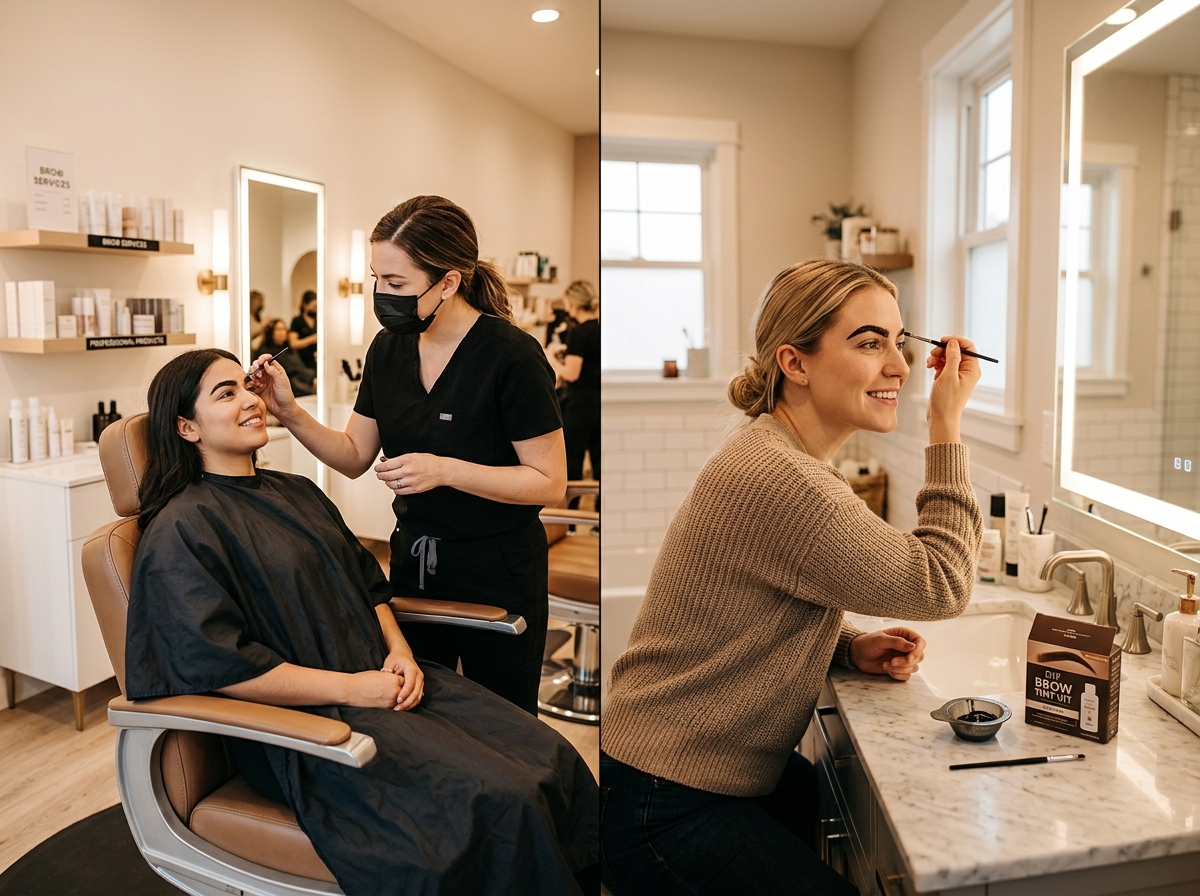
Maintaining Your Tint Result — Regardless of Which Option You Choose
The longevity of a brow tint — professional or at-home — is significantly influenced by the aftercare practices in the days and weeks following the service.
Avoid Water and Sweat for the First 24 Hours
The tint color continues to develop and stabilize for up to twenty-four hours after application. Water, sweat, and skincare products applied to the brow area during this window can disrupt the development process and cause uneven fading that affects both color depth and longevity. Treat the post-tint period with the same care as the post-lamination window — keep brows dry and product-free for a minimum of twenty-four hours after tinting.
Use SPF Around the Brow Area
UV exposure is one of the primary drivers of tint fading — the same sun damage that fades hair color on the scalp affects brow tint in the same way, simply on a smaller scale. Applying a mineral SPF to the brow bone and forehead area as part of the morning skincare routine significantly extends how long the tint color holds its depth and prevents the washed-out, faded quality that brow tints develop in the absence of UV protection.
Avoid Oil-Based Products Directly on the Brows
Oil-based skincare and cleansing products accelerate tint fading by dissolving the color molecules at the hair surface — the same mechanism that causes oil-based products to degrade lash extension adhesive. Use water-based or gel cleansers in the brow area and keep oil-heavy serums and moisturizers away from the brow hairs directly, applying them to the brow bone skin but not onto the hairs themselves. This simple adjustment can add one to two weeks of color longevity to both professional and at-home tint results.
Brow Tinting Is Worth Adding to Your Beauty Routine
Whether you choose the professional route or develop a reliable at-home practice, brow tinting is one of the highest-return beauty investments available in 2026 — particularly in a year when natural, low-maintenance beauty is the dominant aesthetic direction. Defined, colored brows that need no daily product application simplify every morning beauty routine, reduce dependence on brow makeup that can shift or fade throughout the day, and create the naturally polished brow appearance that the soft defined aesthetic requires as its foundation.
For anyone who wants to pair their newly tinted brows with a complete natural eye look — building a morning routine that works beautifully alongside tinted brows without adding unnecessary product — the guide on the morning beauty routine for lash extension wearers covers the full sequence of morning steps that integrates naturally with a low-maintenance brow and lash approach. For the most authoritative and up-to-date editorial guidance on brow tinting products and techniques from professional beauty editors and brow specialists, the Byrdie guide to eyebrow tinting is one of the most comprehensive references available — covering both professional and at-home approaches with expert input from trained brow technicians.