A baby brow lift is targeted partial brow lamination: a professional uses chemical products to redirect selected brow hairs rather than treating the whole brow. It is not surgery, an injectable treatment, or a lift of the skin. The aim is a small styling adjustment, such as a tidier front or tail, while keeping the rest of your brow familiar.
What Is a Baby Brow Lift?
The name is studio-specific, not a standardized treatment category. In Byrdie’s reporting on customized brows, brow expert Jasmine Imani describes her studio’s Baby Lifts as partial lamination for unruly areas. That might mean redirecting the front or styling the tail into a more unified silhouette without removing hair.
Another salon may use the name differently. Before booking, ask whether its version involves chemical lamination, which areas it treats, and what else the appointment includes. A cute service name does not tell you the formula or suitability.
Partial Lamination, Full Lamination, and Brow Gel
Full lamination treats a broader area of brow hair; partial lamination targets selected sections. Neither has to produce a dramatically upright finish. The styling plan matters as much as the service label.
Brow gel is different: it temporarily holds hairs in place and washes away with appropriate cleansing. Lamination chemically changes the hairs’ structure to make redirection possible. Treating fewer hairs does not automatically make it gentler or safer, and the result cannot simply be washed off immediately.
Is Partial Brow Lamination a Good Fit?
A consultation is worth considering if you like your overall shape but struggle with one section that will not sit where you want it. Bring that specific concern rather than a request for completely different brows.

If gaps or pale color are your main concern, lamination will not create new hair. Our soft defined brow makeup guide offers a temporary way to explore added definition before choosing a chemical service.
Sensitivity Matters More Than the Service Name
Tell the provider about previous reactions to brow or lash services, sensitive skin or eyes, and any soreness around your brows. Active irritation, broken skin, or weak, damaged hairs are reasons to pause for an assessment rather than assume a smaller treatment is fine.
Ask about the patch-testing requirements for every product proposed, including any optional tint. Professional manufacturer Elleebana’s patch-testing guidance makes an important distinction: a negative test does not guarantee that a reaction will not happen during treatment. Follow your provider’s product-specific testing instructions, and disclose past reactions even if they happened years ago.
What to Discuss at Your Consultation
Work With Your Natural Hair Direction
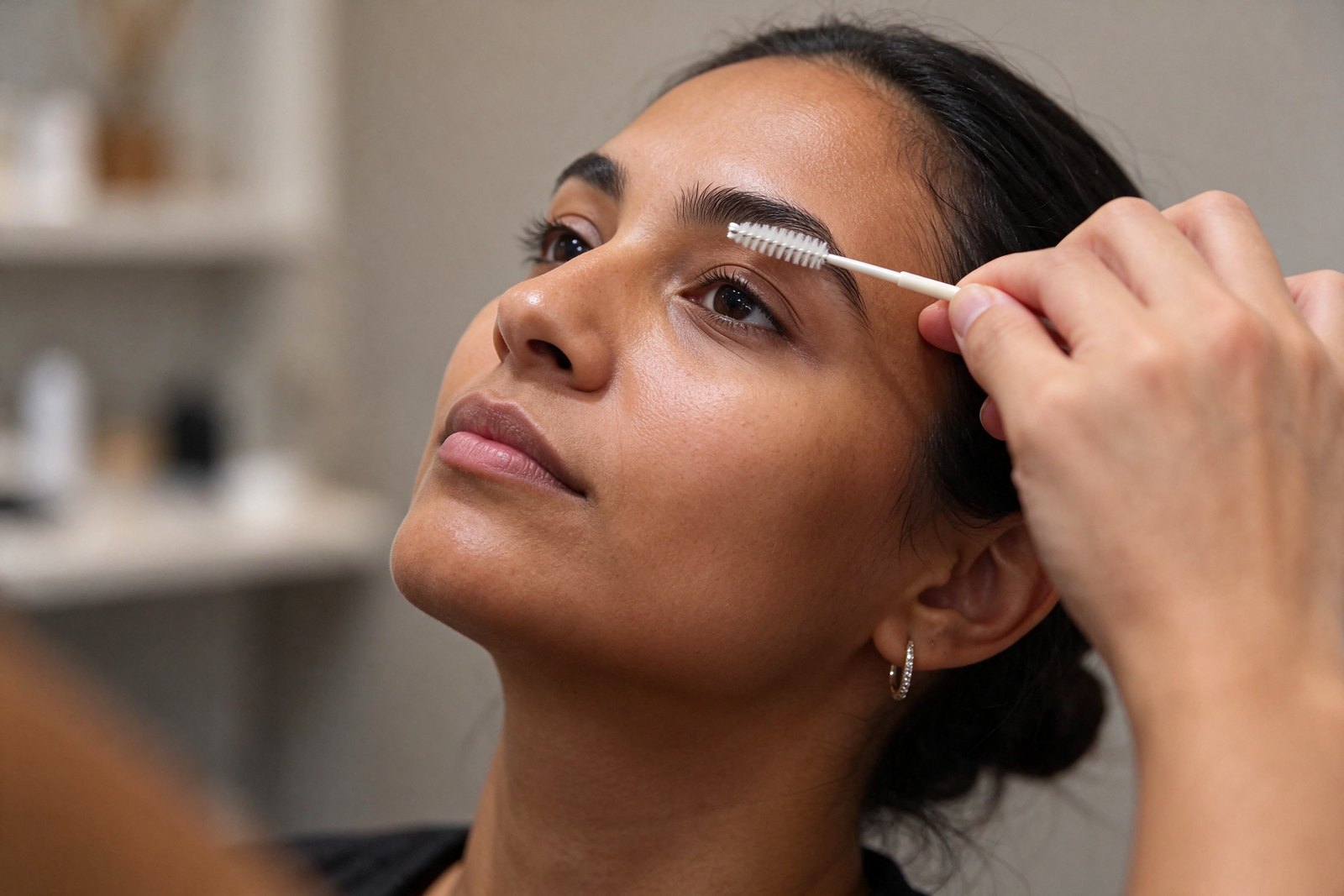
Arrive ready to show how your brows sit without heavy styling. Ask the artist to examine the front, middle, and tail separately, then brush the proposed section into position before chemicals are involved. This preview can help you explain whether you want less lift, a softer front, or a more outward tail.
Look at both brows with your face relaxed and from normal talking distance. Natural growth patterns are not always identical, so discuss a balanced result rather than demanding perfect symmetry.
Share Your Treatment and Skincare History
Give the dates of recent lamination, tinting, bleaching, henna, microblading, and other brow treatments. Mention nearby facial procedures too. Your provider needs that history to assess whether the area is ready and whether previously processed hairs could be treated again.
Bring a list of skincare products used around the brows, especially retinoids, exfoliating acids, and prescription treatments. Do not stop prescribed medication to fit an appointment. Ask your prescriber for advice if the provider identifies a concern. Disclose brow growth serums as well, rather than deciding which products seem relevant yourself.
Confirm Exactly What You Are Booking
Ask which sections will remain untreated, whether tinting or hair removal is optional, and whether the price includes those extras. You can request a direction-focused consultation without agreeing to a darker tint or a new shape.
Ask about the artist’s training with the lamination system being used. A useful explanation should connect the proposed treatment to your hair condition and desired finish. If the answer is simply that a baby lift suits everyone, keep asking or choose another provider.
Set Realistic Expectations Before You Commit
A successful styling adjustment may look subtle. Redirecting existing hairs can change the outline, but it cannot replace missing density, move the brow’s underlying position, or guarantee identical results on both sides.
Expect a result that wears over weeks rather than an effect you can remove that evening. Ask your artist what is realistic for your brows, including how much daily brushing or makeup may still be needed. Photos are useful references, not promises.

If you are unsure about the silhouette, try makeup first. Our guide to previewing flatter brows without over-plucking shows how directional styling can help you assess a different outline without committing to chemical processing.
Plan Aftercare Before Leaving the Studio
Get Instructions for Your Specific Treatment
Request written guidance covering cleansing, water exposure, exercise, makeup, brushing, and any recommended conditioning product. Ask whether instructions differ for the treated and untreated sections. Follow the system your artist actually used rather than mixing advice from several salons.
Our brow lamination aftercare guide can help you prepare questions, but your provider’s current product-specific directions should take priority. Discuss upcoming workouts, swimming, or events before booking so you can decide whether the care requirements fit your schedule.
Know When to Contact Your Provider
Speak up immediately if treatment feels uncomfortable. Afterwards, report persistent redness, itching, unusual dryness, or hair breakage instead of trying another chemical product to correct it. Significant swelling, eye symptoms, or a worsening reaction need prompt medical advice.
Before leaving, save the studio’s contact details and ask who handles follow-up questions. Find out whether a review appointment is available if the styling does not match your agreed plan. For a first treatment, allow room in your schedule to assess the finish rather than booking immediately before an important event.
If you dislike the finish, contact the artist rather than attempting a home chemical reversal. Arrange any future treatment around a fresh assessment of hair and skin condition, not an automatic calendar reminder. A smaller adjustment still deserves a thorough consultation.