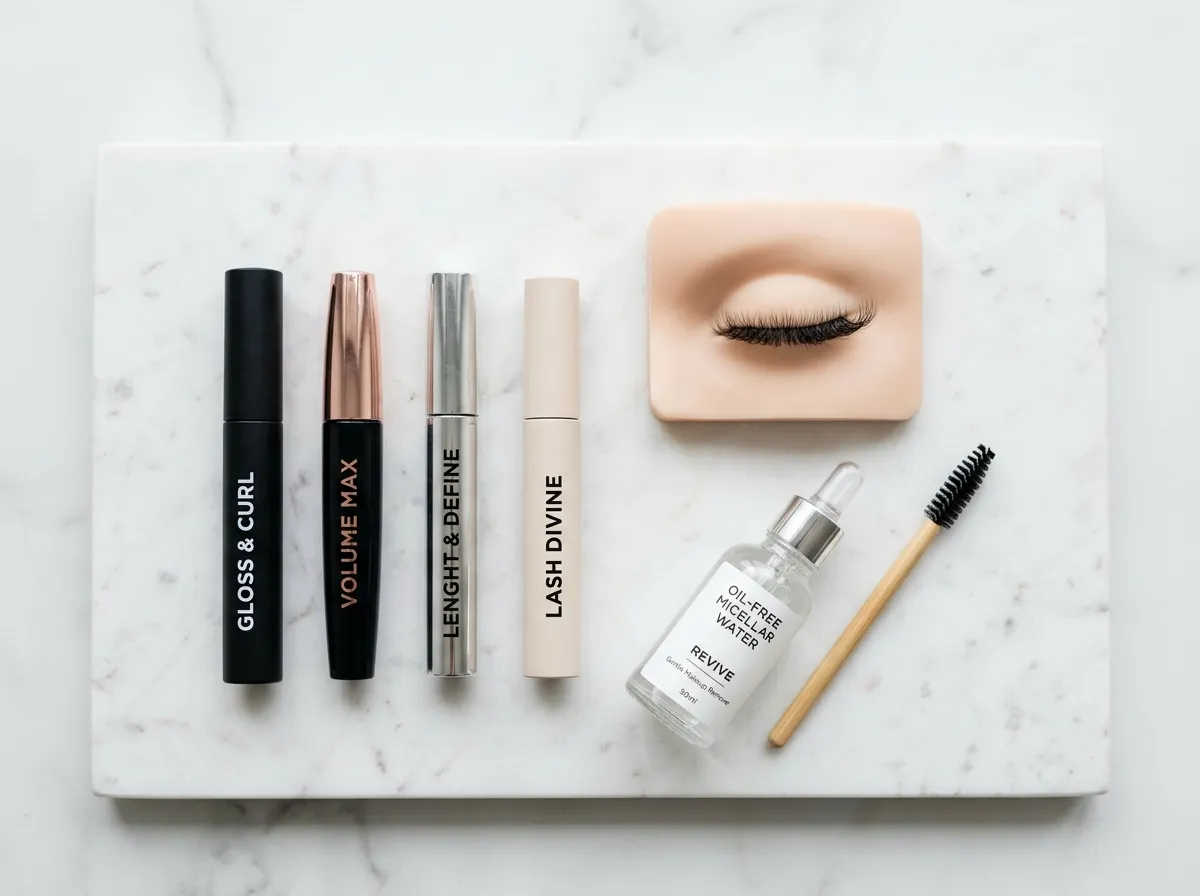
One of the most common questions lash extension wearers ask is whether they can still wear mascara — and the honest answer is: sometimes, with the right product and the right technique. The idea that mascara and extensions are completely incompatible is a myth. The reality is more nuanced. Certain mascara formulas are genuinely damaging to extension bonds and natural lash health when worn regularly. Others are formulated in ways that are entirely compatible with extensions and can be used safely to add definition to the lower lashes or a touch of extra intensity to extension tips when a fill appointment is still a week away.
Understanding the difference — and knowing specifically what to look for on an ingredient list and what to avoid — is the knowledge that allows you to wear mascara confidently without compromising your extensions, your natural lashes, or your retention. This guide covers all of it.
Why Most Regular Mascara Damages Lash Extensions
Before getting into which mascaras work with extensions, it is worth understanding precisely why so many standard formulas cause problems. This understanding makes the ingredient and formula guidance that follows feel logical rather than arbitrary — and it helps you make better decisions when you are evaluating products that do not fit neatly into a labeled category.
The Oil Problem
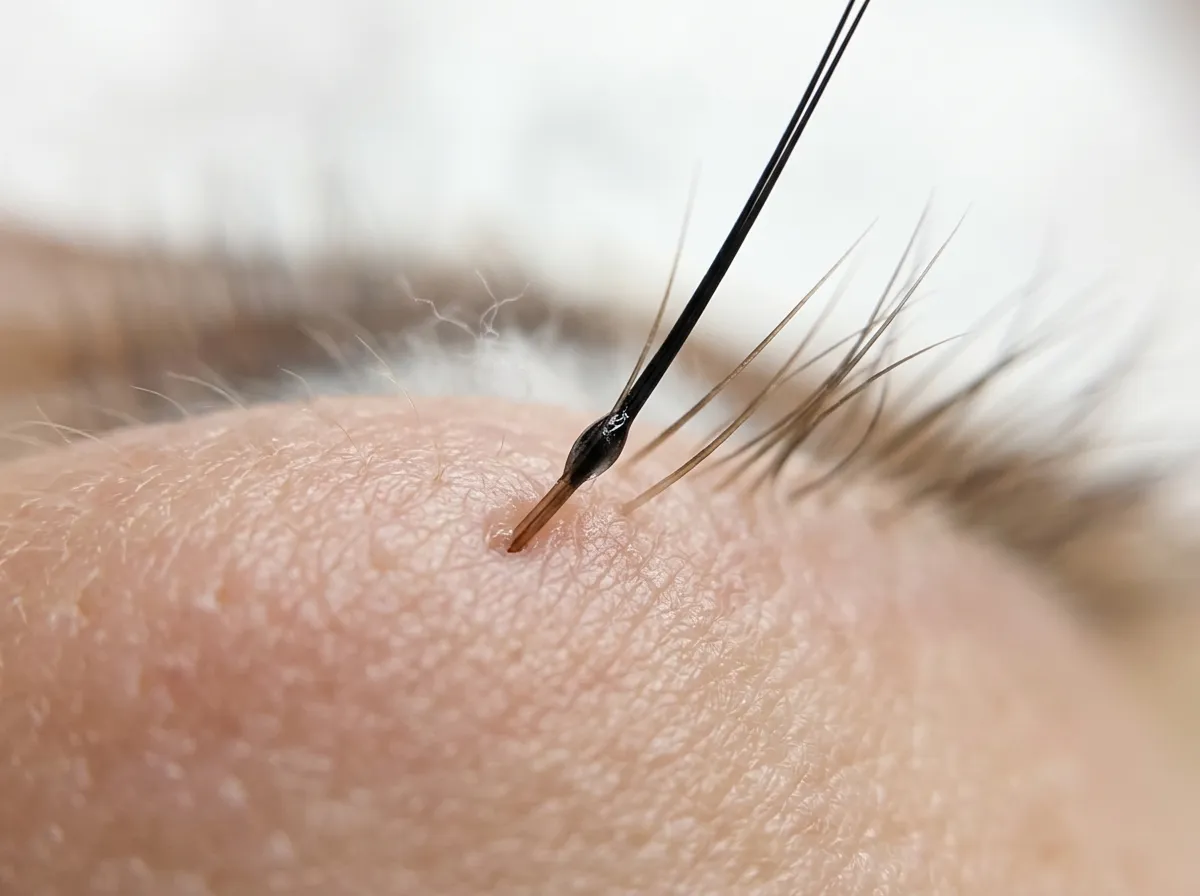
The single most damaging ingredient category for lash extension bonds is oil. Cyanoacrylate — the adhesive used in professional lash extension application — breaks down when exposed to oil consistently over time. The degradation is gradual rather than immediate, which is why oil-based products near the lash line do not cause extensions to fall off instantly but do cause significantly accelerated bond weakening and shortened retention cycles when used regularly.
Many standard mascara formulas contain oils as conditioning agents — mineral oil, coconut oil, argan oil, castor oil, and vitamin E oil are among the most common. These ingredients serve a legitimate purpose in a standard mascara context, where they prevent the lash fibers from becoming brittle and help the formula blend and coat smoothly. In an extension context, however, they are the primary cause of premature bond failure. Checking the full ingredient list of any mascara before using it with extensions — not just the front-of-pack claims — is non-negotiable.
The Waterproof Formula Problem
Waterproof mascaras present a different but equally significant issue. The polymers that make a formula waterproof create a coating on the lash that requires an oil-based or solvent-based remover to dissolve at the end of the day. When that removal process is performed near extension bonds — as it inevitably is when the mascara is applied to extension-bearing lashes — the remover itself becomes the agent of bond degradation rather than the mascara formula. Waterproof mascara on extensions creates a situation where you are either leaving the product on too long or removing it with a product that damages the bonds. Neither outcome is good for retention.
The Fiber Formula Problem
Fiber mascaras — formulas that contain synthetic micro-fibers that adhere to the lash tips to extend apparent length — can cause mechanical damage to extensions when removed. The fibers create a coating that grips the extension surface, and removing that coating requires rubbing or tugging that puts stress on the bond junction where the extension meets the natural lash. Over repeated applications and removals, this mechanical stress weakens the bond and can cause premature extension loss even when no harmful ingredients are present in the formula itself.
What to Look for in an Extension-Safe Mascara
An extension-safe mascara is not necessarily a specialty product — although several brands do now market specifically to the extension-wearing community. It is any mascara that meets a specific set of formula criteria that make it compatible with the adhesive bonds and removal practices required in an extension care routine.
Water-Based Formula
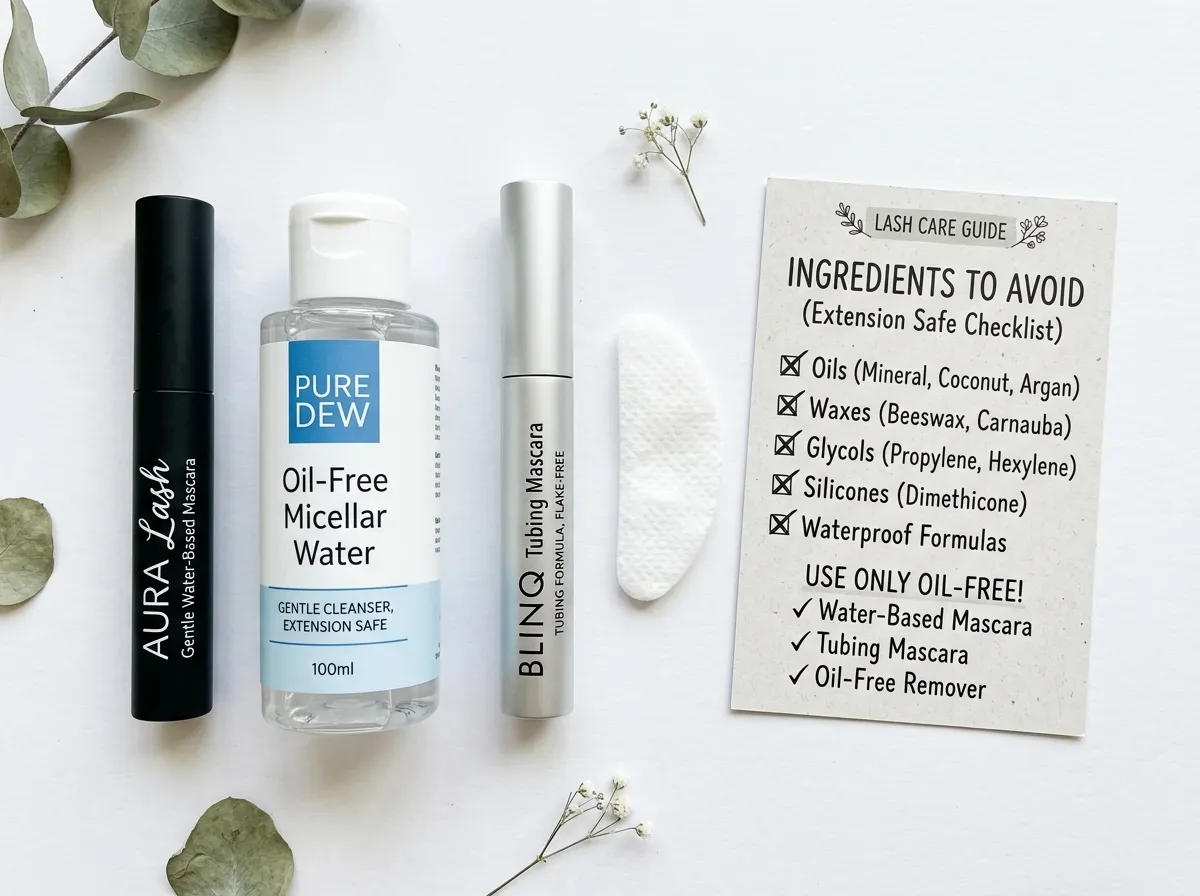
The most important characteristic of an extension-safe mascara is a water-based formula. Water-based mascaras use water rather than oils or solvents as their primary carrier, which means they do not interact with cyanoacrylate bonds in the way oil-based formulas do. They are also significantly easier to remove with an oil-free micellar water or foam cleanser — the same products already recommended in every extension aftercare routine — without requiring the aggressive rubbing or oil-based solvents that damage bonds. Look for water listed as the first ingredient on the formula list, and look for the absence of any oils in the ingredient deck.
Tubing Formula
A tubing mascara is one of the most extension-compatible formula types available. Rather than coating lashes with a traditional film-forming formula, tubing mascaras wrap each lash individually in a flexible polymer tube that slides off cleanly with warm water and gentle pressure — no rubbing, no solvent, no oil required. This removal method is the gentlest possible approach to mascara near extension bonds and is why tubing formulas have become the most widely recommended mascara type within the lash extension community. The comprehensive guide to the best tubing mascaras for 2026 covers the specific formulas worth considering in this category in detail.
Lightweight and Non-Coating
Beyond the water-base requirement, the best extension mascaras are lightweight and non-coating — formulas that add color and definition without depositing heavy product that builds up on the extension surface over multiple applications. Heavy buildup is difficult to remove without aggressive cleansing, and any cleansing aggressive enough to remove significant buildup is also aggressive enough to stress extension bonds over time. A lightweight, defining formula that removes easily in a single gentle cleanse is significantly better for long-term extension health than a heavy volumizing formula even if the volumizing formula happens to be oil-free.
Where to Apply Mascara When Wearing Extensions
Even with a fully extension-safe formula, where you apply the mascara matters as much as the formula you choose. The application zone is one of the most important factors in whether mascara and extensions coexist successfully or create ongoing retention problems.
Lower Lashes Only — The Safest Approach
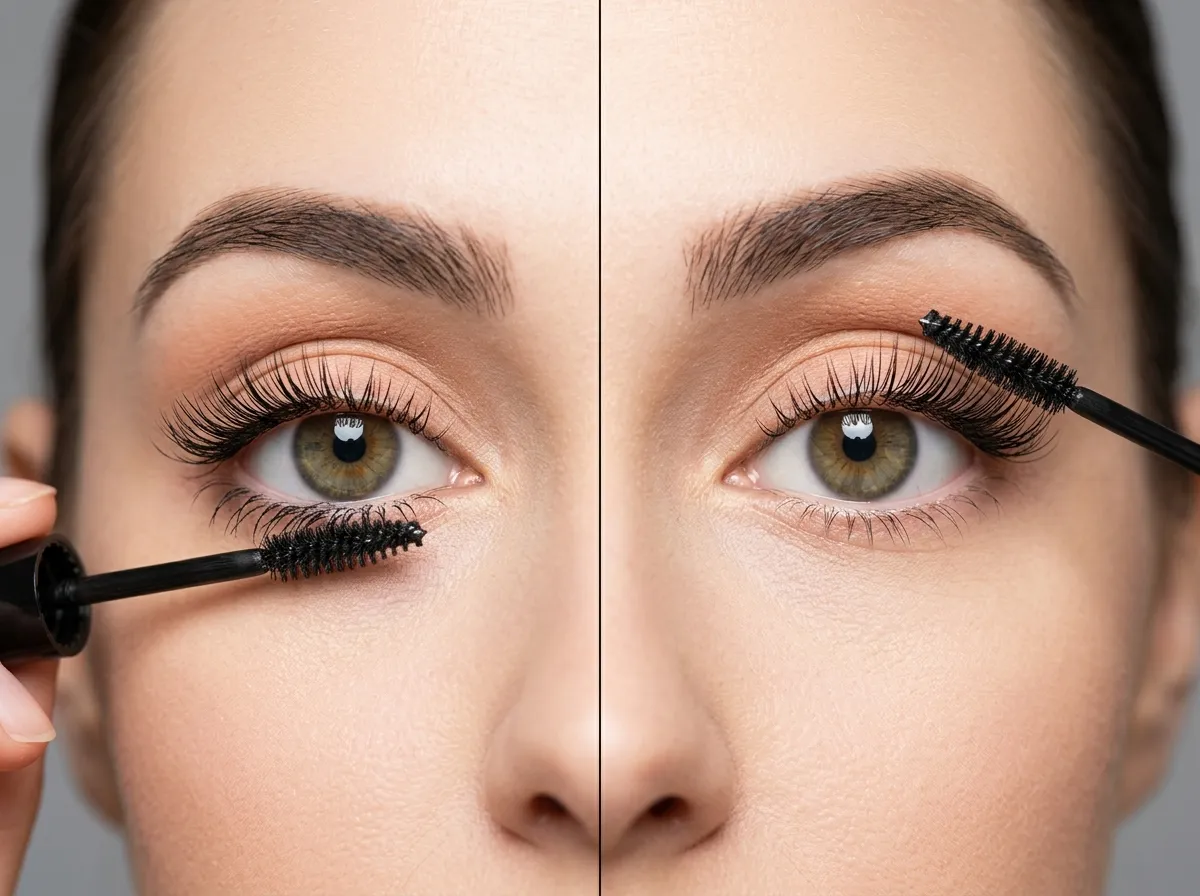
The safest and most universally recommended approach for extension wearers who want to use mascara is to apply it exclusively to the lower lashes. Lower lashes are natural lashes without extensions — there are no bonds to protect, no adhesive to degrade, and no retention concerns. A single coat of any mascara formula on the lower lashes adds definition and completeness to the eye look without creating any risk to the upper extension bonds. This approach is ideal for everyday wear and for anyone who has experienced retention issues in the past when wearing mascara on their upper extensions.
Tips Only on Upper Extensions
When a fill appointment is still a week away, and the extension set is looking less full than desired, applying an extension-safe mascara to the tips of the upper extensions only — never the roots — is the approach most lash artists conditionally recommend. The critical distinction is root versus tip. Applying product at the root brings it into direct contact with the adhesive bond — the most vulnerable point of the extension. Applying it only to the distal tip of the extension keeps the product away from the bond zone and significantly reduces the risk of adhesive degradation. Use a light hand, a single coat, and ensure the formula is fully water-based before attempting this approach.
Never Apply to the Lash Root or Bond Area
Regardless of formula, never apply mascara — or any product — directly to the lash root or the bond area where the extension meets the natural lash. This zone is where the adhesive sits and where any formula interference will have its most immediate and damaging effect. Product buildup at the root is also one of the leading contributing factors to the development of lash microbiome imbalances and blepharitis — conditions that can cause lash loss, eye irritation, and a compromised environment for future extension application.
How to Remove Mascara Safely with Extensions
Removal is where the most extension damage occurs — not during the mascara application itself. A formula that is perfectly extension-compatible can still cause significant bond weakening if it is removed incorrectly at the end of the day.
Use an Oil-Free Micellar Water
An oil-free micellar water applied with a lint-free applicator is the gold standard for mascara removal in the extension-wearing community. Micellar water dissolves water-based mascara formulas effectively without requiring rubbing or tugging, and the oil-free formula ensures no adhesive degradation occurs during the removal process. Apply it to a lint-free pad — never a cotton ball, whose fibers can snag on extension tips — and hold it gently against the lower lash line for ten to fifteen seconds before wiping away with a single light downward stroke.
Use a Lash Extension Cleanser for Residue
After micellar water removal, cleansing the lash line with a dedicated lash extension-safe foam cleanser removes any remaining mascara residue and ensures the bond area is completely clean before the next day’s application. This two-step removal process — micellar water followed by foam cleanser — is the most thorough and bond-safe approach to mascara removal for extension wearers and is worth incorporating as a nightly routine rather than an occasional step.
Never Rub or Tug at Extensions During Removal
Mechanical stress — rubbing, tugging, and scrubbing — is as damaging to extension bonds as chemical exposure from incompatible formula ingredients. Always use a pressing and releasing motion rather than a rubbing motion when removing mascara near extensions. If the product is not dissolving with gentle pressure, the formula is not extension-compatible and should not be used on or near your extensions regardless of what the front-of-pack marketing claims.
Ingredients to Always Avoid Near Extensions
Reading ingredient lists is a skill that pays significant dividends for extension wearers evaluating mascara products. The following ingredients — regardless of where they appear on the list — indicate a formula that is incompatible with extension bonds and should be avoided for upper lash application.
Oils to Watch For
- Mineral oil (also listed as paraffinum liquidum)
- Coconut oil (Cocos Nucifera oil)
- Castor oil (Ricinus Communis seed oil)
- Argan oil (Argania Spinosa Kernel oil)
- Jojoba oil (Simmondsia Chinensis seed oil)
- Sweet almond oil (Prunus Amygdalus Dulcis oil)
- Vitamin E oil (Tocopherol — in high concentrations as a carrier)
Other Problematic Ingredients
- Glycols in high concentrations — propylene glycol and butylene glycol can act as solvents that weaken adhesive bonds with repeated exposure
- Alcohol denat — a drying alcohol that can cause extension fibers to become brittle and is often used in waterproof formulas as a quick-drying agent
- Synthetic waxes in heavy concentrations — beeswax, carnauba wax, and synthetic polymer waxes create the same buildup and removal problems as waterproof polymers
For a broader reference on eye cosmetic ingredients and safety standards, the FDA’s guidance on eye cosmetics provides authoritative information on what is regulated in eye area products and what consumers should be aware of when evaluating formulas applied near the eye.
Making the Right Choice for Your Lash Routine
The best mascara for lash extension wearers is ultimately the one that fits your specific routine, your retention history, and your lash goals. If you have never had retention issues and want to experiment with upper lash mascara, start with a water-based or tubing formula applied to tips only and evaluate the impact on your next fill appointment. If retention has been a persistent challenge, restricting mascara to the lower lashes only — where it causes zero bond interference — gives you the eye definition you want without adding any additional variable to an already delicate situation.
What matters most is making the choice with accurate information rather than marketing claims. A mascara labeled as extension-safe is only genuinely safe if the ingredient list supports that claim — and reading that list, knowing what to look for, and understanding why certain ingredients cause the problems they do puts you in control of your own lash health in a way that no product label can replicate.
For the complete picture of how mascara fits into a broader extension care and maintenance routine, the guide on avoiding and fixing lash damage after extensions covers the cumulative effects of product choices on natural lash health over time — an essential read for anyone who wears extensions regularly and wants to protect their natural lashes for the long term. For an independently tested and regularly updated guide to the best mascaras across all formula types, Allure’s best mascara guide is one of the most rigorous and trustworthy editorial references available when evaluating specific product options.