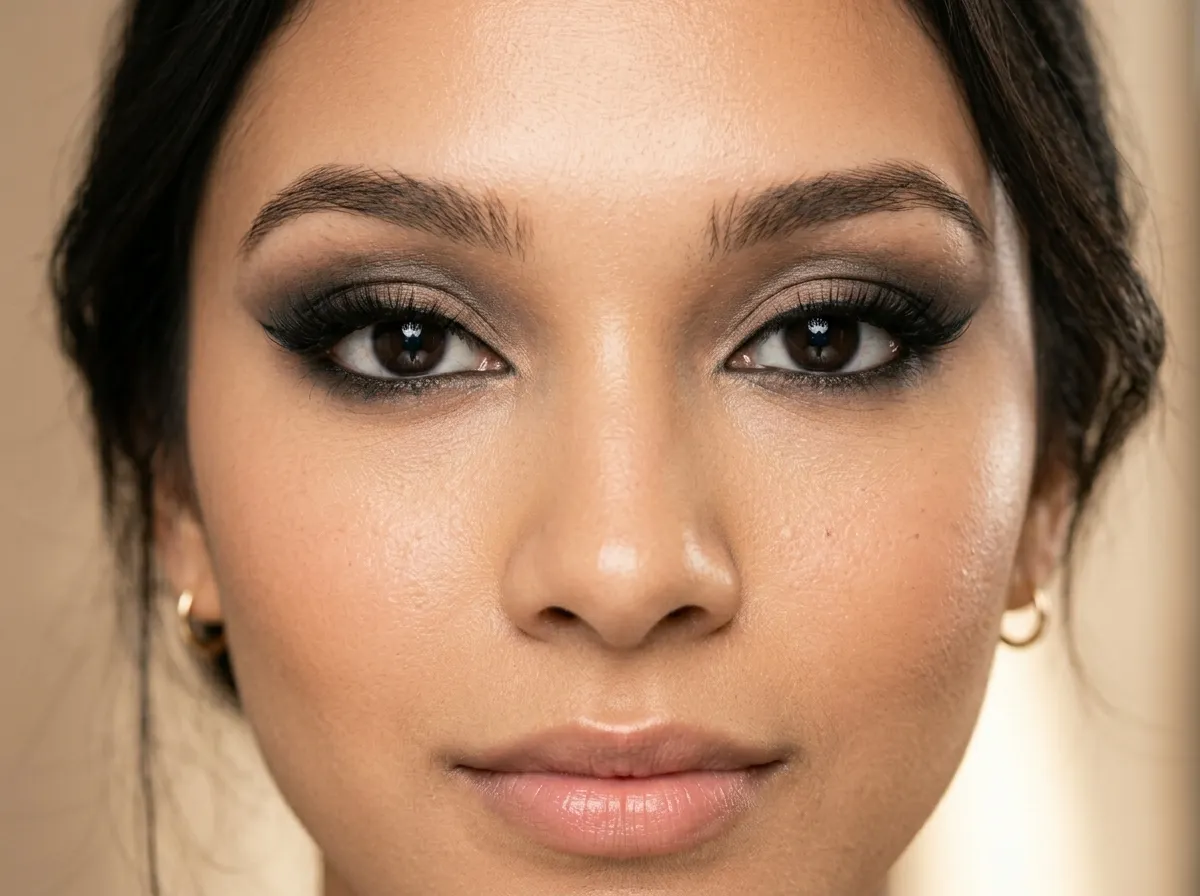
Hooded eyes are one of the most common eye shapes in the world — and one of the most consistently misunderstood when it comes to makeup application. If you have hooded eyes, you have almost certainly experienced the frustration of carefully blending a beautiful eyeshadow look in the mirror, only to have it completely disappear the moment you open your eyes and step back. Or spending time crafting a precise winged liner that looks perfect with your eye relaxed, only to find it stamped and smeared onto your upper lid the second you blink.
These are not application mistakes. They are the result of applying techniques designed for other eye shapes to a hooded eye without the adjustments the shape requires. Hooded eyes are not more difficult to work with than any other eye shape — they simply require a different approach. This guide covers every element of an eye makeup routine specifically adapted for hooded eyes — from eyeshadow placement to liner technique to lash choices — so that every product you apply remains visible, intentional, and flattering when your eyes are fully open.
Understanding What Makes Hooded Eyes Different
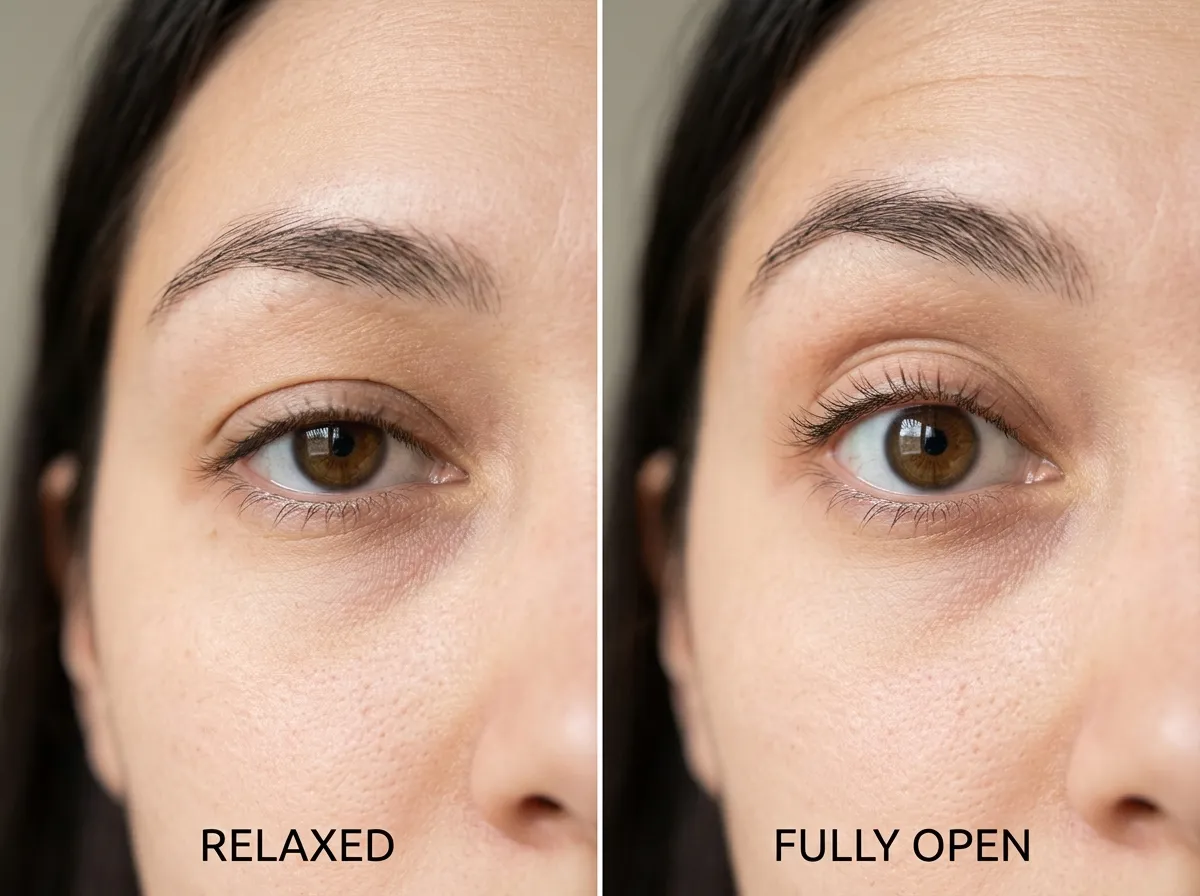
A hooded eye has a fold of skin — the hood — that descends from the brow bone and covers part or all of the upper lid when the eye is open. The amount of visible lid space varies from person to person. Some people have a subtle hood that covers only the outer corner of the lid. Others have a more pronounced hood that covers the majority of the lid surface, leaving only a thin strip of skin visible between the lash line and the descending fold when looking straight ahead.
This variable lid visibility is the central challenge of hooded eye makeup. Any product applied to the hidden portion of the lid — the area covered by the hood when the eye is open — becomes invisible in real life even if it looks stunning in a mirror with a relaxed eye. The solution is not to fight the hood but to redirect your product placement to the visible zones — placing shadow, liner, and definition where it can actually be seen when the eye is open and looking straight ahead.
The Mirror Trap
One of the most important concepts for anyone with hooded eyes to internalize is what makeup artists call the mirror trap — the phenomenon where makeup looks completely different in a close-up mirror with a relaxed eye than it does in real life with the eye fully open. The hood descends more when the eye is relaxed and rises when it is fully open, meaning the visible lid surface changes significantly between the two positions. Always check your hooded eye makeup with your eyes fully open, looking straight into a mirror positioned at eye level — not a close-up mirror held above you, which changes the lid geometry entirely. What you see in that forward-facing, open-eye position is what everyone else sees when they look at you.
Eyeshadow Techniques for Hooded Eyes
Eyeshadow on hooded eyes requires a fundamentally different placement strategy than the crease-based blending approach used on other eye shapes. The crease — the fold of skin where the lid meets the brow bone — is either hidden or not clearly visible on hooded eyes, which means blending into it as a reference point produces results that are invisible when the eye is open.
Place Shadow Above the Natural Crease
The most important adjustment for hooded eye eyeshadow is to place your shadow above where your crease actually sits — higher than feels natural or correct when looking in a close-up mirror. This feels wrong during application because in a relaxed mirror view, the shadow will appear to sit too high on the brow bone area rather than on the lid. When you open your eyes fully and look straight ahead, however, the hood descends and the shadow you placed above the crease becomes the visible focal point of the lid — sitting exactly where it needs to be.
The amount of upward adjustment needed depends on how pronounced your hood is. A subtle hood may only require placing the shadow two to three millimetres above where the crease appears in a relaxed mirror. A more pronounced hood may require placing it significantly higher — essentially on what appears to be the lower brow bone when the eye is relaxed. Always check placement with fully open eyes as you go rather than completing the full application before assessing.
Use Cut Crease Technique for Maximum Definition
A cut crease — where a sharp, clean line of concealer or light shadow is used to create a defined boundary between the lid color and the transition shade above it — is one of the most effective techniques for creating visible lid definition on hooded eyes. By establishing a crisp, deliberate boundary above the hood level, the cut crease creates the impression of a distinct, open lid space even on eyes where visible lid real estate is very limited. The line should be drawn with eyes open, positioned at the lowest point where the hood descends to when the eye is fully open — everything below this line is the visible lid zone, and everything above it is the transition and brow bone zone.
Matte Shades Over Shimmer on the Lid
On hooded eyes, matte eyeshadow on the lid almost always produces more flattering results than shimmer or sparkle. Shimmer expands the surface it covers visually — on a full, open lid this creates a beautiful highlighting effect, but on a hooded lid where space is limited, shimmer can make the lid appear to recede further under the hood rather than come forward. Matte shades define and deepen the visible lid space, creating the impression of more depth and definition without the visual expansion that shimmer produces. Reserve shimmer for a small placement at the very center of the lid or the inner corner, where it creates a specific pop of light rather than an all-over coverage effect.
Blend Upward and Outward — Not Into the Crease
On other eye shapes, blending is directed primarily into the crease in circular or back-and-forth horizontal motions. On hooded eyes, blend upward and outward — angling your brush strokes toward the temple rather than back and forth across a crease that may not be visible. This directional blending lifts the visual weight of the shadow upward and creates the elongating, lifting effect that is the most flattering outcome of an eye makeup look on this shape. It also ensures your shadow is building in the zone that remains visible when the eye is open rather than in the zone that disappears under the hood.
Eyeliner for Hooded Eyes
Eyeliner on hooded eyes requires the same fundamental principle adjustment as eyeshadow — placement must account for what the eye looks like when open, not what it looks like in a relaxed mirror. This is where most liner frustrations on hooded eyes originate.
Draw Liner with Eyes Open
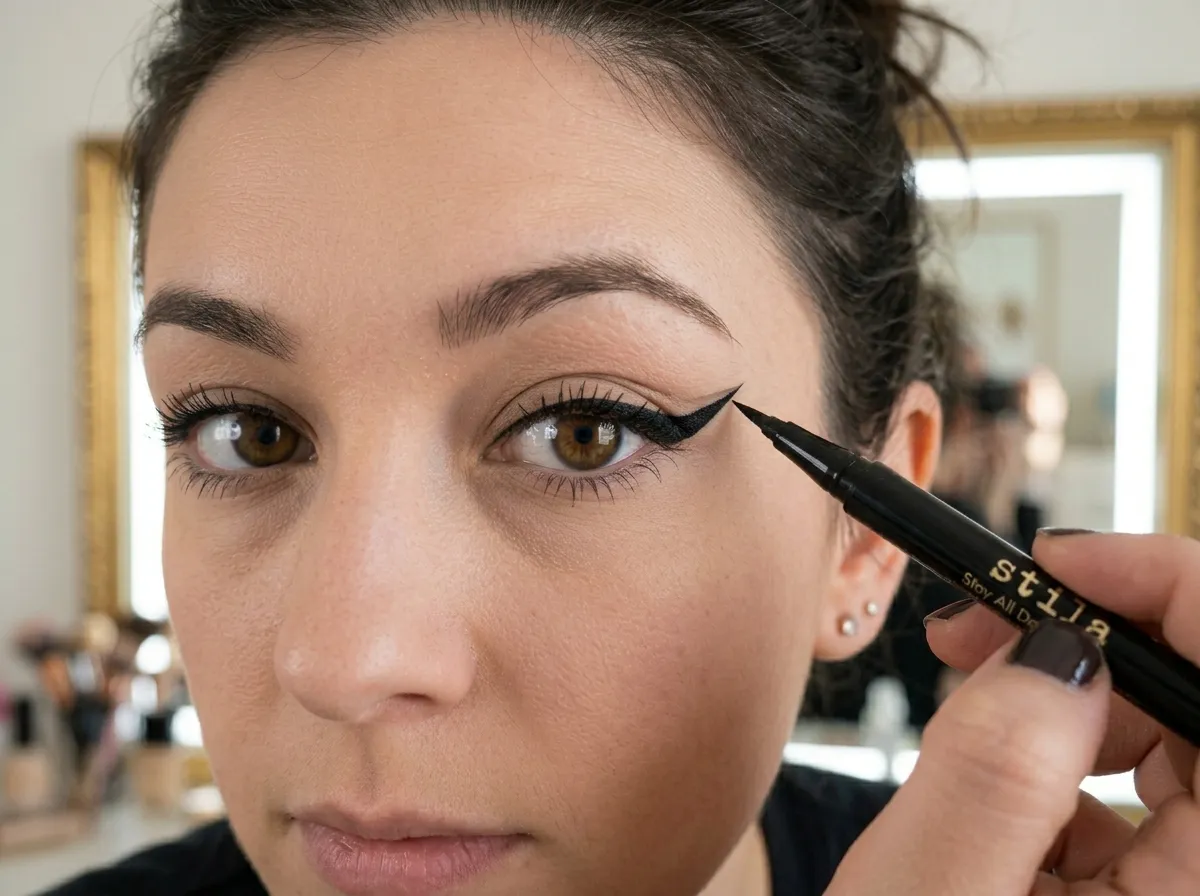
The most transformative adjustment for hooded eye liner application is to draw it with your eyes fully open rather than looking down into a mirror. Hold a mirror at eye level, open your eyes completely, and draw your liner on the visible portion of the lid while looking straight ahead. This ensures the liner sits within the visible zone when your eye is open rather than on the portion of the lid that disappears under the hood. It feels awkward initially — particularly for precise liner work — but produces results that are actually visible in real life rather than perfect in a mirror and invisible in the world.
Skip the Full Upper Lid Line for Everyday Looks
A traditional liner line drawn along the entire upper lash line from inner to outer corner often disappears under the hood on a hooded eye, leaving only the inner and outer corners visible and creating the impression of a disconnected, unintentional liner application. For everyday looks, consider skipping the full lid line and concentrating liner only at the outer third of the upper lash line where it remains most visible — this outer placement creates definition and elongation without the frustration of a full line that partially disappears. Pair this outer liner with tightlining — filling in the upper waterline — for a defined eye that remains fully visible regardless of hood depth. The complete guide to tightlining your waterline for bigger-looking eyes covers this technique in full, and it is one of the single most effective tools in a hooded eye makeup kit.
Wing Placement for Hooded Eyes
The winged liner adjustments for hooded eyes are among the most significant of any eye shape. A wing drawn at the natural outer corner angle — following the lower lash line direction — will either disappear under the hood or stamp onto the upper lid. The hooded eye wing must be placed above the natural lash line, angled more steeply upward than feels correct in a relaxed mirror view, so that it clears the hood and remains visible when the eye is fully open. The complete breakdown of wing placement for hooded eyes and every other eye shape is covered in the guide on winged eyeliner for every eye shape — an essential companion read for anyone working through liner techniques on a hooded eye.
Lower Lash Line Emphasis
Because the upper lid can be a challenging zone for visible liner on hooded eyes, shifting some of the definition emphasis to the lower lash line is a highly effective strategy. A smudged liner or shadow line along the lower lash line — particularly concentrated at the outer corner — creates definition and depth that remains completely visible regardless of what the upper hood is doing. A nude or white pencil on the lower waterline further opens and brightens the eye by creating the visual impression of a larger, more awake eye — a particularly valuable technique for hooded eyes where upper lid space is limited.
Lash Choices That Work Best for Hooded Eyes
Lash selection is one of the most impactful decisions a hooded eye wearer can make — the right lash style can create more visible lift and openness than almost any other product in the routine.
Curl Is Everything
On hooded eyes, lash curl matters more than lash length or volume. A dramatically curled lash — one that sweeps upward and away from the lid — clears the hood and becomes visible from straight ahead, creating an open, awake eye impression that a long but straight lash cannot achieve. Straight or minimally curled lashes on a hooded eye tend to brush against the hood as they grow outward, either disappearing under it or creating irritation from repeated contact. Prioritize CC or D curl lashes for extensions on hooded eyes — these aggressive curl profiles clear the hood most effectively and maintain visibility from every viewing angle. The deep dive into M and L curls for hooded and monolid eyes covers specialist curl options for extreme hood depth where even a D curl may not provide sufficient clearance.
Length Distribution for Hooded Eyes
For lash extension mapping on hooded eyes, concentrate the longest lengths at the center of the eye directly above the pupil rather than at the outer corner as with many other eye shapes. Center-weighted length creates a doll-eye opening effect that lifts the visual center of the eye forward — counteracting the closing-in effect of the hood. Outer-weighted length on a hooded eye can disappear under the hood at the outer corner, where the fold tends to be deepest, wasting the longest lashes where they are least visible. The full framework for bespoke lash mapping for every eye shape provides the complete mapping approach for optimizing extension placement on hooded eyes specifically.
Mascara Application for Hooded Eyes
When applying mascara to hooded eyes, the technique matters as much as the product. Use a zigzag motion at the lash root — wiggling the wand back and forth while pressing it into the base of the lashes before drawing it upward — to ensure maximum product is deposited at the root where lashes need the most lift. Apply at least two coats, allowing each to partially dry before the next, to build the curl-hold that keeps lashes lifted away from the hood throughout the day. A clear lash primer applied before mascara significantly enhances curl retention on hooded eyes by adding grip and weight to the lash base.
Brow Shape and Its Impact on Hooded Eyes
The eyebrow sits directly above the hood and has a more significant influence on hooded eye appearance than it does on most other eye shapes. Brow adjustments — while not strictly eye makeup — are worth addressing in any comprehensive hooded eye guide because they directly affect how much visible lid space is available and how open the eye appears.
Higher Arch Creates More Visible Lid Space
A brow with a higher arch — positioned above the brow bone rather than sitting close to the eye — creates more vertical space between the brow and the lash line, which visually increases the apparent visible lid area on a hooded eye. If your brows are naturally flat or low-set, reshaping them slightly higher — through grooming, brow pencil work, or a professional shaping service — can make a genuinely significant difference in how open your hooded eyes appear, even before any eye makeup is applied.
Avoid Heavy, Low-Sitting Brow Fills
A heavily filled, low-sitting brow on a hooded eye reinforces the closing-in effect of the hood by adding visual weight directly above the already limited lid space. Keep brow filling light and natural — building shape and definition without adding density that pushes the visual boundary further toward the eye.
Putting the Full Hooded Eye Look Together
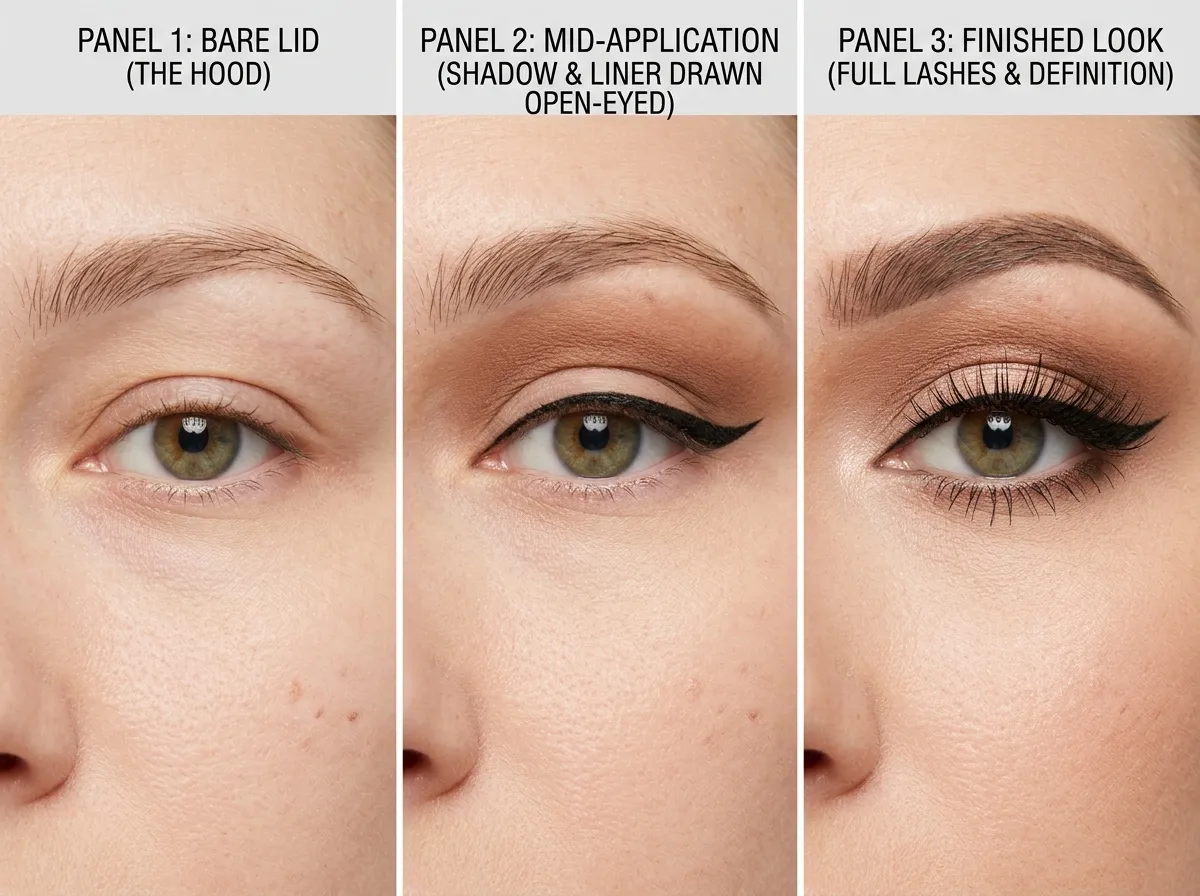
Every technique in this guide works individually to improve the visibility and impact of eye makeup on hooded eyes — but the most transformative results come from applying them together as a cohesive approach. A routine that combines above-crease shadow placement, upward directional blending, open-eye liner application, an aggressively curled lash, and a lifted brow shape produces an eye look that is not just visible but genuinely stunning — eyes that appear open, lifted, dimensional, and fully defined regardless of how pronounced the hood may be.
The key mindset shift that makes all of this work is moving from applying eye makeup the way you have always seen it done — which is almost always demonstrated on non-hooded eyes — to applying it the way your specific eye shape requires. Hooded eyes are not a limitation. They are a canvas with their own set of rules, and once you understand those rules, the creative possibilities are as expansive as for any other eye shape.
For further reference on how professional makeup artists adapt all aspects of an eye look — including eyeshadow, liner, and lash choices — for hooded and other challenging eye shapes, the Byrdie guide to makeup tips for hooded eyes offers expert editorial guidance that complements the techniques covered here. And for anyone who wants to build out a complete eye makeup routine that pairs beautifully with their hooded eye look, the step-by-step smoky eye guide for beginners covers the full shadow blending sequence with specific notes on adapting the technique for different eye shapes including hooded eyes.