
Glasses wearers occupy a unique position in the lash and beauty world — one that is almost never addressed directly. The vast majority of lash guides, extension recommendations, mascara tutorials, and curl advice is written with bare-faced wearers in mind, leaving anyone who wears prescription glasses to figure out independently how their frames interact with their lashes, their extensions, and their eye makeup. The result is that most glasses wearers either avoid lash enhancements entirely out of frustration or spend years making lash choices that do not account for the specific challenges and opportunities that come with wearing frames every day.
Those challenges are real — lashes that are too long brush against lenses and leave smudgy marks. Extensions that are too curled pop up above the frame. Mascara migrates onto the inside of the lens. But the opportunities are equally real — glasses frames amplify the eye area dramatically, making even simple lash choices look significantly more polished, and the right lash length, curl, and style can make the entire glasses-and-lash combination appear intentionally coordinated and beautifully styled. This guide covers everything glasses wearers need to know to get that balance exactly right.
Understanding How Glasses Change Your Lash Needs
Before making any specific lash choices — whether for natural lashes, extensions, or everyday mascara — it helps to understand precisely how wearing glasses changes the visual and practical context of the eye area.
The Lens Distance Factor
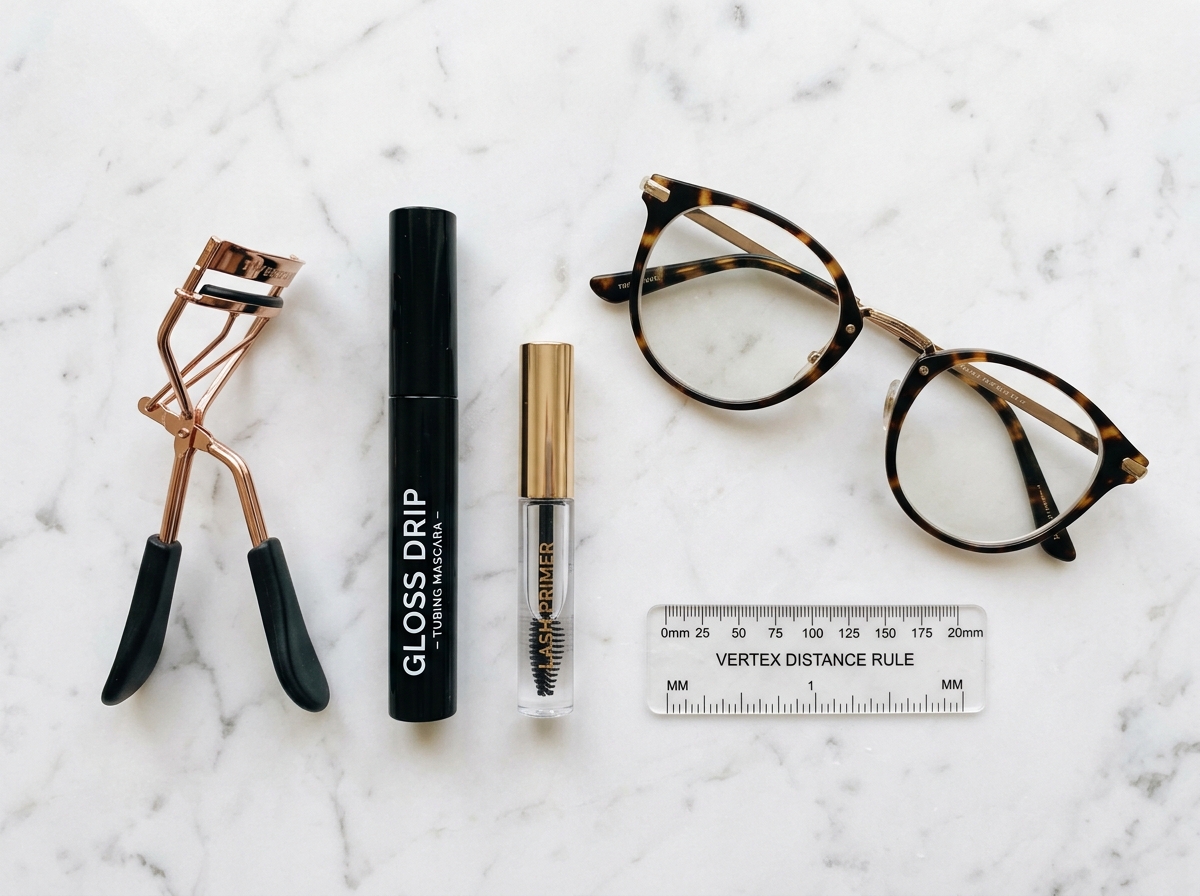
The distance between the back surface of your lens and your eye — called the vertex distance — determines how much clearance your lashes have before they make contact with the glass. This distance varies depending on the frame style, how the frames sit on your nose, and whether you wear high-index lenses that sit closer to the face than standard lenses. Most people who experience lash-on-lens contact have a vertex distance of less than twelve millimetres — meaning any lash that extends more than approximately ten to eleven millimetres forward will brush the lens during the blink cycle.
This is why lash length recommendations for glasses wearers differ so significantly from those for non-glasses wearers. A fourteen or sixteen millimetre extension that looks beautiful on someone without glasses may spend the entire day sweeping against the inside of a lens — depositing mascara residue, bending the lash shape, and creating a distracting smudge directly in the line of vision.
How Frames Affect Perceived Lash Volume
One of the most underappreciated aspects of wearing glasses is how dramatically frames amplify the perceived volume and definition of the eye area. The frame border creates a defined rectangle around the eye that functions similarly to an eye makeup look — it adds structure, draws attention to the eye, and creates a visual context that makes lashes appear more defined and prominent than they would on an unframed face. This means glasses wearers often need less lash volume and length than they might assume to achieve a polished, noticeable lash look — the frames are already doing significant visual work.
Natural Lash Care for Glasses Wearers
For glasses wearers who work primarily with their natural lashes — with or without mascara — several specific care considerations apply that do not affect non-glasses wearers to the same degree.
The Lash-on-Lens Contact Problem
Repeated contact between natural lashes and the back surface of a lens creates two problems simultaneously. The first is cosmetic — mascara, natural lash oils, and skin residue transfer to the lens surface and accumulate throughout the day, creating a smudgy interior surface that impairs vision and requires constant cleaning. The second is structural — the repeated forward pressure of the lens against the lashes during blinking gradually bends them downward rather than allowing them to maintain their natural upward curve, which over time can affect the natural growth direction of the lash.
The solution is a combination of lash curl — directing lashes upward and away from the lens surface — and length management, keeping lashes at a length that clears the lens rather than reaching it. Both of these are covered in the sections that follow.
Curling Natural Lashes for Glasses Wearers
A lash curler is arguably more important for glasses wearers than for anyone else who uses lash products. Curling the lashes upward redirects them away from the lens surface, reducing or eliminating contact during blinking and preserving both the cleanliness of the lens and the shape of the lash. Use the three-position curling technique — base, mid-shaft, and tips — for a gradual, sustained curl that holds throughout the day without a single sharp bend that can cause breakage.
For glasses wearers whose natural lashes are particularly resistant to holding a curl — a common issue in warmer or more humid climates — a keratin lash lift is one of the most practical long-term solutions available. A lash lift permanently curls the natural lash upward for six to eight weeks, eliminating the daily curling step entirely and providing a consistent, lens-clearing curl that requires no daily maintenance. For glasses wearers specifically, the lash lift may be the single most impactful lash service available — it solves the lens contact problem at the root rather than requiring daily management.
Lash Growth Serums and Length Management
For glasses wearers whose natural lashes are long enough to contact the lens regularly, the instinct to use a lash growth serum to make them even longer should be approached with caution. Significantly longer natural lashes will contact the lens more aggressively rather than less. If you use a lash growth serum — and the benefits for lash health and density are genuine — pair it with regular curling to ensure the additional length grows in an upward direction rather than outward toward the lens. The guide on natural lash growth serums — what works and what is hype covers the evidence behind different growth serum ingredients and helps identify which formulas are worth the investment for your specific lash goals.
Lash Extensions for Glasses Wearers
Lash extensions and glasses are a combination that requires specific consultation and planning — but when done correctly, the result is one of the most polished and low-maintenance eye looks available to glasses wearers. The key is working with a lash artist who understands how frames interact with extension length, curl, and mapping.
The Right Extension Length for Glasses Wearers
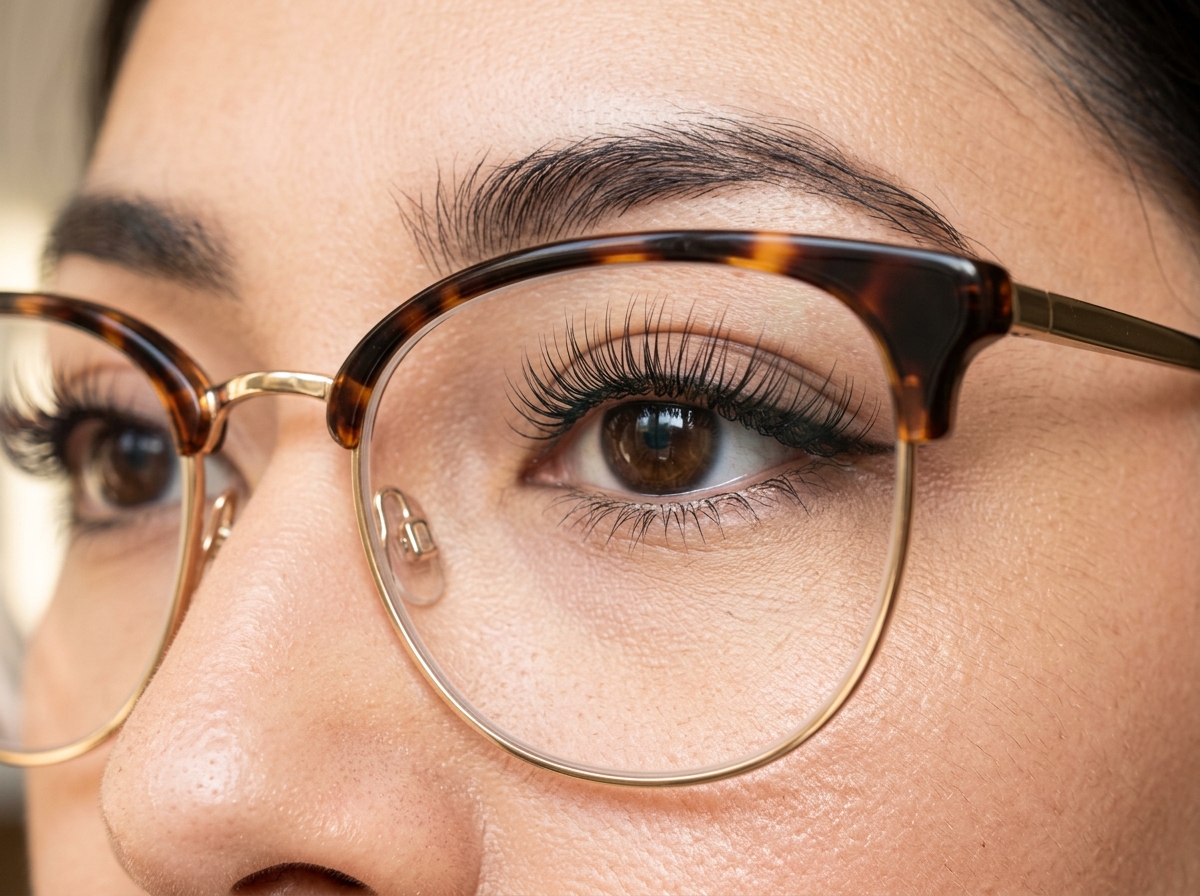
Length is the most critical variable for glasses wearers getting extensions. The general guideline used by experienced lash artists for clients who wear glasses daily is to keep extension lengths two to four millimetres shorter than they would recommend for a non-glasses wearer with the same natural lash length and eye shape. For most glasses wearers, this means working in the eight to eleven millimetre range rather than the twelve to sixteen millimetre range that dominates many extension menus.
Before your appointment, measure your vertex distance — the gap between your lens and your eye — using a millimetre ruler held against the side of your frame. Share this measurement with your lash artist so they can calculate the maximum safe extension length for your specific frame and prescription combination. This simple step eliminates the guesswork that leads to lens contact problems after a new set.
Curl Selection for Extensions with Glasses
Curl selection is equally important as length for glasses wearers. A more aggressive curl — a CC or D curl — redirects the extension tip upward and away from the lens surface more effectively than a softer C curl, which tends to grow outward in a direction that makes lens contact more likely. For glasses wearers, a CC or D curl at a moderate length almost always outperforms a C curl at the same length in terms of lens clearance, lash visibility above the frame, and overall polished appearance.
For glasses wearers with hooded eyes — where the combination of a descending hood and a frame lens creates particularly limited clearance for lashes — specialist curls may be required. The detailed guide on M and L curls for hooded and monolid eyes covers curl options that provide extreme upward lift at the base — particularly useful when standard curls still result in lens contact despite appropriate length selection.
Lash Mapping Considerations for Frames
The frame shape itself should influence the lash mapping approach your artist uses. Different frame shapes interact with different lash maps in different ways — and a map designed without accounting for the frame can produce an extension set that looks beautiful without glasses but awkward or unbalanced when the frames are on.
Round and Oval Frames
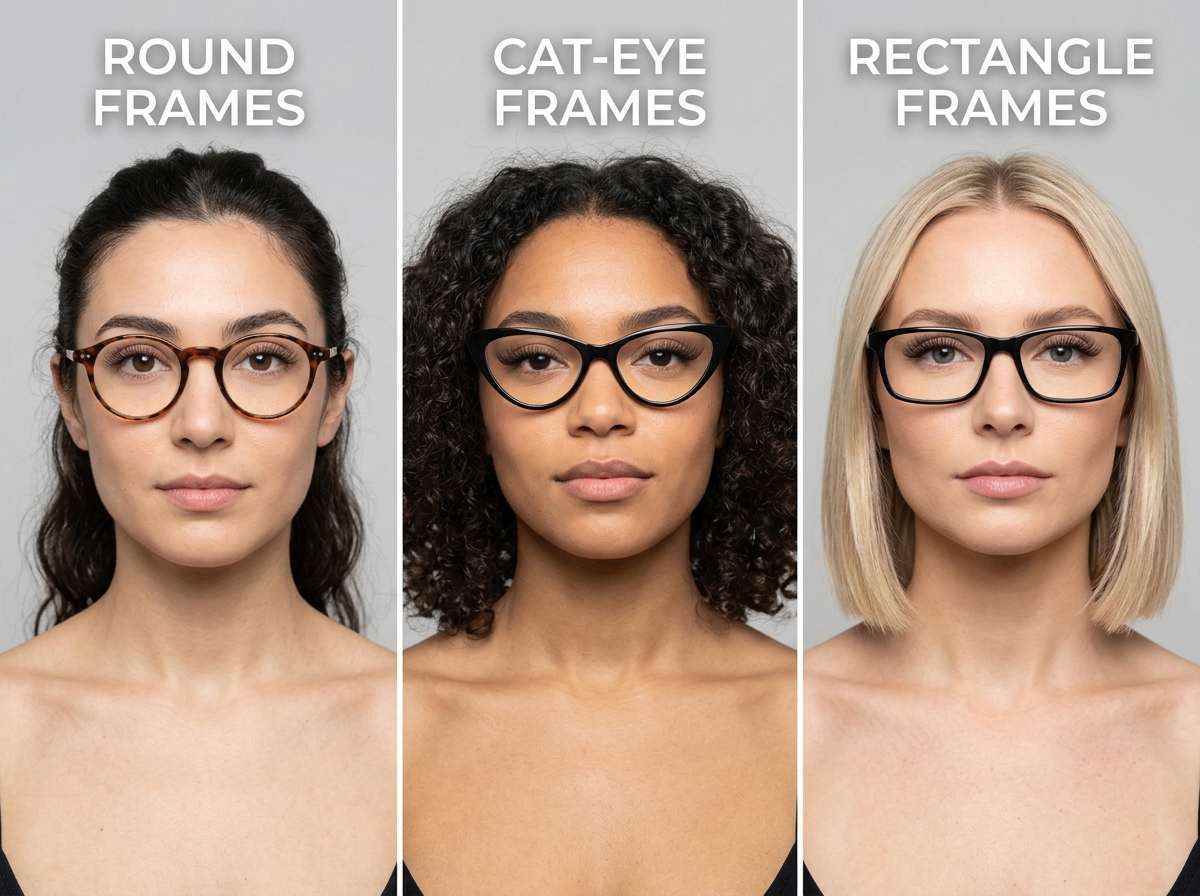
Round and oval frames suit a lash map that concentrates the longest extensions at the center of the eye — directly above the pupil — where they are most visible through the circular or oval lens opening. A cat-eye map that concentrates length at the outer corner can disappear behind the outer edge of a round frame, wasting the longest extensions in the least visible zone.
Cat-Eye and Angular Frames
Cat-eye and angular frames that already have a lifted, elongated shape at the outer corner complement a natural or slightly outer-weighted lash map — the frame provides the cat-eye effect and the lash map simply needs to fill and define rather than create additional angular drama that competes with the frame shape.
Rectangle and Browline Frames
Rectangle and browline frames — which have a strong horizontal emphasis — benefit most from a lash map that adds vertical lift and curl to counterbalance the horizontal dominance of the frame. A center-weighted doll-eye map with an aggressive curl opens the eye upward within the frame’s horizontal structure and creates a balanced, proportional result.
For a complete framework for how lash mapping adapts to different eye shapes — which applies directly alongside frame shape considerations — the guide on bespoke lash mapping for every eye shape provides the foundational mapping principles that experienced lash artists use as the starting point before layering frame-specific adjustments.
Mascara and Eye Makeup Tips for Glasses Wearers
Beyond lash length and curl, the products and techniques used for eye makeup have specific implications for glasses wearers that rarely appear in standard beauty guides.
Choosing Mascara That Does Not Transfer to Lenses
Mascara transfer to the inside of the lens is one of the most common and most frustrating lash problems for glasses wearers. The solution is a tubing mascara formula — which wraps each lash in a flexible polymer tube rather than coating it with a traditional film-forming formula. Tubing formulas do not smudge, flake, or transfer in the way traditional mascaras do, because the tubes themselves are physically stable structures rather than a soft coating that can transfer on contact. For glasses wearers who experience daily lens smudging from mascara, switching to a tubing formula typically eliminates the problem entirely. The comprehensive guide to the best tubing mascaras for smudge-proof lashes covers the specific formulas that perform best in this regard.
Waterproof Formulas for Lens Clearance
In addition to choosing a tubing or smudge-proof formula, glasses wearers benefit from waterproof mascara because it maintains its curl better throughout the day than non-waterproof formulas. A non-waterproof mascara applied to curled lashes gradually relaxes during the day as the formula softens with eye moisture and heat — causing the curl to drop and lashes to drift toward the lens. A waterproof formula locks the curl in position from application through removal, maintaining lens clearance throughout the day without the curl gradually collapsing back toward the glass.
Eye Makeup Placement for Glasses Wearers
Glasses frames create a visual frame within a frame — the eye makeup sits inside the lens opening and is viewed through that border. This means the most impactful eye makeup placement for glasses wearers is concentrated within the lens opening rather than extending beyond the frame edges. Liner that extends past the outer corner of the lens disappears behind the frame — investing effort in it produces no visible result. Shadow that extends to the brow bone may be partially hidden by the top of the frame depending on frame height. Focus your eye makeup energy on the lash line, the lower lash line, and the visible lid space within the lens — where it will be seen clearly and will have the most visual impact.
Maintaining Lash Health with Daily Glasses Wear
Daily glasses wear creates specific ongoing lash health considerations that build up over time if not actively managed. The combination of lens contact, frame pressure, and limited air circulation around the lash line can contribute to gradual lash health issues that occasional wearers do not experience.
Cleaning the Lash Line Regularly
The reduced air circulation around the lash line created by glasses frames — particularly in warm weather — creates a slightly more enclosed microenvironment at the lash root that accumulates oils, debris, and perspiration more quickly than an unframed eye. Regular lash line cleansing — using a gentle foam or micellar cleanser specifically safe for lash extensions if applicable — is more important for glasses wearers than for those without frames. The science behind why lash line hygiene matters at a cellular and microbiome level is covered in depth in the guide on the lash microbiome and eyelid hygiene science — particularly relevant for anyone wearing frames that reduce airflow around the lash line daily.
Checking Frame Fit Regularly
Frames that sit too close to the face — due to incorrect adjustment or nose pad wear — reduce the vertex distance and increase lens contact with lashes over time. Having your frames adjusted by an optician every six to twelve months ensures the fit remains consistent and the vertex distance is maintained at a level that allows your lash choices to work as intended. This is a lash health consideration most people never connect to their optician visits — but the fit of the frame directly determines the practical boundaries of every lash choice you make.
Your Glasses and Lashes Can Work Together Beautifully
The combination of glasses and beautiful, well-maintained lashes is one of the most underappreciated pairings in the beauty world. When the lash length, curl, and style are chosen with the frame in mind — and when the daily care routine accounts for the specific demands that glasses place on lash health and lens cleanliness — the result is a polished, intentional eye look that the frame actually enhances rather than competes with.
For authoritative guidance on how prescription eyewear interacts with eye health and eye area care — including how different lens types and coatings affect the eye environment — the American Academy of Ophthalmology guide to eyeglasses is the most reliable reference available and worth consulting alongside any lash care decisions that involve your prescription eyewear. And for anyone considering a lash lift as a long-term glasses-compatible lash solution, the complete guide to lash lifts and tints as a low-maintenance alternative covers everything you need to know before booking your first appointment.