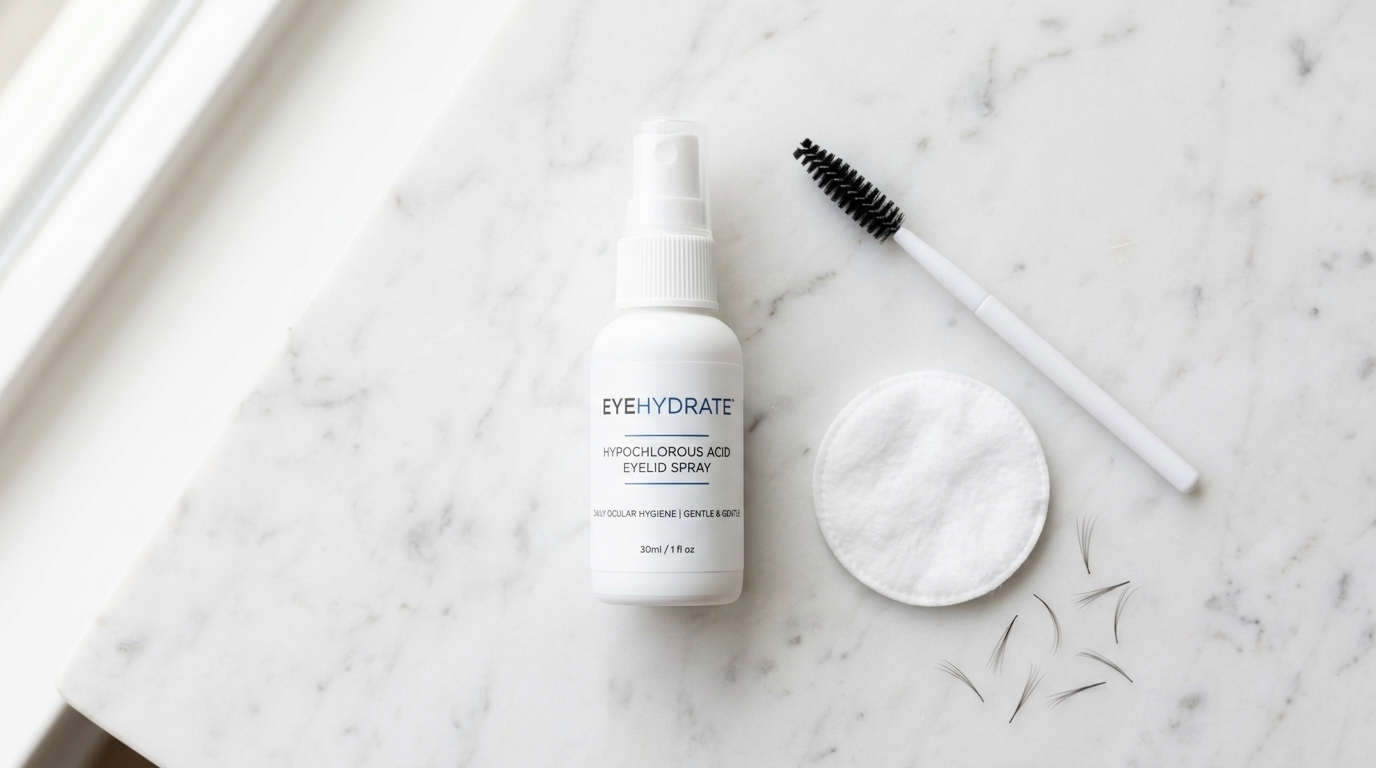
There is a skincare and lash care ingredient that has been quietly building one of the most impressive evidence bases in dermatology and ophthalmology for years — and in 2026, it has finally crossed into mainstream beauty conversations in a significant way. Hypochlorous acid has been used in clinical wound care, post-surgical eye care, and medical-grade eyelid hygiene protocols for decades. Now it is appearing in beauty sprays, lash cleansers, and eyelid hygiene products marketed directly to everyday consumers — and for lash extension wearers, lash lift clients, and anyone who struggles with eyelid irritation, blepharitis, or demodex mites, it may be the most important addition to a lash care routine available in 2026.
This guide explains exactly what hypochlorous acid is, why it works so effectively in the lash and eyelid hygiene context, and how to incorporate it into your routine safely and correctly — whether you wear extensions, get regular lash services, or simply want to maintain the healthiest possible lash line environment for your natural lashes.
What Is Hypochlorous Acid?
Hypochlorous acid — often abbreviated as HOCl — is a weak acid produced naturally by the human immune system as part of the body’s first-line defense against pathogens. When white blood cells encounter bacteria, fungi, or other harmful microorganisms, they produce hypochlorous acid to neutralize the threat. It is one of the most effective antimicrobial agents the body generates — capable of killing a broad spectrum of bacteria, viruses, and fungi within seconds of contact — and it does so without the tissue damage associated with stronger antiseptics like alcohol or hydrogen peroxide.
In a topical formulation, hypochlorous acid is produced through a process called electrolysis — passing an electrical current through a saline solution to generate the same compound the immune system produces naturally. The result is a stable, gentle, highly effective antimicrobial solution that can be applied directly to sensitive tissue — including the delicate eyelid skin and lash line — without causing irritation, dryness, or damage to the surrounding cells.
Why HOCl Is Different from Other Antiseptics
Most antiseptic ingredients work by being broadly destructive — they kill pathogens by destroying cell membranes or denaturing proteins, but they do the same to healthy human cells in the process. This is why alcohol and hydrogen peroxide sting on broken skin and cause dryness with repeated use. Hypochlorous acid works differently. Because it is the same compound the body’s own immune cells produce, human skin cells recognize it as a native molecule rather than a foreign chemical — meaning it eliminates pathogens without triggering the inflammatory response or tissue damage that stronger antiseptics cause. This unique biocompatibility is what makes it appropriate for use on some of the most sensitive tissue on the face — the eyelids and lash line.
Why the Lash Line Needs Dedicated Hygiene
The lash line is one of the most microbiologically complex zones on the entire face. It sits at the intersection of the eye, the skin, the hair follicle, and the meibomian glands — the oil-producing glands that line the upper and lower lid margins and are essential for a healthy tear film. This intersection creates a uniquely favorable environment for the accumulation of bacteria, dead skin cells, makeup residue, and in some cases, demodex mites — microscopic organisms that live naturally in hair follicles but can proliferate to problematic levels when lash line hygiene is inadequate.
Blepharitis and Its Connection to Lash Health
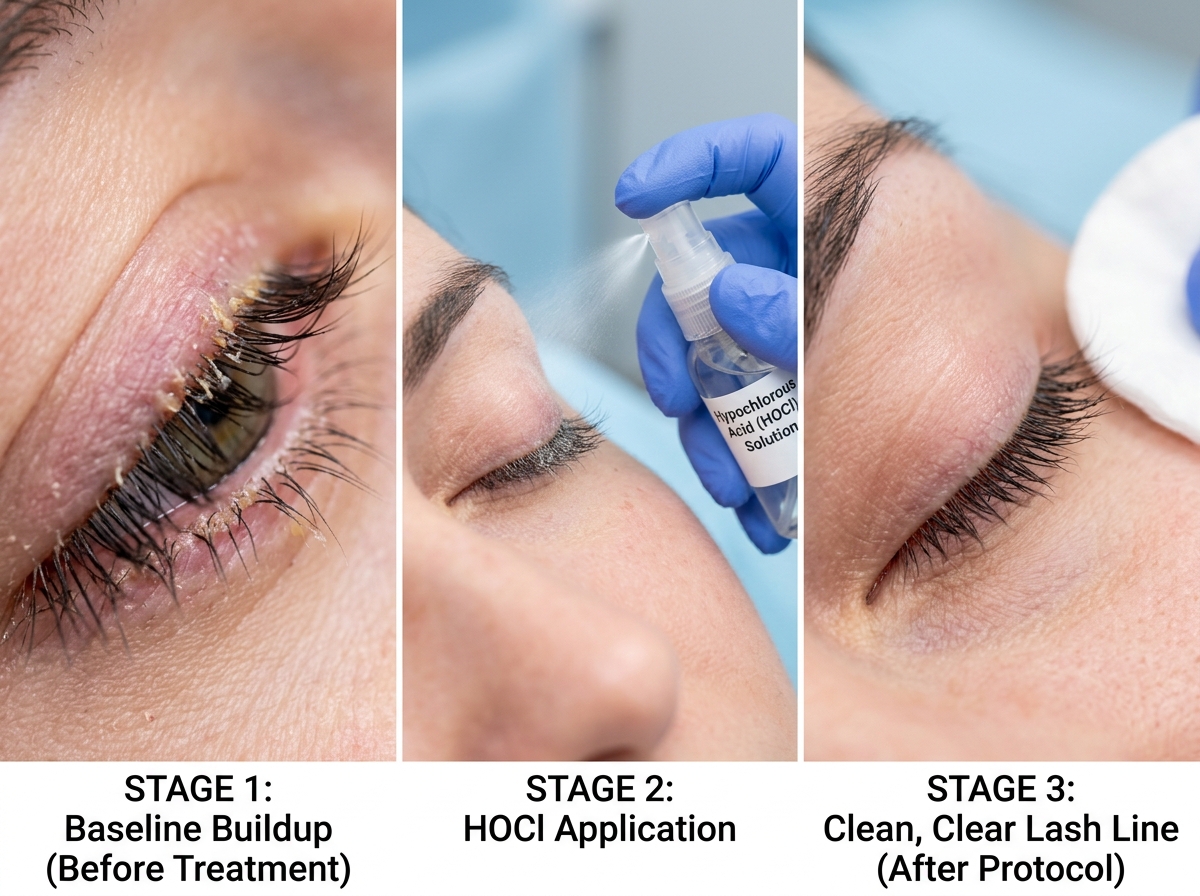
Blepharitis — chronic inflammation of the eyelid margins — is one of the most common eye conditions in the world, and poor lash line hygiene is one of its primary contributing factors. It presents as redness, irritation, flaking, and crusting at the lash base — symptoms that are not only uncomfortable but directly damaging to lash follicle health and, in extension wearers, to adhesive bond integrity. Bacterial overgrowth at the lash line — particularly of staphylococcal bacteria — is the most common cause of anterior blepharitis, and biofilm accumulation at the lash base is what sustains it even when the eye appears outwardly clean.
The full science of how blepharitis, demodex, and the lash line microbiome interact is covered in depth in the guide on the lash microbiome, hygiene science, eyelash health, demodex, and blepharitis — essential reading for anyone who wants to understand why consistent lash line hygiene is not optional but foundational to long-term lash health. Hypochlorous acid addresses the bacterial and inflammatory components of blepharitis directly, making it one of the most clinically supported topical interventions for this condition available without a prescription.
Demodex Mites and Extension Wearers
Demodex mites are present on virtually every adult face in small numbers — they are a normal part of the skin microbiome. The problem arises when their populations grow beyond normal levels, which occurs most readily in environments where lash line hygiene is compromised by product buildup, infrequent cleansing, or conditions that favor their reproduction. Extension wearers are at elevated demodex risk compared to non-extension wearers because the increased surface area of the lash line created by extensions provides more follicular habitat for mite colonization — and because many extension wearers avoid thorough lash line cleansing out of concern for their adhesive bonds.
Hypochlorous acid applied regularly to the lash line creates an antimicrobial environment that is hostile to demodex overgrowth without requiring aggressive scrubbing or the use of harsh cleansing agents that could damage extension bonds. This makes it one of the most compatible demodex management tools available specifically for extension wearers.
The Evidence Behind Hypochlorous Acid for Eye Area Use
The clinical evidence supporting hypochlorous acid for eyelid hygiene is substantially stronger than that behind most beauty ingredients. It has been studied in peer-reviewed ophthalmological research as a treatment for blepharitis, demodex infestation, meibomian gland dysfunction, and post-surgical eyelid care — contexts that require a much higher standard of evidence than typical cosmetic ingredient claims.
Research published in the National Library of Medicine has demonstrated hypochlorous acid’s effectiveness in reducing bacterial load at the eyelid margin, decreasing demodex populations with consistent use, and improving the symptoms of anterior blepharitis — including lash line inflammation, crusting, and follicular irritation — with a safety profile suitable for daily use on the periocular area. This clinical foundation is what distinguishes HOCl from most trending skincare ingredients, which arrive in beauty conversations long before any meaningful evidence has accumulated.
What the Research Means for Everyday Use
The practical takeaway from the clinical evidence is that hypochlorous acid used consistently — once or twice daily on the lash line — produces measurable improvements in lash line hygiene, bacterial balance, and inflammatory markers over time. It is not a product that delivers dramatic immediate results in the way a volumizing serum or a mascara might. It is a foundational hygiene tool that produces its most significant benefits through consistent long-term use — gradually reducing the bacterial and inflammatory burden at the lash line in ways that support healthier follicles, more comfortable eyes, and better retention for extension wearers.
How to Use Hypochlorous Acid in Your Lash Care Routine
Incorporating HOCl into a lash care routine is one of the simplest additions you can make — the application takes under sixty seconds and requires no special technique or equipment beyond a clean spoolie or lint-free applicator.
When to Apply
Hypochlorous acid can be applied morning and evening — or once daily as a minimum effective protocol. Morning application removes any bacterial accumulation that has occurred during sleep, when the closed eye creates a warm, moist environment that encourages microbial activity. Evening application removes the day’s accumulation of makeup residue, environmental pollutants, and sebum from the lash line before sleep. For extension wearers, the evening application is particularly important as it removes any product buildup that could compromise adhesive bonds or contribute to follicular inflammation overnight.
Application Method — Spray Format
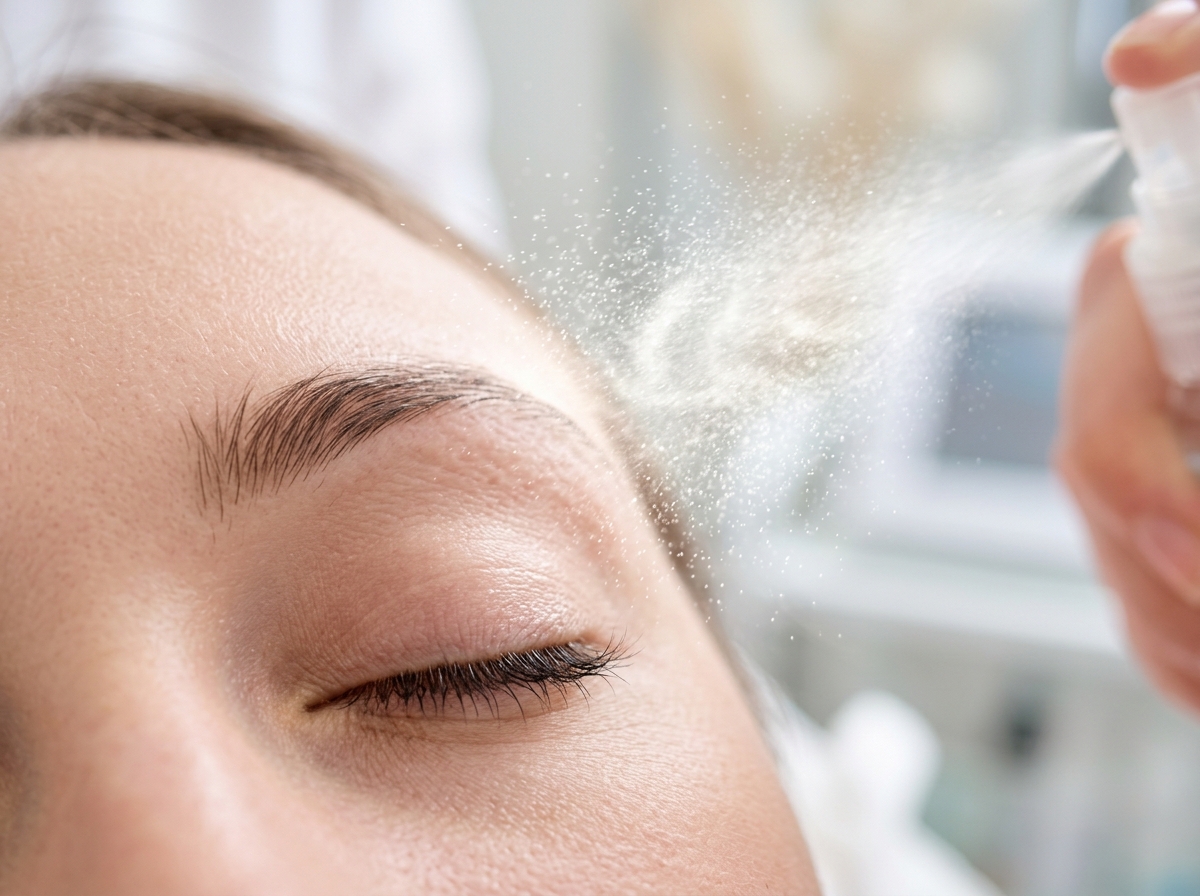
The most common and most convenient hypochlorous acid format for lash line use is a fine-mist spray. Close both eyes and mist the HOCl spray directly onto the closed eyelids and lash line from a distance of fifteen to twenty centimetres. Allow the solution to sit on the lash line for thirty to sixty seconds — this contact time is important for the antimicrobial action to be effective — then gently blot any excess with a clean, lint-free tissue using a pressing rather than rubbing motion. Do not rinse. The residual HOCl continues working as it dries, and rinsing immediately after application removes it before the contact time is sufficient for meaningful antimicrobial effect.
Application Method — Applicator Pad or Spoolie
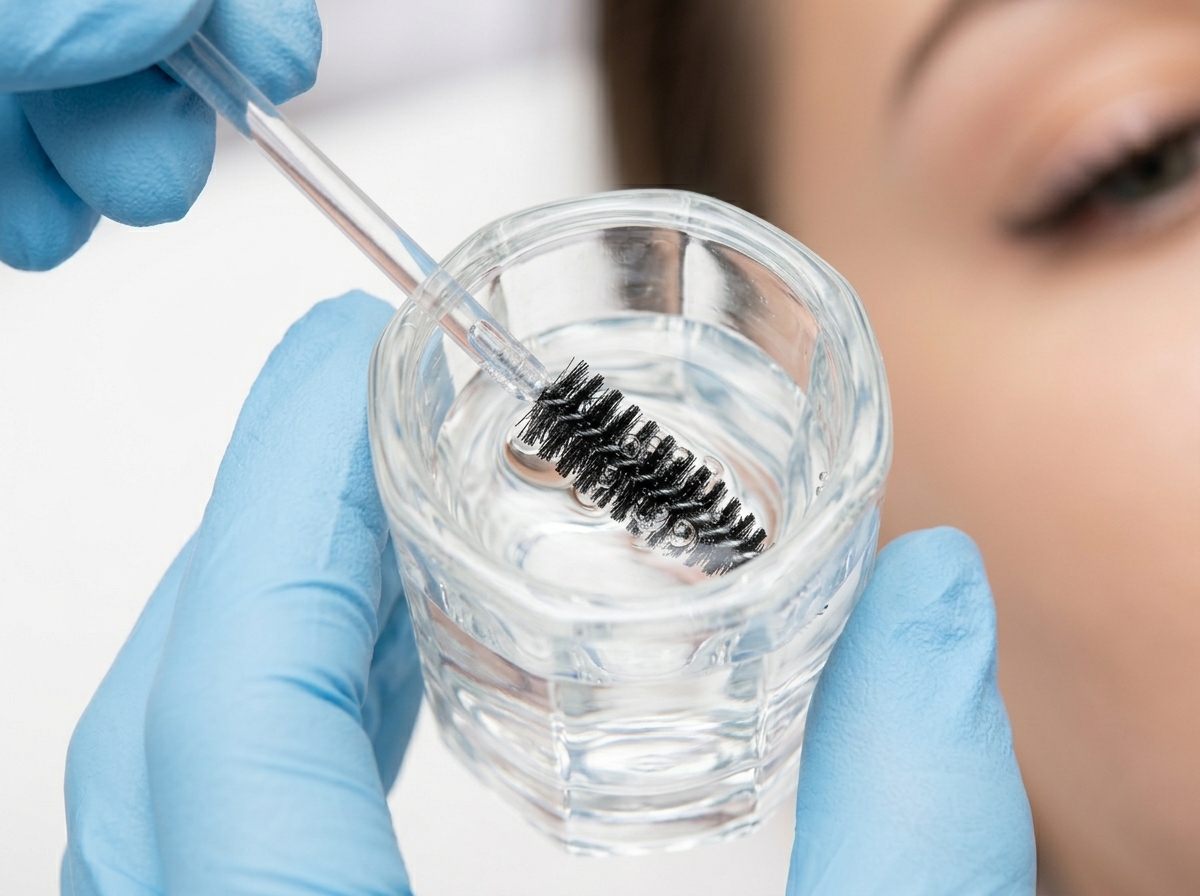
For more targeted lash line application — particularly for extension wearers who want precise placement — saturate a lint-free applicator pad or a clean spoolie with HOCl solution and apply directly to the lash line using gentle strokes along the lash base. This method delivers the solution precisely to the follicular zone where bacterial and demodex activity is highest and avoids any unnecessary product contact with the adhesive bond area. Allow to dry without rinsing. A spoolie application also gently loosens any debris at the lash base — a mechanical cleaning benefit in addition to the antimicrobial chemical action.
Layering with Your Existing Lash Cleanser
Hypochlorous acid works synergistically with a dedicated lash cleanser rather than replacing it. The recommended sequence is to apply HOCl first — allowing the antimicrobial solution to penetrate the lash line and address bacteria and biofilm — then follow with a lash extension-safe foam cleanser to remove any loosened debris, makeup residue, and product buildup that the HOCl has released from the lash base. This two-step sequence — HOCl followed by foam cleanser — represents the most thorough and clinically sound lash line hygiene protocol available for extension wearers.
Who Benefits Most from Hypochlorous Acid
While hypochlorous acid is appropriate and beneficial for virtually anyone with lashes — natural or extended — certain groups stand to gain the most significant benefit from incorporating it into their routine.
Lash Extension Wearers
Extension wearers benefit from HOCl on multiple levels simultaneously. It maintains the antimicrobial environment at the lash line that prevents the bacterial and inflammatory conditions that cause follicular stress and premature lash loss. It supports adhesive bond longevity by keeping the bond zone clean of the biological debris that can physically compromise bond integrity over time. And it provides a gentle, non-aggressive daily hygiene option that does not require the vigorous scrubbing that can dislodge extension bonds when used as a standalone cleansing approach. For anyone who has experienced blepharitis, irritation, or accelerated lash loss while wearing extensions, hypochlorous acid is one of the most evidence-supported interventions available. Understanding how this connects to the broader picture of extension retention is covered in the guide on lash retention in humid climates — where biological factors at the lash line interact with environmental ones to affect how long extensions hold.
Anyone with Recurring Blepharitis or Eye Irritation
For people who experience recurring eyelid irritation, redness, flaking at the lash base, or morning eye crusting — all hallmarks of blepharitis — hypochlorous acid used consistently is one of the most accessible and evidence-supported interventions available without a prescription. The American Academy of Ophthalmology’s guidance on blepharitis treatment acknowledges the role of eyelid hygiene — including hypochlorous acid-based lid scrubs — as a foundational management strategy for this condition. Anyone experiencing persistent symptoms should also consult an eye care professional, but HOCl can be used safely as part of an ongoing management protocol.
Lash Lift and Tint Clients
Lash lift clients benefit from hypochlorous acid in the post-treatment period — the forty-eight hours following a lift when the lash structure is most vulnerable to disruption. HOCl’s antimicrobial action supports the lash line environment during this sensitive healing period without requiring any water contact, rubbing, or product application that could affect the lift result. After the initial forty-eight hour period, incorporating HOCl into a daily routine helps maintain the lash line health that makes lash lifts last longer and perform more consistently. The complete guide to lash lifts and tints as a low-maintenance lash alternative covers the full aftercare protocol that HOCl fits within naturally.
Choosing a Hypochlorous Acid Product for Lash Use
As HOCl has entered the mainstream beauty market, the range of available products has expanded significantly — and not all formulations are equally effective or appropriate for lash line use. A few key criteria help identify products worth using.
Concentration and Stability
Hypochlorous acid is inherently unstable — it degrades over time when exposed to light, heat, and air. Look for products packaged in opaque or UV-protective bottles with a fine-mist spray mechanism that minimizes air exposure during each use. Products with a clearly stated HOCl concentration — typically between 0.005% and 0.02% for cosmetic eyelid use — and a documented shelf life are preferable to those that simply list HOCl as an ingredient without any concentration transparency. A product that has been sitting on a shelf in clear packaging for an unknown period may have degraded to a level where its antimicrobial activity is minimal.
Preservative-Free and Ophthalmologist-Tested
For use on the eyelid and lash line, choose a product that is preservative-free and ophthalmologist-tested — or ideally ophthalmologist-recommended. Preservatives used in some HOCl formulations can cause their own eyelid irritation in sensitive users, which defeats the purpose of using an anti-inflammatory, antimicrobial ingredient. Products specifically marketed for eyelid hygiene — rather than general wound care or skin sprays — are formulated with the sensitivity of the periocular area in mind and are the most appropriate choice for lash line application.
Hypochlorous Acid Is the Lash Hygiene Upgrade Most People Are Missing
In a beauty world full of trending ingredients that arrive with bold claims and thin evidence, hypochlorous acid stands apart — a genuinely well-researched, clinically supported ingredient with decades of safety and efficacy data behind it, now available in accessible, affordable formats that any lash lover can incorporate into a daily routine in under sixty seconds. For extension wearers, lash lift clients, and anyone who takes the health of their natural lashes seriously, it is one of the most impactful additions to a lash care routine available in 2026 — not because it is new, but because the evidence has always been there and the beauty world is finally paying attention.
For the full picture of what a complete, science-forward lash health routine looks like from follicle to tip — incorporating hygiene, nutrition, serum support, and professional services — the guide on natural lash care with oils, serums, and gentle maintenance covers the broader protocol that hypochlorous acid fits within as a foundational hygiene step.