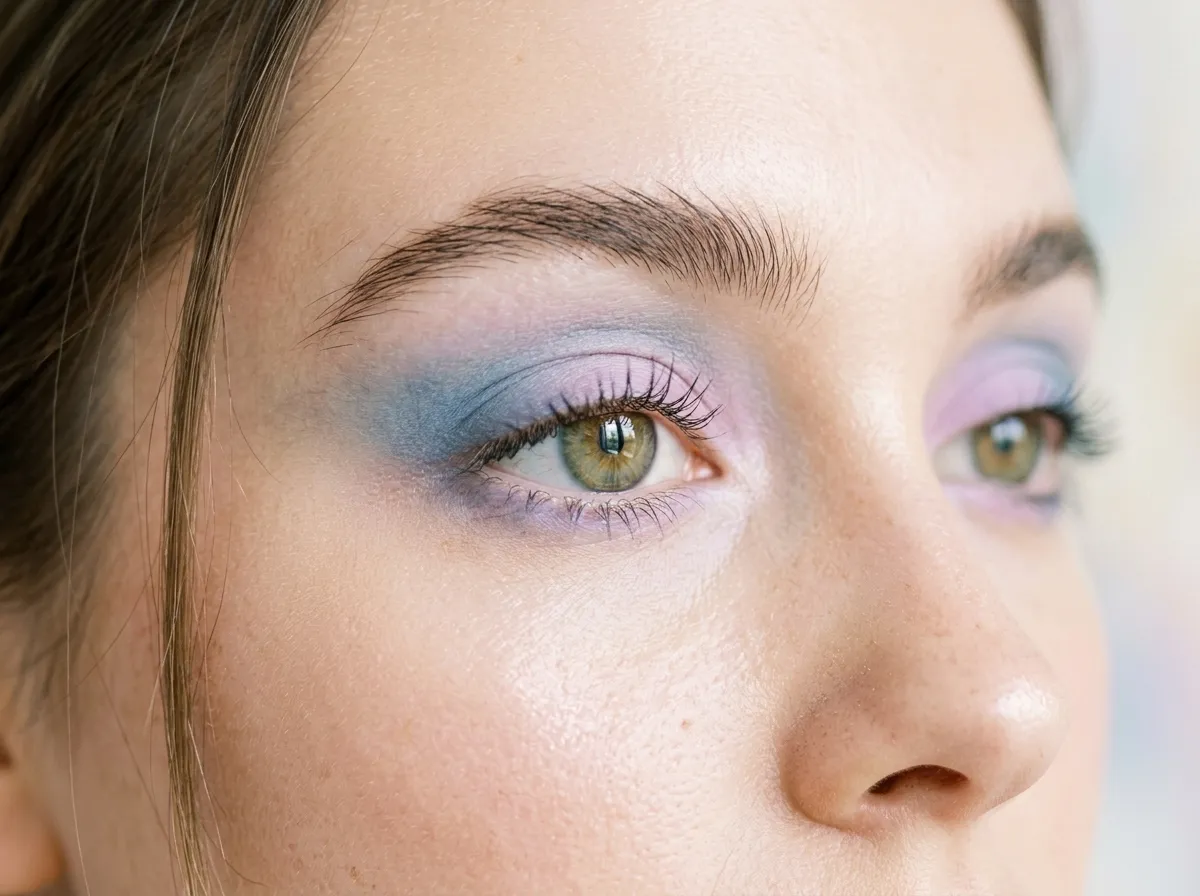
If your eyeshadow routine has felt a little predictable lately — the same neutral palette, the same crease blend, the same finished result — the watercolour eye makeup trend of 2026 is exactly the creative reset you have been waiting for. Seen across runways from Paris to Milan and rapidly filtering into everyday beauty feeds, the watercolour eye is defined by sheer, translucent washes of color blended softly across the lid with no harsh edges, no heavy layering, and no perfectly precise lines. It looks effortless. It looks artistic. And — most importantly for anyone intimidated by intricate eye makeup — it is genuinely forgiving to execute because soft edges and subtle imperfections are not mistakes in this technique. They are the point.
This guide covers everything you need to know to recreate the watercolour eye look at home — from understanding what makes the aesthetic work, to the specific products and techniques that deliver the soft, translucent quality that defines the trend at its best.
What Defines the Watercolour Eye Makeup Trend
The watercolour eye takes its name and its aesthetic directly from the painting technique — thin, translucent layers of pigment that allow light to pass through them and blend organically at their edges without sharp boundaries. In makeup terms, this translates to sheer eyeshadow applied with a light hand, colors that bleed softly into each other at the edges rather than being blocked in precise sections, and an overall effect that reads as a wash of color rather than a deliberate, constructed shape.
What sets the 2026 interpretation apart from softer eye looks of previous years is the color palette. This year’s watercolour eyes are leaning into unexpected, slightly muted tones — dusty blue, faded terracotta, soft sage green, washed-out lavender, pale copper, and cloudy grey — rather than the brights or neons of previous color trends. These softened, almost faded shades create the painted quality that makes the look feel genuinely artistic rather than simply colorful.
How It Differs from a Traditional Eyeshadow Look
A traditional eyeshadow look builds opacity and depth through layering — primer, transition shade, lid color, crease work, highlight, liner. The goal is a polished, structured shape with clean transitions between defined zones. The watercolour eye inverts almost every one of these principles. Opacity is minimized rather than built. Structure is dissolved rather than defined. Transitions are blurred to invisibility rather than cleanly demarcated. Even the liner — if used at all — is deliberately smudged or replaced with a soft shadow line that has no hard edge.
This is why the watercolour eye feels so fresh in 2026’s beauty landscape — it is a genuine departure from the precision-driven, heavily blended technique that has dominated editorial eye makeup for years. It rewards a lighter touch and a more intuitive approach, making it one of the most accessible trend looks for people who find structured eye makeup intimidating.
The Products That Create a Watercolour Effect
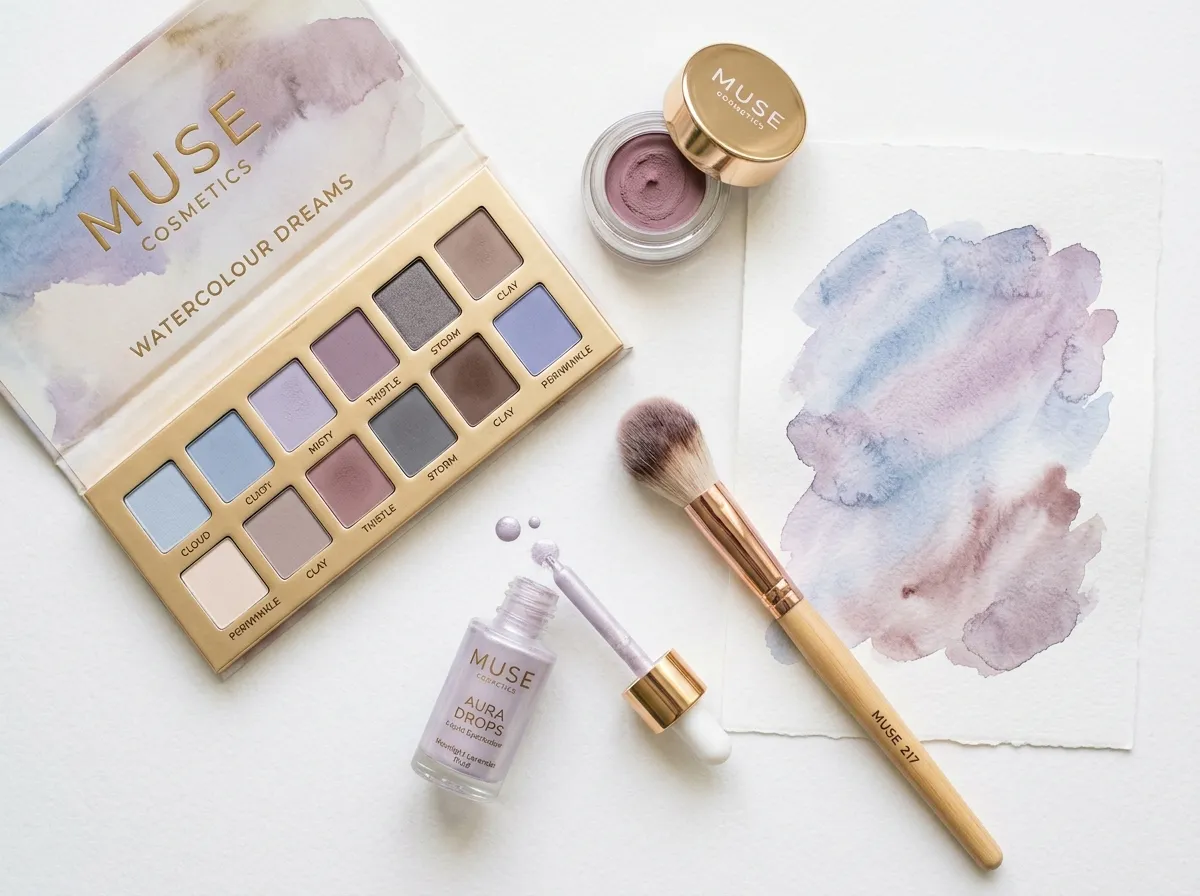
The translucent, soft-edged quality of a watercolour eye is largely determined by product choice. Using the wrong formulas — heavy, opaque, or highly pigmented shadows — will produce a dense, saturated result that looks nothing like the sheer, painted aesthetic the trend requires.
Sheer Eyeshadow Formulas
The foundation of a watercolour eye is a sheer or satin eyeshadow in a soft, muted tone. Look specifically for shadows described as sheer, wash, or watercolor finish — these are formulated with lower pigment density than standard eyeshadows and deposit color lightly with each application. Pressed shadows with a satiny or slightly luminous finish work better for this technique than true mattes, which can look flat and chalky when applied sheer. A light shimmer or pearl finish adds the translucent quality that mimics the way watercolour paint catches light on paper.
Liquid Eyeshadow and Tinted Eye Primers
Sheer liquid eyeshadows and tinted eye primers are outstanding for watercolour application because their consistency naturally encourages blending and sheering out. A single drop tapped onto the lid with a fingertip and blended outward with light dabbing motions creates a stained, translucent wash of color that is the visual equivalent of a watercolour wash — slightly more concentrated at the center where the product was first applied and fading organically toward the edges. Several major beauty brands have released products specifically designed for this type of wash application in 2026, but a standard liquid eyeshadow or even a highly pigmented tinted balm applied lightly achieves the same result.
Cream Shadows Applied with Fingers
A cream eyeshadow applied with the fingertip rather than a brush is one of the most beginner-friendly ways to achieve a watercolour effect. Fingers naturally deposit less product than brushes and the warmth of the fingertip softens the cream formula, making it easier to blend to a sheer, seamless finish. The slight translucency that results from finger application — where the natural skin tone shows through the shadow — is exactly the quality that defines the watercolour aesthetic.
What to Avoid
Highly pigmented powder shadows, glitter formulas, and any product with a foiled or metallic finish will work against the watercolour aesthetic. These deliver opacity and impact rather than translucency and softness. Similarly, eye primer used beneath a watercolour look can make the colors appear denser and more saturated than intended — if the sheer, washed quality is the goal, apply your watercolour shadow directly to clean, moisturized skin rather than over primer, which will intensify the color deposit.
How to Create a Watercolour Eye Step by Step
The following technique uses a pressed sheer shadow and a cream shadow in two complementary tones — a soft approach that works for both beginners and experienced makeup wearers.
Step 1 — Choose Your Color Story
Select two colors that sit adjacent or close to each other on the color wheel — blue and lavender, terracotta and peach, sage and mint, dusty rose and soft plum. The watercolour effect works best when the colors are related rather than strongly contrasting, because the blending at their shared edges creates a natural, organic transition rather than a distinct boundary. Both shades should be in the soft, muted, or slightly faded version of their color rather than a bright or saturated one — think dusty, cloudy, or washed-out rather than vibrant or neon.
Step 2 — Apply the First Color as a Base Wash
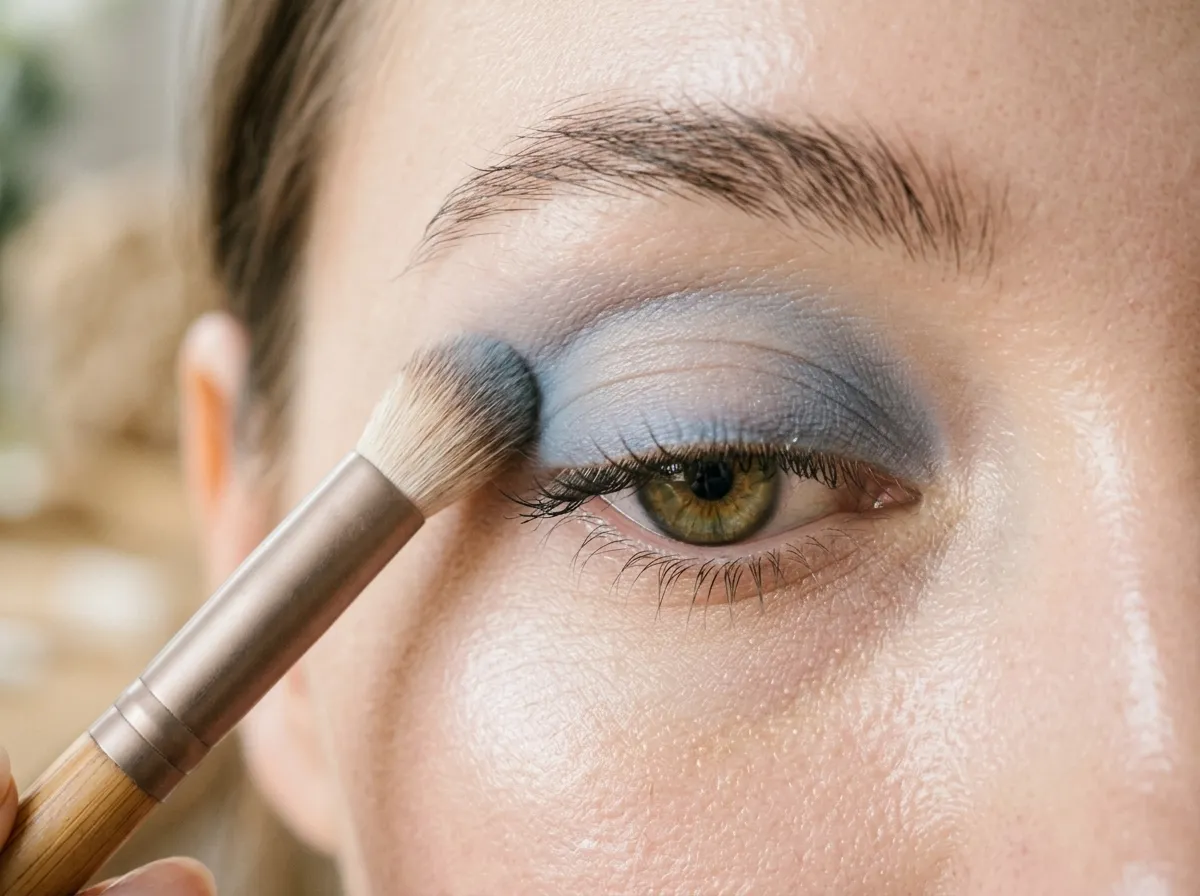
Using a large, fluffy eyeshadow brush — the same dome-shaped brush used for transition shades in traditional eye makeup — load it very lightly with your first shade and tap off the majority of the product before touching it to the eye. Apply the shadow across the entire lid and slightly into the socket using sweeping, circular motions, building coverage gradually with multiple light passes rather than a single heavy application. The goal at this stage is a soft, barely-there wash that tints the lid without fully covering it. You should still be able to see your natural skin tone showing through the shadow.
Step 3 — Place the Second Color at the Outer Corner
Using the same lightly loaded brush or your fingertip, place your second complementary shade at the outer corner of the eye — the outer third of the lid and the outer section of the lower lash line below. Do not press the color in solidly. Dab it on with a light touch, concentrating the most color at the very outer corner and allowing it to fade organically inward and upward toward the base wash applied in the previous step. Where the two colors meet is where the watercolour magic happens — they should bleed into each other at their shared edge rather than creating a visible boundary.
Step 4 — Blend the Transition Between Colors
Using a clean, lightly loaded brush or a clean fingertip, work the boundary between the two colors using gentle circular or dabbing motions — not sweeping strokes, which will move the colors too aggressively and create muddiness. The goal is to soften and diffuse the edge between the two shades until the transition appears completely seamless. This step should take no more than thirty seconds — over-blending a watercolour look collapses the color distinction between the two shades and results in a single flat tone rather than a dimensional wash effect.
Step 5 — Add a Soft Lower Lash Line
The lower lash line treatment is what completes the watercolour eye and gives it its characteristic wraparound quality. Using a small smudge brush or your fingertip, apply a soft line of either shadow shade along the lower lash line — keeping it deliberately smudged and soft rather than precise. Blend it slightly downward and outward so it appears to melt away from the lash line rather than sitting as a defined stripe. This lower lash line shadow ties the upper and lower eye together and creates the impression that the color is floating around the entire eye rather than sitting only on the lid.
Step 6 — Finish with Mascara
The mascara choice for a watercolour eye matters more than it might seem. A heavy, volumizing mascara can overwhelm the delicate softness of the look and create a jarring contrast between the dreamy, diffused eye and a boldly defined lash line. For the watercolour aesthetic, a single coat of a lengthening or defining mascara — applied carefully to separate and elongate without over-thickening — complements the look without competing with it. A brown mascara rather than black is worth considering here, as the softer contrast harmonizes with the muted palette of most watercolour eye colors. The full breakdown of brown mascara vs. black mascara covers exactly how each shade interacts with different eye looks and color palettes — a helpful reference when finishing a soft, color-forward eye.
Color Combinations Worth Trying in 2026
One of the most enjoyable aspects of the watercolour eye trend is the freedom it gives to experiment with color combinations that would feel overwhelming in a traditional, opaque eye look. Because everything is applied sheer and soft, colors that might seem bold or unusual in full opacity become wearable, interesting, and genuinely beautiful when sheered out to a watercolour wash.
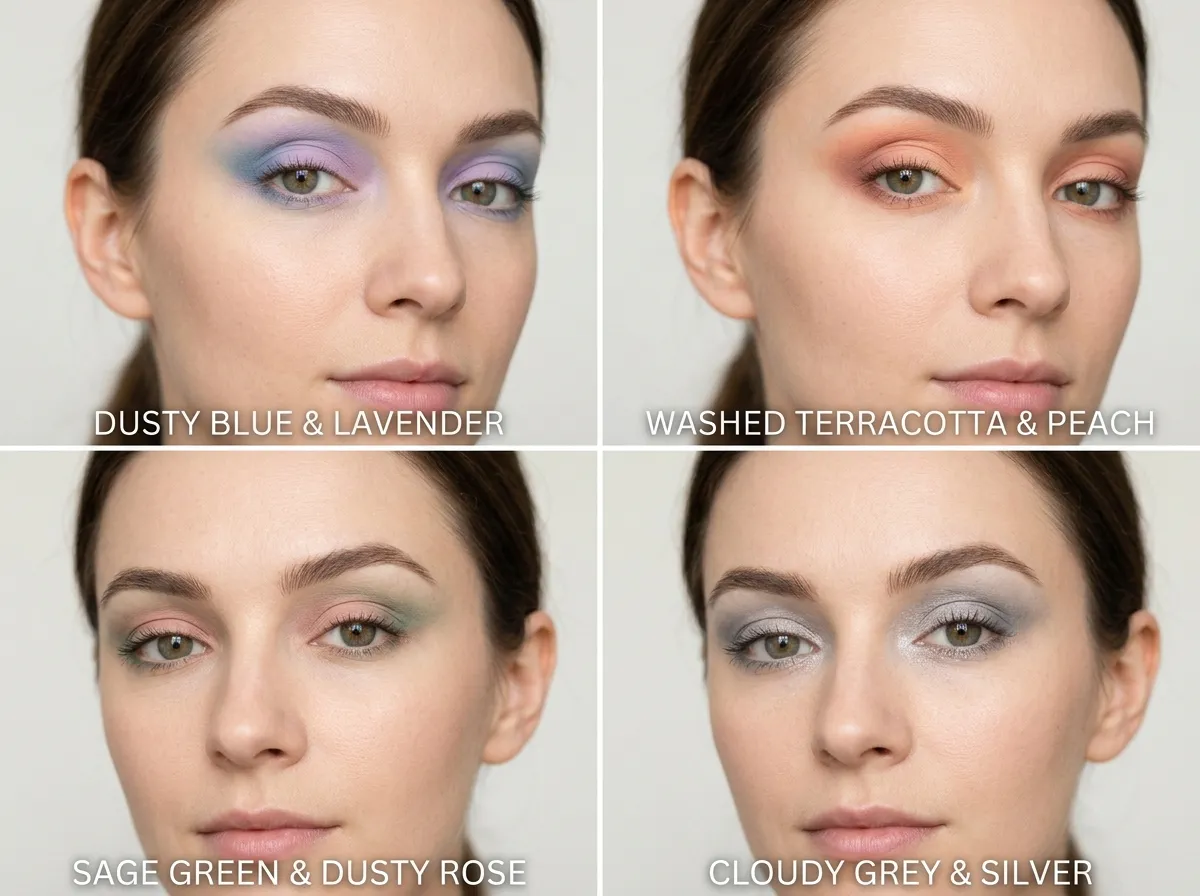
Dusty Blue and Soft Lavender
This is the combination most closely associated with the watercolour eye trend as it has appeared on 2026 runways. The cool, slightly faded quality of dusty blue paired with the whisper-soft warmth of lavender creates a dreamy, ethereal effect that works on virtually every skin tone and eye color. Blue tones are particularly striking on brown eyes, where the complementary contrast makes the iris appear richer and more dimensional.
Washed Terracotta and Pale Peach
For a warmer, more sun-kissed watercolour look, terracotta and peach create a soft, earthy wash that reads as a natural flush of warmth across the eye area. This combination is especially flattering on olive and deeper skin tones and pairs beautifully with a glossy, minimal lip and dewy skin for a complete warm-toned beauty look.
Sage Green and Dusty Rose
An unexpected but genuinely beautiful combination — the muted green of sage and the softened pink of dusty rose create an organic, botanical quality when blended together. The key with this pairing is keeping both shades very soft and faded — a bright green or vivid pink will lose the watercolour quality entirely. This combination is particularly striking on hazel and green eyes, where the sage tone draws out the green flecks in the iris.
Cloudy Grey and Soft Silver
For a more neutral, wearable interpretation of the watercolour eye that transitions easily from day to evening, a cloudy grey base wash with a soft silver or pearl placement at the center of the lid creates a cool, luminous effect. This combination works beautifully as a complement to a smoky eye for evenings when you want definition without the full construction of a traditional smoky eye technique — the grey base provides depth while the silver wash keeps the look soft and dimensional rather than heavy.
Adapting the Watercolour Eye for Different Occasions
The watercolour eye sits naturally at the intersection of artistic and wearable — but small adjustments to intensity and finish make it appropriate for a wider range of occasions than its runway origins might suggest.
For Everyday Wear
Keep the color saturation extremely light — one shade only, applied as the softest possible wash. A single sheer coat of a soft terracotta, dusty rose, or warm peach tapped onto the lid with a fingertip takes thirty seconds to apply and creates a polished, effortless eye that reads as put-together without looking like you have tried hard. Finish with a single coat of mascara and nothing else. This minimal version of the watercolour eye is one of the most wearable everyday looks of 2026.
For Special Occasions
Build the color to a slightly higher intensity — still sheer relative to traditional eyeshadow, but with more visible saturation at the outer corner and a slightly more defined lower lash line. Adding a small amount of fine pearl or satin highlight pressed onto the center of the lid with a fingertip elevates the look for evening without losing the soft, diffused quality that defines the aesthetic. A single coat of tightlining — applying liner to the inner rim of the upper waterline to make lashes appear denser at the root — adds definition that complements rather than competes with the watercolour finish. The complete guide to tightlining your waterline for bigger-looking eyes covers this technique in full detail.
With Lash Extensions
The watercolour eye is one of the best looks to wear with lash extensions because the soft, diffused eye color complements rather than competes with the lash definition the extensions already provide. The extensions supply all the dramatic framing the look needs — the watercolour shadow adds a painterly dimension of color without overloading the eye with competing elements. Skip the mascara entirely when wearing extensions and allow the soft color wash to speak for itself against the defined lash line. For a complete picture of how to incorporate eye makeup into your extension routine safely, the guide on eyelash extension aftercare for beginners covers the application and removal practices that protect your lash investment while allowing you to enjoy eye makeup fully.
The Watercolour Eye Rewards a Light Touch
Of all the eye makeup trends that have emerged in recent years, the watercolour eye is one of the few that genuinely rewards restraint. The lighter your hand, the sheerer your product, and the softer your blending, the more successfully the look comes together. It is a technique that forgives imprecision, celebrates subtlety, and produces results that feel genuinely artistic rather than formulaic. In a beauty landscape that has been dominated by precision and construction for the better part of a decade, the watercolour eye offers something genuinely different — and for anyone who has felt intimidated by complex eye makeup, it is one of the most accessible and rewarding entry points into color that currently exists.
For further inspiration on how 2026’s most exciting eye makeup trends are being interpreted across skill levels and styles, the Vogue guide to eye makeup trends offers regularly updated editorial coverage from professional makeup artists and beauty editors that pairs beautifully with the techniques covered in this guide.