
If you have noticed that your lashes look thinner, shorter, or less dense than they did in your twenties and thirties, you are not imagining it — and you are far from alone. Lash thinning after 40 is one of the most common beauty concerns among women in this age group, and it is almost never discussed with the same depth and practical guidance that other age-related changes receive. Most conversations about mature beauty focus on skin — wrinkles, loss of firmness, pigmentation changes — while lash health quietly deteriorates in the background, leaving many women feeling that their options are limited to heavy mascara or the commitment of extensions.
The reality is significantly more nuanced and more hopeful than that. Lash thinning after 40 has specific, well-understood causes — primarily hormonal but also influenced by nutritional status, product choices, and cumulative mechanical stress — and targeted interventions exist for each of them. This guide explains exactly what is happening to your lashes after 40 and provides a practical, evidence-informed roadmap for restoring density, length, and health.
Why Lashes Change After 40
Lash thinning after 40 is not a single phenomenon with a single cause — it is the cumulative result of several simultaneous biological changes that converge in the perimenopausal and menopausal years. Understanding each of them helps explain why lash health can decline relatively quickly during this period and why a multi-pronged approach to restoration is more effective than any single product or treatment.
The Hormonal Factor
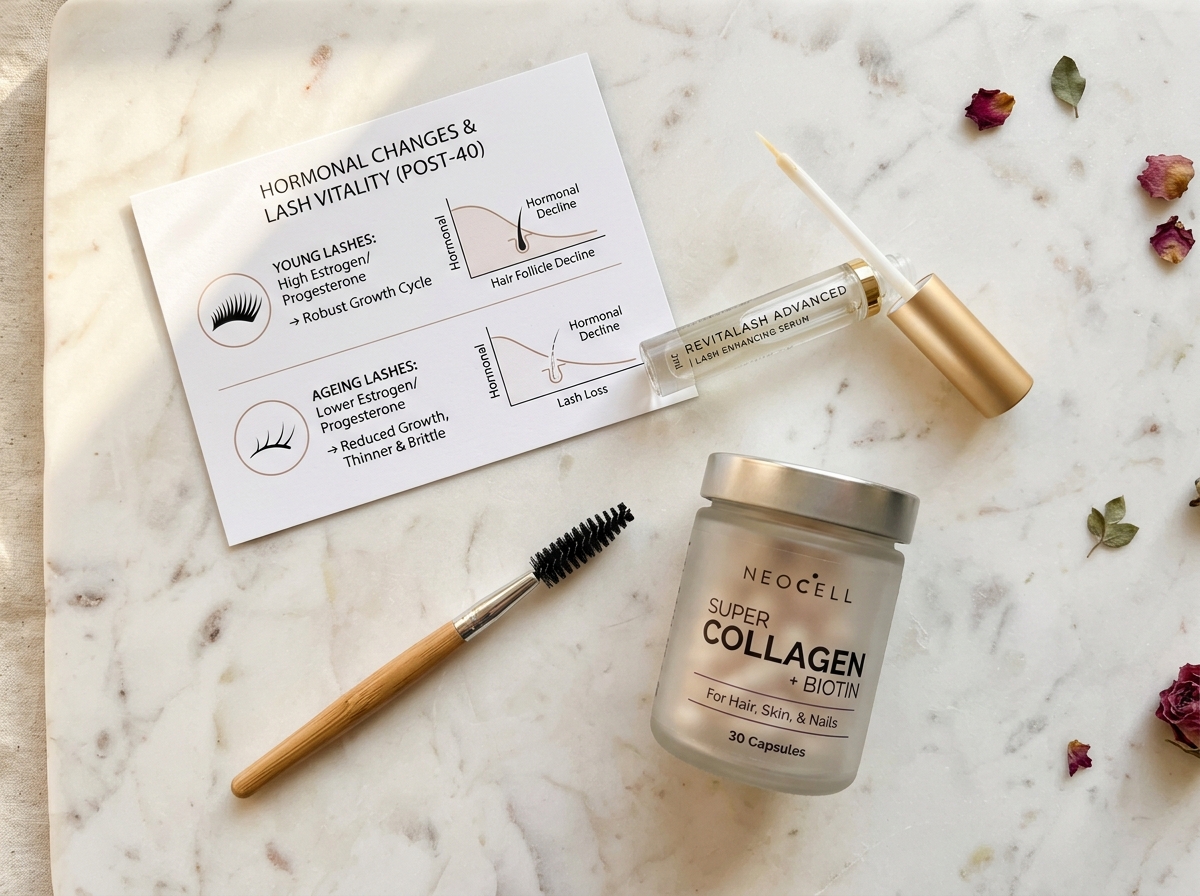
The most significant driver of lash thinning after 40 is the hormonal shift associated with perimenopause and menopause — specifically the decline in estrogen and progesterone levels that begins in the early-to-mid forties for most women. These hormones play a direct role in the hair growth cycle across the entire body, including the lashes. Estrogen prolongs the anagen phase — the active growth phase of the lash cycle — meaning higher estrogen levels are associated with lashes that grow longer before entering the resting and shedding phases. As estrogen declines, the anagen phase shortens, lashes reach a shorter maximum length before shedding, and the overall density of the lash line gradually decreases as fewer follicles are in active growth at any given time.
Progesterone decline contributes through a different mechanism — it affects the ratio of androgenic hormones relative to estrogens, which can influence hair follicle sensitivity in ways that further shorten the growth phase and reduce follicle output. The combined effect of declining estrogen and progesterone on the lash growth cycle is directly analogous to the scalp hair thinning that many women experience during the same period — the biological mechanisms are essentially identical, just manifesting on a much smaller scale at the lash line.
Understanding the lash growth cycle in detail — including the specific phases that hormonal changes affect — is covered in the guide on the natural lash growth cycle, shedding, and fill schedules. Reading it alongside this guide provides a complete biological picture of what is happening at the follicular level during lash thinning after 40.
Declining Collagen and Its Effect on Follicle Health
From approximately age 25, collagen production declines at a rate of roughly one percent per year. By the time a woman reaches her mid-forties, the cumulative collagen loss in the periorbital skin is significant enough to visibly affect the structural environment in which lash follicles are anchored. Lash follicles depend on a healthy, collagen-rich dermal matrix for physical support — when this matrix weakens, follicles lose some of their structural anchoring, which can affect both the quality of lash output and the ability of individual lashes to reach their full growth potential before shedding.
This is one of the reasons that eye area skincare — particularly ingredients that stimulate collagen synthesis — has a genuine role to play in lash health after 40, not just in skin appearance. A well-supported periorbital dermis is a better follicular environment than a depleted one, and targeted skincare investment in this zone pays dividends in lash quality as well as skin quality. The detailed guide on peptide eye creams and lash-line skincare covers the specific ingredient categories — particularly peptide complexes and copper peptides — that most directly support the collagen-dependent aspects of lash follicle health.
Nutritional Changes and Deficiencies
Nutritional status changes after 40 in ways that specifically affect hair and lash health. Absorption of key micronutrients — including iron, zinc, biotin, and vitamin D — decreases with age, and the dietary patterns that maintained optimal lash health in younger years may no longer provide sufficient levels of these nutrients for the demands of aging follicles. Iron deficiency in particular is strongly associated with hair thinning across the body — including lashes — and is common in perimenopausal women whose menstrual cycles are irregular and blood loss is variable before menstruation ceases entirely.
Vitamin D deficiency is another frequently overlooked contributor to lash thinning after 40. Vitamin D receptors are present in hair follicle cells, and adequate vitamin D levels are necessary for normal follicle cycling. Research published by the National Library of Medicine on vitamin D and hair loss has identified associations between vitamin D deficiency and non-scarring alopecia — the same type of diffuse, follicle-cycle-related hair loss that most commonly affects lashes after 40.
Cumulative Mechanical and Chemical Stress
By the time a woman reaches her forties, her lashes have been subjected to decades of mechanical and chemical stress — mascara application and removal, eye rubbing, contact lens insertion and removal, makeup wipes, and potentially years of lash extension wear. This cumulative stress gradually weakens individual follicles, causes microscopic trauma at the lash root, and in some cases leads to traction-related follicular damage that permanently reduces the output capacity of affected follicles. Women who have worn heavy extensions for many years without adequate recovery periods may find that follicular damage contributes meaningfully to the thinning they notice after 40, compounding the hormonal and nutritional factors already at work.
What You Can Do — A Practical Restoration Plan
Addressing lash thinning after 40 effectively requires working across multiple fronts simultaneously — hormonal support, targeted topical treatment, nutritional optimization, and mechanical stress reduction. No single intervention addresses all the contributing factors, but a well-designed combination protocol produces results that are genuinely meaningful for most women within three to six months of consistent application.
Lash Growth Serums — The Most Direct Topical Intervention
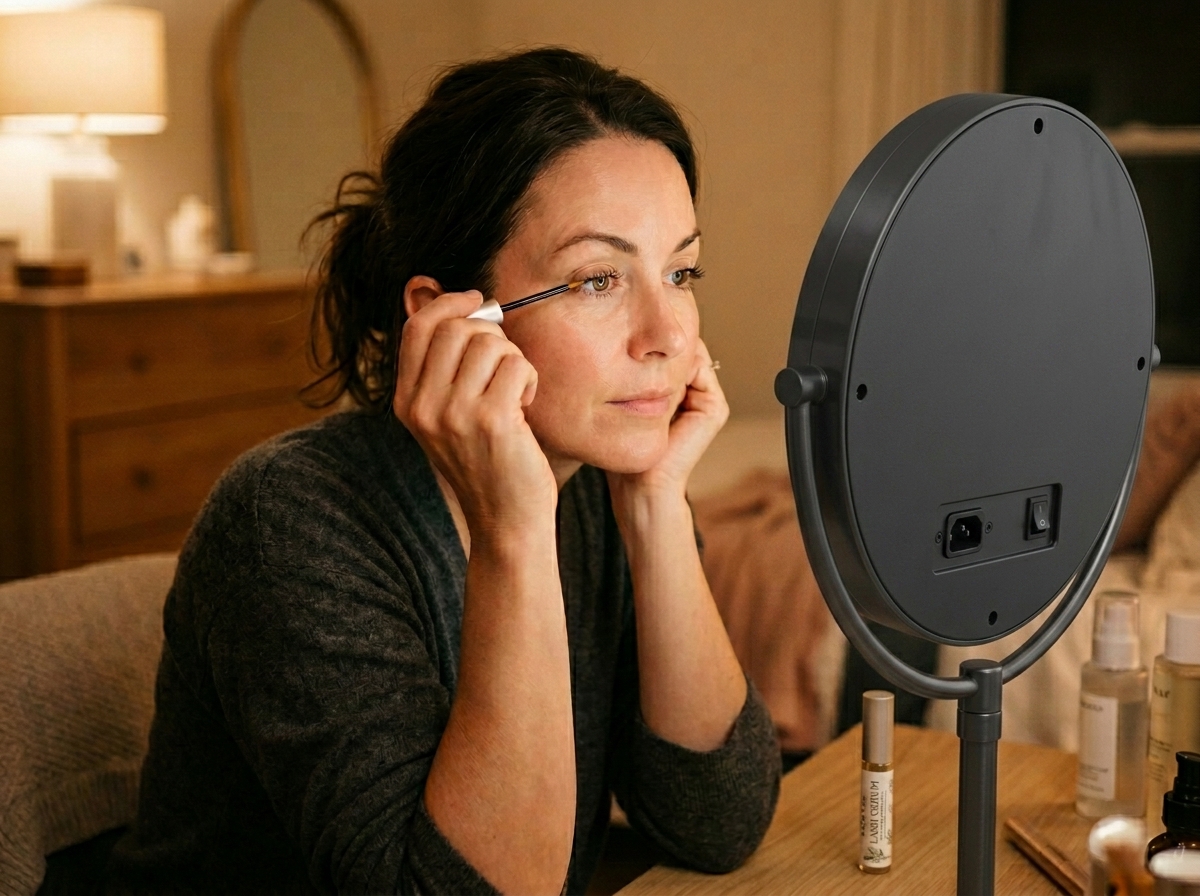
A lash growth serum applied consistently to the lash line is the most direct topical intervention available for sparse lashes after 40, and the evidence behind the most effective ingredient categories is substantially stronger than for most beauty products. The two primary mechanisms through which topical lash serums improve lash density are extending the anagen phase — keeping individual lashes in active growth for longer before they shed — and improving follicular health in ways that increase the output quality of each cycle.
For women over 40, prostaglandin-free formulas are the recommended starting point — particularly for anyone with sensitivity, dry eyes, or a history of contact lens wear. Prostaglandin-based serums (including the prescription formula bimatoprost) carry a risk of side effects, including periorbital fat loss, iris color change, and eyelid darkening that is worth avoiding when prostaglandin-free alternatives have strong evidence behind them. The comprehensive guide to prostaglandin-free lash serums for sensitive eyes covers the safest and most effective options in this category — directly applicable for women over 40 navigating the lash serum market.
For women who want a broader overview of which ingredients in natural lash serums have real evidence behind them versus which are primarily marketing claims, the guide on natural lash growth serums — what works and what is hype provides the evidence-based comparison needed to make an informed product choice.
Red Light Therapy for Follicular Stimulation
One of the most scientifically interesting developments in lash health over the past several years is the growing evidence base for low-level laser and red light therapy as a stimulant for hair follicle activity. Red light in the 630 to 670 nanometre wavelength range has been shown to increase cellular energy production in follicle cells, extend the anagen phase, and improve the quality of hair output — precisely the mechanisms most compromised by the hormonal changes of perimenopause and menopause. At-home red light devices are now available at accessible price points that make this technology practical for daily use without clinical appointments. The full guide to red light therapy for lash growth with at-home devices covers the evidence, the device selection criteria, and the correct protocol for lash-targeted red light treatment.
Nutritional Support from the Inside
Addressing the nutritional contributors to lash thinning after 40 requires both dietary awareness and targeted supplementation in many cases. The following nutrients have the strongest evidence base for lash and hair follicle health and are worth assessing through a blood panel before supplementing — since some (particularly iron and vitamin D) can cause harm in excess as well as deficiency.
Iron
Iron deficiency is one of the most common and correctable causes of diffuse hair and lash thinning in women over 40. A full blood count and serum ferritin test — available through a standard GP or primary care appointment — will identify whether iron deficiency is contributing to lash thinning. Ferritin levels below 30 micrograms per litre are associated with hair loss even in the absence of overt anaemia, meaning many women who are not clinically iron-deficient by standard thresholds may still have ferritin levels low enough to affect follicle function.
Biotin and B Vitamins
Biotin — vitamin B7 — is one of the most widely marketed supplements for hair and lash health, and while true biotin deficiency is relatively rare, the B vitamin complex as a whole plays a significant role in follicular cell metabolism. A B-complex supplement that includes biotin alongside B6, B12, and folate provides broader nutritional support for follicle function than biotin alone and addresses the reduced absorption of B vitamins that occurs with age.
Omega-3 Fatty Acids
Omega-3 fatty acids — found in oily fish, flaxseed, and high-quality fish oil supplements — support follicular health through their anti-inflammatory action at the follicle root and their role in maintaining the lipid quality of the sebaceous secretions that condition the lash shaft. The anti-inflammatory effect is particularly relevant for women over 40 whose perimenopausal hormonal changes create a pro-inflammatory systemic environment that can affect follicle cycling.
Reducing Mechanical Stress on Aging Lashes
Aging lash follicles are more vulnerable to mechanical stress than younger ones — meaning the removal habits, product choices, and daily handling practices that were adequate at 25 may cause measurable follicular damage at 45. Specific changes worth making include switching from cotton makeup removal pads — whose fibers snag on lashes during removal — to lint-free applicators, replacing any oil-based makeup removers near the lash line with oil-free micellar water, avoiding waterproof mascara as a daily product in favor of tubing formulas that remove without rubbing, and addressing any chronic eye-rubbing habits that may be contributing to cumulative follicular trauma.
For women who wear lash extensions, ensuring that extensions are sized and weighted appropriately for the natural lash strength at this life stage is particularly important. Heavy extensions that were comfortable on stronger natural lashes in younger years can cause traction-related follicular stress on the thinner, more delicate natural lashes of the mid-forties. A lash artist experienced in working with mature lash clients can advise on appropriate weight, length, and fill frequency adjustments. The guide on avoiding and fixing lash damage after extensions covers the specific ways extension wear can contribute to lash thinning and how to modify the approach to protect rather than further compromise aging natural lashes.
Professional Lash Services for Sparse Lashes After 40
Beyond home care, certain professional lash services are particularly well-suited to the specific needs of women experiencing lash thinning after 40 — providing visible enhancement while actively supporting rather than stressing the natural lash.
Lash Lifts as a Volume-Enhancing Alternative
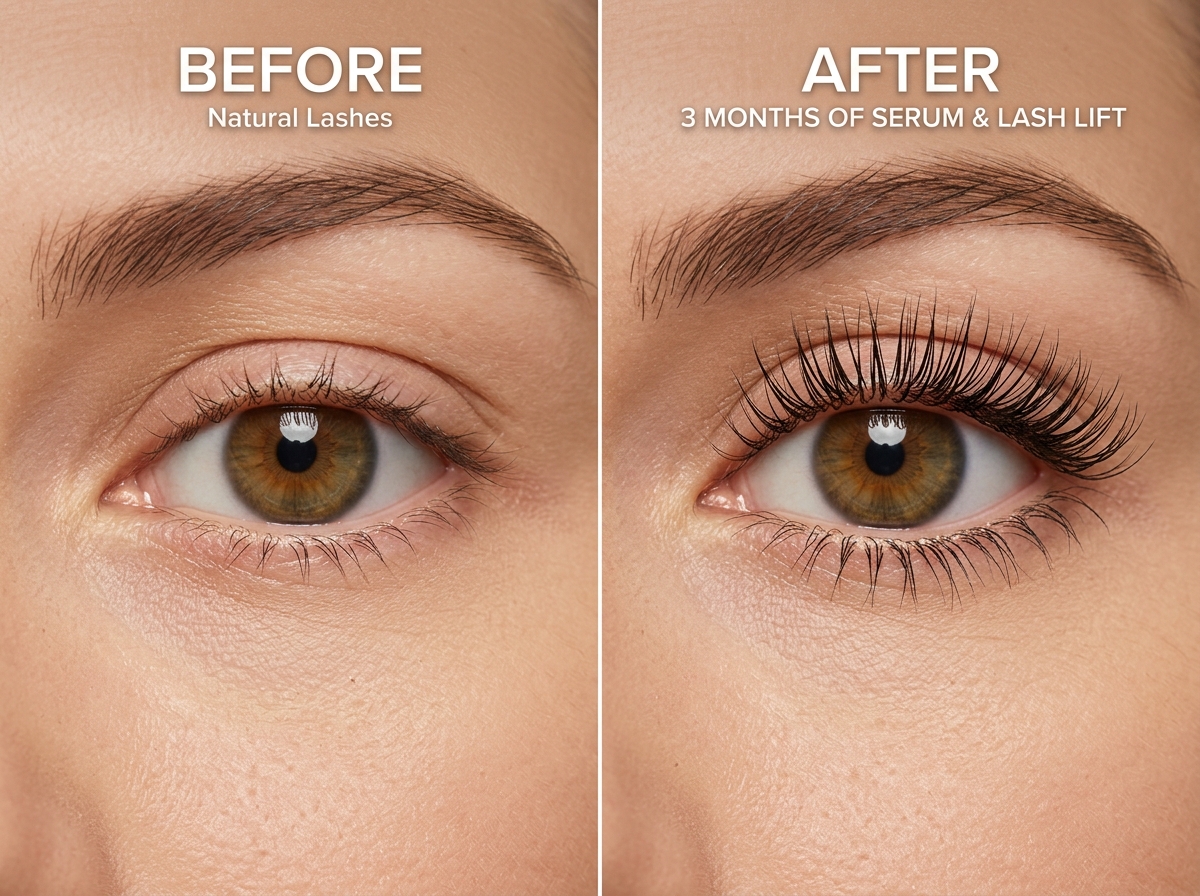
For women whose natural lashes are thinning but still present, a lash lift is one of the most impactful and least damaging professional services available. By permanently curling the natural lash upward for six to eight weeks, a lift makes existing lashes appear significantly longer, more defined, and more voluminous without adding any weight or mechanical stress. Combined with a lash tint — which darkens the natural lashes to their maximum visible depth — a lift and tint on thinning lashes can produce a result that rivals the appearance of a light extension set while placing zero additional load on already-stressed follicles. The complete overview of lash lifts and tints as a low-maintenance lash alternative is directly relevant for women over 40 evaluating their options.
Classic Extensions on Thinning Natural Lashes
Women who want extensions after 40 should work with a lash artist experienced in mature lash mapping — someone who understands that thinning natural lashes require lighter, shorter extensions than the same client would have worn five or ten years earlier. A well-executed classic set — one extension per natural lash in a conservative length and a fine diameter — provides genuine enhancement without the cumulative follicular stress of a volume or mega-volume set on compromised natural lashes. Transparent communication with your lash artist about your natural lash changes and your retention history is the most important step in ensuring the service supports rather than accelerates thinning.
The Timeline for Results — What to Expect
Lash restoration after 40 is a process measured in months rather than days or weeks — and understanding the realistic timeline for each intervention helps manage expectations and maintain consistency through the period before results become visible.
Topical Serums
Most lash growth serums require a minimum of six to eight weeks of consistent nightly application before visible improvements in lash density and length are noticeable — and full results typically take three to four months. This timeline reflects the biology of the lash growth cycle — new lashes stimulated by the serum must complete a full growth phase before they become visible at the lash line, and the growth phase itself takes 8 to 12 weeks, from follicular activation to visible emergence.
Nutritional Supplementation
Nutritional interventions have a similar timeline — three to six months of consistent supplementation before visible changes in lash density typically emerge. This is not a sign that the supplements are not working — it reflects the time required for improved follicular nutrition to translate through a full growth cycle into visible lash output. Blood panel monitoring at the three-month mark helps confirm that target nutrient levels have been achieved and maintained.
Red Light Therapy
Red light therapy for lash follicle stimulation typically shows early results within four to six weeks of consistent use — three to five sessions per week as recommended for most at-home devices — with continued improvement over three to six months of ongoing use. Unlike topical serums, which work by altering the biochemical environment at the follicle, red light works by directly stimulating cellular energy production — a mechanism that can produce somewhat faster initial results in some users.
Sparse Lashes After 40 Are Not Permanent
The most important message in this entire guide is that lash thinning after 40 — while real, common, and driven by genuine biological changes — is not a permanent or irreversible condition for the vast majority of women. The follicles are still present. The growth cycle is still functioning. What has changed are the hormonal, nutritional, and structural conditions that determine how well those follicles perform — and those conditions are genuinely addressable through a combination of the interventions covered in this guide.
Approach lash restoration after 40 as a long-term project rather than an immediate fix. Build a routine that combines a prostaglandin-free growth serum, targeted eye area skincare with collagen-supporting ingredients, nutritional assessment and support where needed, and mechanical stress reduction in your daily product habits. Give each intervention adequate time to work. And work with lash professionals who understand the specific needs of mature natural lashes when choosing professional services. The lashes you have at 50 can genuinely be fuller, healthier, and more beautiful than the lashes you had at 40 — if the right care is applied consistently and patiently. For authoritative clinical guidance on hair loss in women — including lash thinning in the context of menopause and hormonal change — the American Academy of Dermatology’s guide to hair loss causes provides the most reliable medical reference available and is worth reviewing alongside the practical interventions covered in this guide.