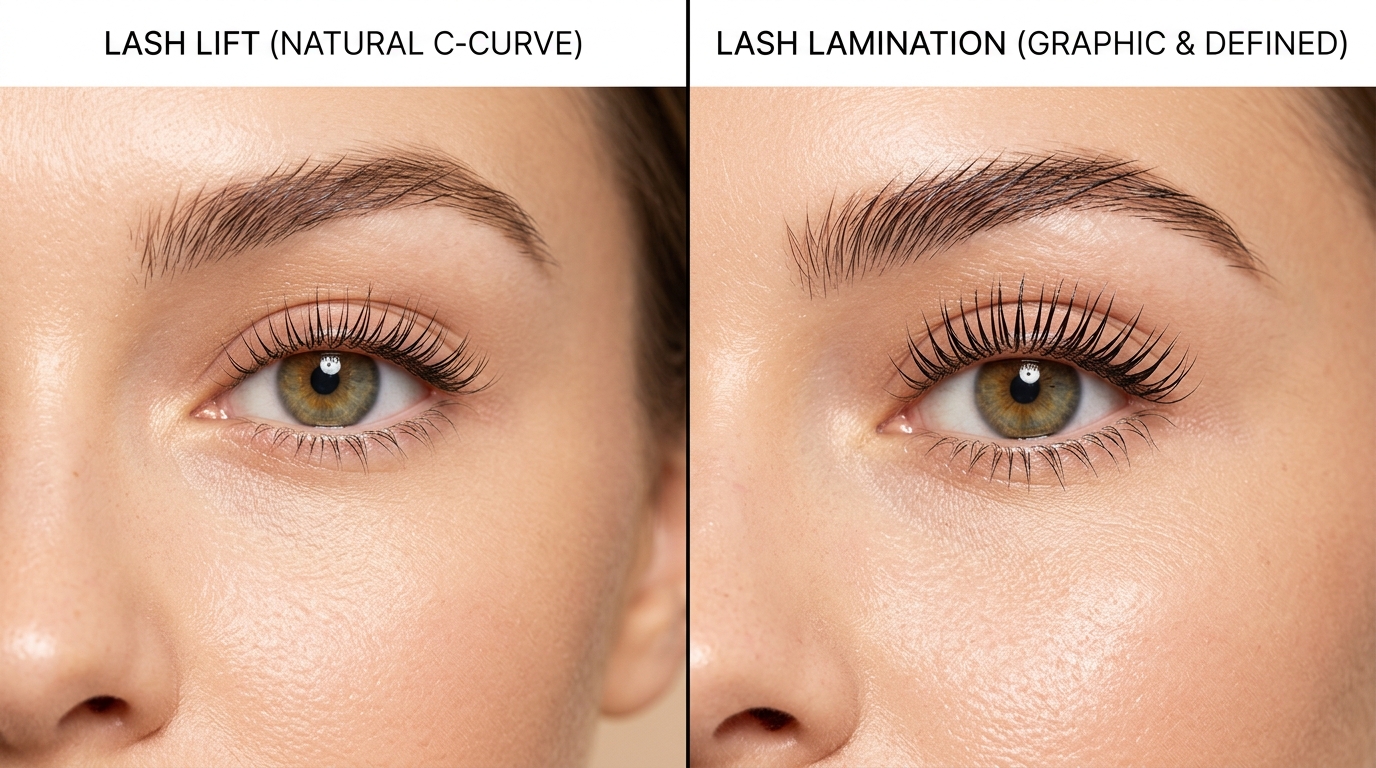
If you have spent any time researching natural lash treatments in 2026, you have almost certainly encountered both terms — lash lamination and lash lift — sometimes used interchangeably, sometimes described as entirely different services, and occasionally presented as though one is simply a newer, better version of the other. The confusion is understandable. Both treatments use a chemical process to alter the structure of natural lash hairs. Both promise enhanced lashes without extensions. Both last approximately six to eight weeks. And in some salons, the same service is marketed under different names depending on the technique and the aesthetic result being offered.
But lash lamination and lash lift are not the same treatment — and the difference between them matters significantly when it comes to choosing the right service for your specific lash type, eye shape, and desired outcome. This guide explains exactly what each treatment is, how the processes differ, what results each one produces, and how to decide which is the better fit for you.
What Is a Lash Lift?
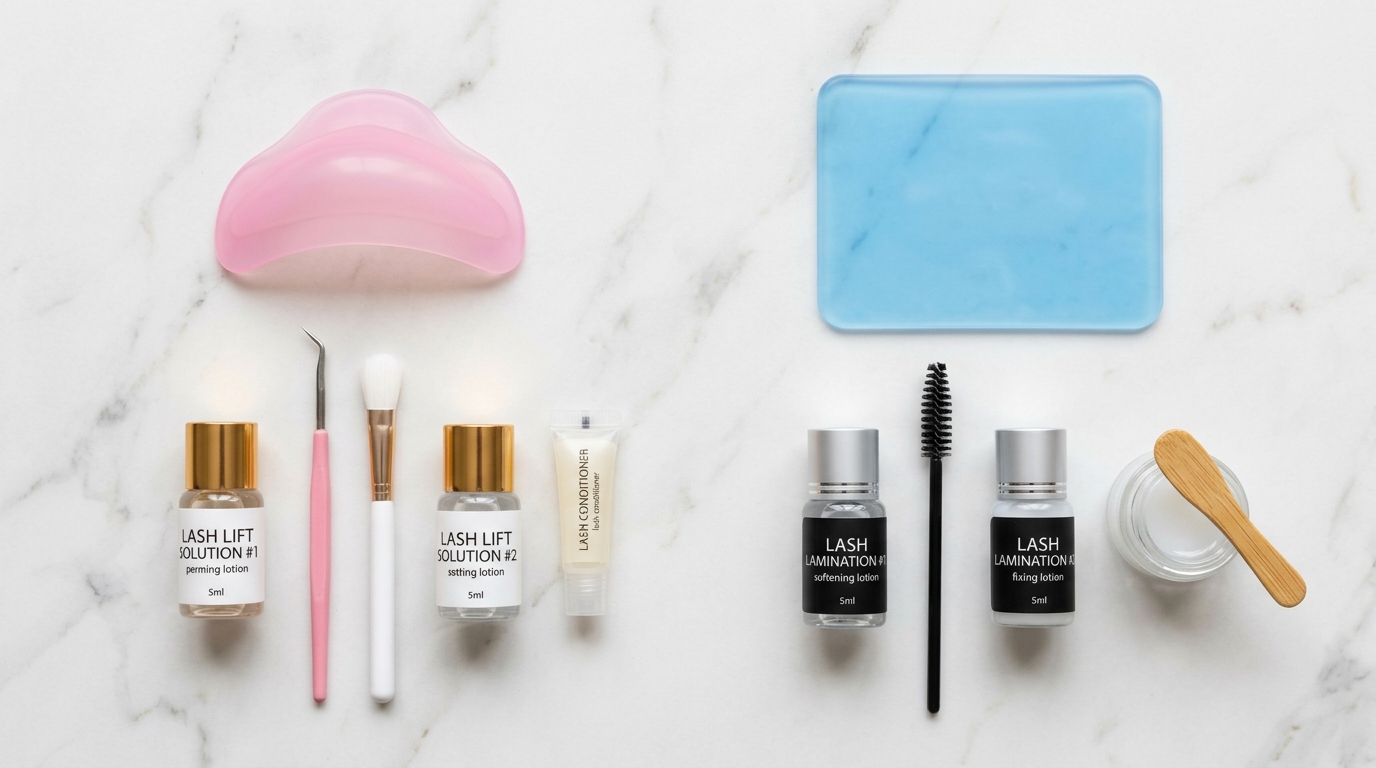
A lash lift is a semi-permanent curling treatment that chemically restructures the natural lash hair to create an upward curl that lasts six to eight weeks. The treatment uses a silicone rod or shield — placed along the upper lash line — over which the natural lashes are wrapped and held in position while a lifting solution softens the protein bonds within the hair shaft. Once the bonds are softened, a setting solution is applied to fix the lashes in their new curved position, and the shield is removed to reveal lashes that are permanently curled upward for the duration of the treatment period.
The result of a lash lift is lashes that appear longer, more open, and more defined without any added length or volume from extensions. Because the lashes are curled upward and away from the eye, they catch light differently than flat or downward-pointing lashes — creating the impression of significantly greater length even though no product has been added. A lash lift is almost always paired with a lash tint, which darkens the natural lashes to their maximum pigment depth and makes the lifted result appear even more dramatic and defined.
Who Is a Lash Lift Best Suited For
A lash lift is particularly well suited to people whose primary concern is creating an upward curl and a wide-open eye effect. It works best on lashes that are already a reasonable length — typically eight millimetres or longer — because the curl created by the lift maximizes the apparent length of whatever natural lash is there to work with. People with naturally straight or downward-pointing lashes gain the most dramatic transformation from a lift, as the curl correction creates an eye-opening effect that is impossible to replicate with daily mascara or a lash curler alone.
It is also the preferred option for people who want a completely natural-looking result — a lifted lash with a tint reads as simply having naturally beautiful, healthy lashes rather than as a treated or styled appearance. For a complete overview of everything the lash lift service involves — including the treatment process, aftercare, and longevity expectations — the guide on lash lifts and tints as a low-maintenance alternative covers the full picture in detail.
What Is Lash Lamination?
Lash lamination is a treatment that restructures the natural lash hairs to lie in a uniform forward and slightly upward direction — creating a sleek, defined, brushed effect rather than the curved, lifted effect of a traditional lash lift. Rather than wrapping lashes over a curved shield to create a curl, lash lamination typically presses the lashes flat against the lid and brushes them into a consistent direction using a flat or slightly angled pad, then sets them in that position using the same chemical process of softening and neutralizing bonds.
The result is lashes that appear fuller, more uniform, and more intentionally styled — a wet, slicked, or fluffy brushed look depending on the specific technique used by the technician. Lash lamination is often described as the brow lamination treatment applied to lashes — and the visual parallel is accurate. Where a lash lift creates an upward curving arc, lash lamination creates a flat, forward-brushed texture that covers more of the visible lid and creates the impression of greater lash density without adding any individual hair.
Who Is Lash Lamination Best Suited For
Lash lamination is particularly well suited to people with naturally full, dense lashes who want to enhance the texture and direction of their existing lashes rather than add curl. It works especially well on people with lashes that grow in multiple directions — some forward, some sideways, some outward — as the lamination process disciplines all of the hairs into a uniform direction that creates a cohesive, polished result from their natural volume. People who prefer the editorial, fashion-forward aesthetic of slicked or brushed lashes over the more classic, romantic aesthetic of curved lifted lashes tend to find lamination the more appealing option.
It is also gaining significant traction in 2026 among people who want a more graphic, intentional lash look that sits closer to the lid and creates a defined lash line effect — particularly popular with editorial and runway-influenced beauty aesthetics where the lash is treated as a textural element of the eye look rather than simply as a frame.
The Key Differences Between the Two Treatments
Now that both treatments are clearly defined, the specific differences between them become much easier to evaluate in the context of your own lash goals.
Direction of the Result
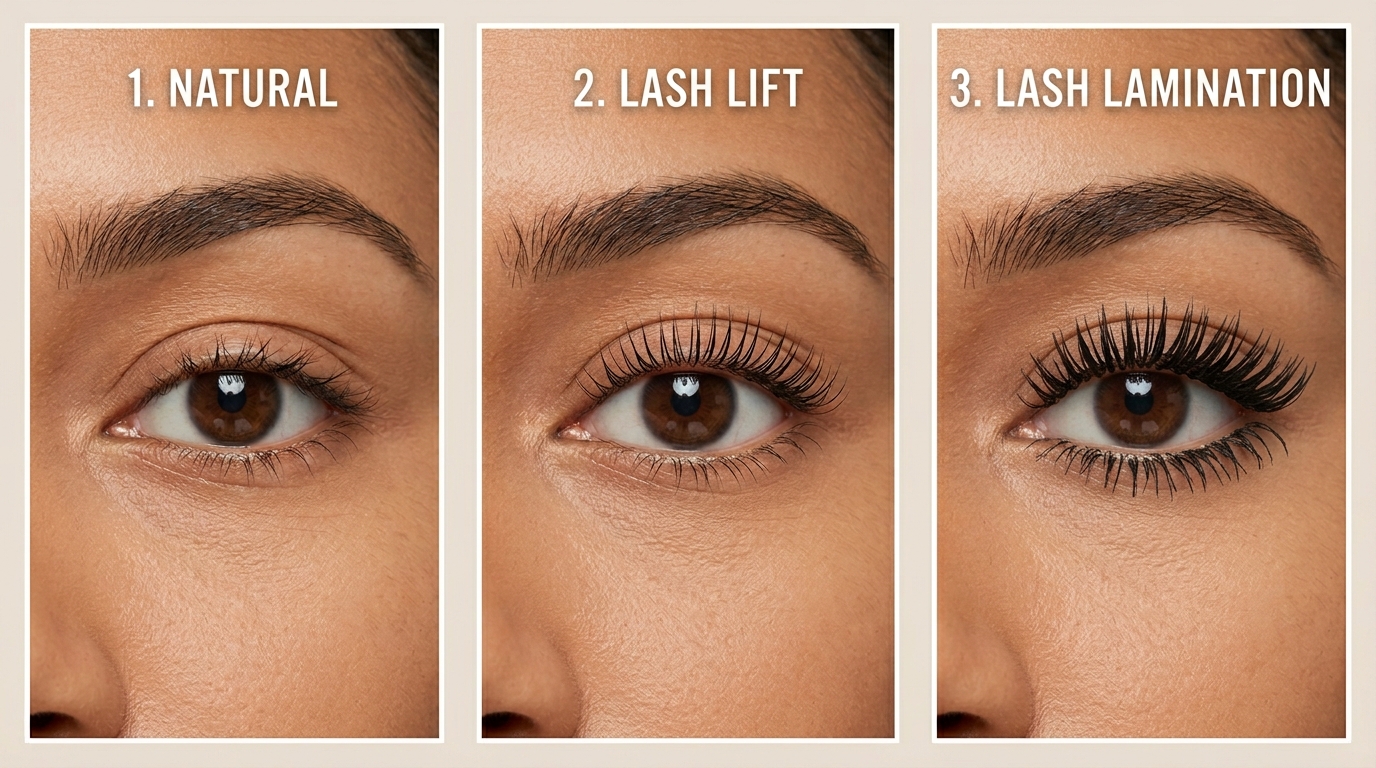
This is the most fundamental difference. A lash lift directs lashes upward and away from the eye in a curved arc — maximizing the apparent length and creating an open, wide-awake eye effect. Lash lamination directs lashes forward and slightly upward against the lid in a flat, uniform texture — maximizing the apparent density and creating a defined, editorial lash line effect. The two results serve different aesthetic goals and are not interchangeable.
Effect on Eye Shape
Because a lash lift directs lashes upward, it creates a visually lifting effect on the eye — making the eye appear larger, more open, and more awake. This is why lash lifts are particularly popular for hooded eyes, downturned eyes, and any eye shape where a lifted, open appearance is the primary goal. Lash lamination, by directing lashes forward and flat, creates a different visual effect — the lashes cover more of the lid surface and create a defined, emphasized lash line that makes the eye appear more intensely framed rather than more open. For an understanding of how different lash directions interact with different eye shapes, the comprehensive guide on best lash styles by eye shape provides the foundational framework for evaluating which directional result flatters your specific features.
The Chemical Process
Both treatments use the same fundamental chemistry — a lifting or softening solution that breaks the disulfide bonds in the hair protein structure, allowing the hairs to be physically repositioned, followed by a neutralizing or setting solution that reforms the bonds in the new position. The difference is in the physical positioning during the chemical process. In a lash lift, the lashes are wrapped over a curved silicone shield that imparts the curl shape. In lash lamination, the lashes are brushed flat against a pad or the lid itself, which imparts the straight, forward-brushed direction.
This means both treatments carry essentially the same chemical risk profile — both can over-process lashes if the solutions are left on for too long or applied too frequently, and both require the same recovery and retreatment intervals to maintain lash health. The chemistry is the same — only the physical tool and the resulting direction differ.
Longevity and Maintenance
Both treatments last approximately six to eight weeks before the lash hairs gradually return toward their natural growth direction as new unblaminated hairs grow in at the root and the treated hairs relax over time. The maintenance requirements are also essentially identical — avoiding moisture for the first twenty-four to forty-eight hours, keeping oil-based products away from the lash line, gentle cleansing, and consistent conditioning with a nourishing lash serum or oil to keep the treated hairs healthy between appointments.
The retreatment interval should be a minimum of six weeks for both services — retreating sooner than this risks over-processing the lash hairs with repeated chemical exposure before adequate recovery time has passed. Over-processed lash hairs become brittle, break more easily at the mid-shaft, and produce progressively thinner, shorter regrowth that takes multiple growth cycles to fully recover. Protecting lash health between treatments is the most important long-term consideration for anyone who receives either service regularly. The guide on avoiding and fixing lash damage after extensions covers the principles of lash health protection that apply equally to chemically treated natural lashes — the underlying biology is the same regardless of which treatment was applied.
Compatibility with Lash Extensions
Both lash lift and lash lamination are generally considered incompatible with simultaneous lash extension wear — extensions are designed for natural, uncurled lash hairs, and the altered protein structure of chemically treated lashes can affect adhesive bond quality. However, both treatments are excellent standalone alternatives for people who want enhanced natural lashes without the commitment, cost, or maintenance of extensions. For anyone evaluating the full range of professional lash services available to them — including where extensions, lifts, and laminations each fit within a realistic lifestyle and maintenance budget — the detailed comparison of lash extensions vs. magnetic lashes provides useful context for positioning natural lash treatments within the broader lash service landscape.
Which Treatment Is Right for You
Choosing between a lash lift and lash lamination comes down to three primary considerations — your natural lash characteristics, your desired aesthetic outcome, and your eye shape.
Choose a Lash Lift If
- Your lashes are naturally straight or point downward and you want to correct the direction to upward and open
- Your primary goal is making your eyes appear larger, more awake, and more lifted
- You prefer a natural, romantic, classic lash aesthetic over an editorial or graphic one
- You have hooded, downturned, or monolid eyes where upward curl creates the most flattering and visible enhancement
- Your lashes are on the finer or sparser side and you want the curl to maximize their apparent length rather than their apparent density
Choose Lash Lamination If
- Your lashes are naturally full and grow in multiple directions — you want uniformity and texture rather than additional curl
- Your primary goal is a defined, editorial, brushed lash line that creates a fashion-forward aesthetic
- You prefer the sleek, wet, or fluffy brushed look over a classic curved lift result
- You have naturally upturned eyes where additional upward curl might look exaggerated or disproportionate
- You are drawn to the brow lamination aesthetic and want to apply the same principle to your lashes
When the Answer Is Neither — or Both Over Time
Some people find that their preference alternates between the two treatments depending on the season, the occasion, or their current beauty aesthetic. There is no rule that says every appointment must be the same service — trying a lash lift for one cycle and a lamination for the next is a completely legitimate way to discover which result you genuinely prefer when you have experienced both firsthand. Many people find that the description of each treatment makes one seem clearly preferable in theory — but seeing the actual result on their own lashes shifts the preference in the opposite direction.
Questions to Ask Your Technician Before Booking
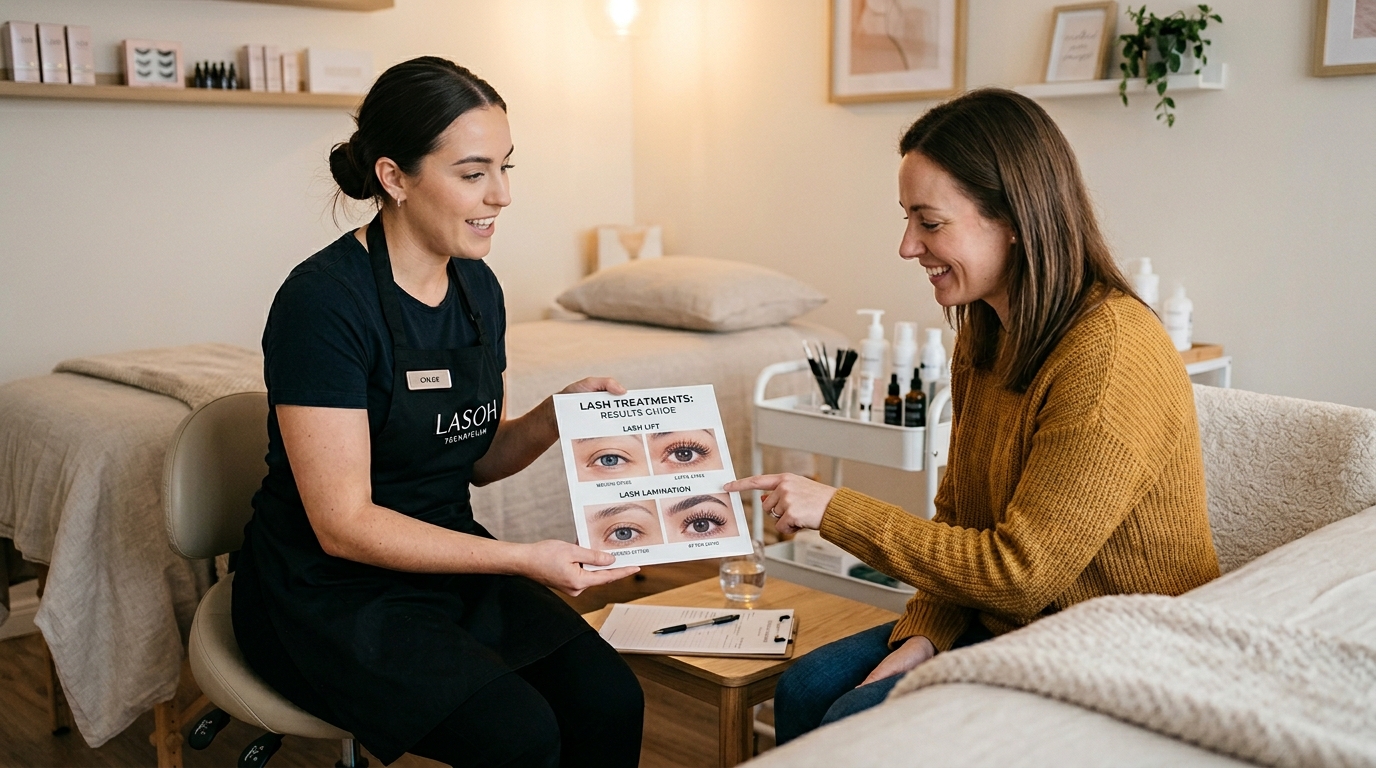
Regardless of which treatment you choose, arriving at your appointment with a few specific questions ensures you get the result you are envisioning rather than a result that looks great in reference photos but does not translate to your specific lash characteristics.
Is My Natural Lash Length Suitable?
Both treatments require a minimum natural lash length to produce a visible result — typically around six to eight millimetres. Lashes shorter than this may not have sufficient length for the chemical treatment to produce a meaningful directional change. If you have been using a lash growth serum to improve length before a treatment appointment, allow a full growth cycle before booking — typically eight to twelve weeks of consistent serum use — to give the serum adequate time to produce visible length improvement. The comprehensive overview of natural lash growth serums — what works and what is hype covers the evidence-based options that genuinely improve lash length over time.
How Recently Were My Lashes Last Treated?
If you have had a previous lash lift, lamination, perm, or any other chemical lash treatment within the past six weeks, communicating this clearly to your technician before the appointment is essential. Retreating already-chemically-processed lash hairs without adequate recovery time is the most common cause of lash breakage and damage from these services — a technician who knows your recent treatment history can assess the current condition of your lashes and advise whether retreatment is appropriate or whether a recovery period is needed first.
Which Technique Does This Salon Use for Lamination?
Lash lamination is a less standardized service than lash lifts — different technicians use different pads, shields, and brushing techniques that produce different degrees of flatness, forward direction, and texture in the final result. Asking to see before-and-after photos of the technician’s specific lamination work — rather than generic reference images — gives you the most accurate preview of the actual result you will receive in that specific salon using that specific technique.
Both Treatments Deliver — When Applied Correctly
Lash lamination and lash lift are both genuinely excellent services that deliver beautiful, low-maintenance natural lash results for the right candidate with the right expectations. The confusion between them is a marketing and terminology problem rather than a technical one — the treatments are distinct, the results are distinct, and once you understand what each one actually does to the lash hair and why, choosing between them becomes a straightforward decision based on your own lash goals.
For the most authoritative and up-to-date clinical guidance on chemical hair treatments — including the protein bond chemistry that underlies both lash lift and lash lamination processes — the National Library of Medicine research on hair fiber structure and chemical treatments provides the scientific foundation that explains why these treatments work, how long results last, and what determines safe retreatment intervals. For expert editorial guidance on lash lift and lamination services from professional beauty editors and lash technicians, the Sins ‘N Lashes comparison of lash lift vs. lash lamination is one of the most comprehensive and regularly updated references available on this specific topic.