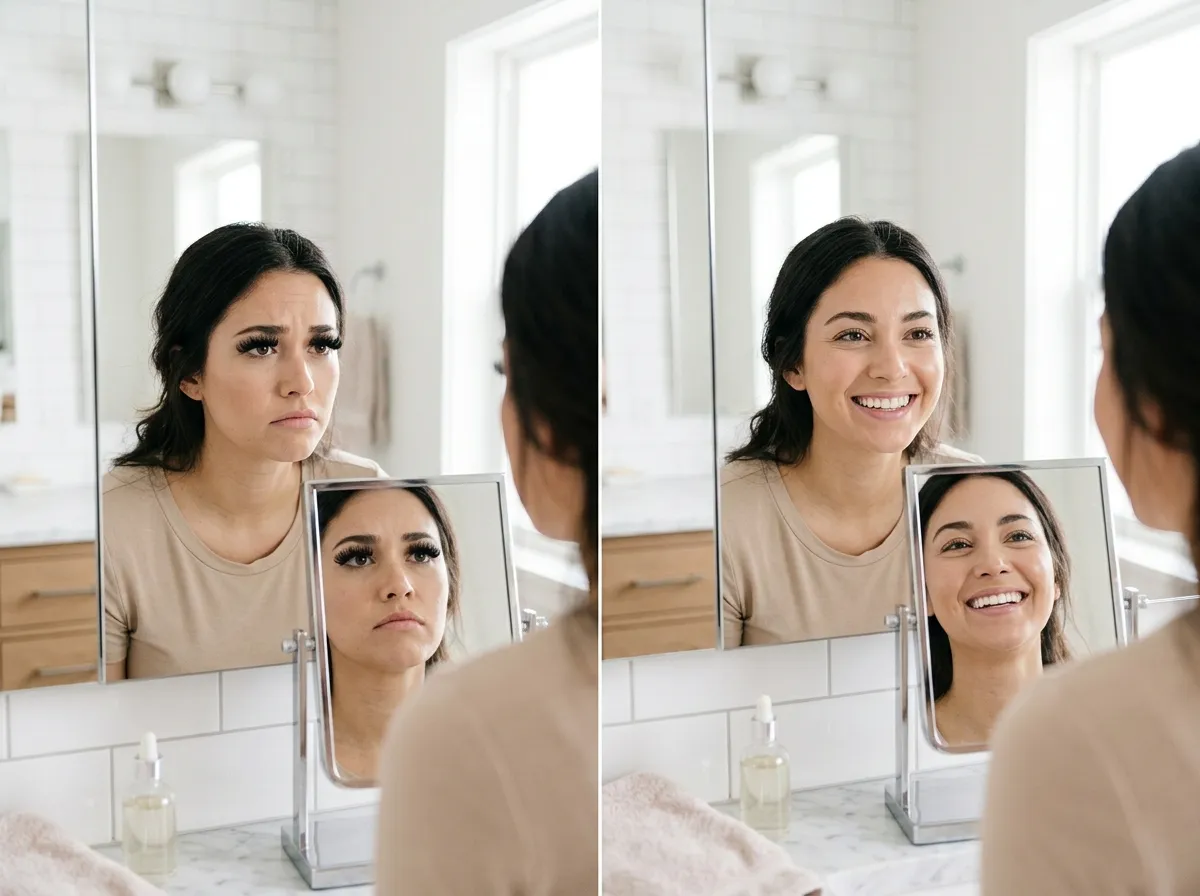
You have been wearing lash extensions for months — maybe even years. You love them. You feel put-together, polished, and ready to face the world the moment you open your eyes in the morning. Then one day, your fill appointment gets pushed back by a week. You catch a glimpse of yourself in the mirror with your natural lashes and barely recognize the face staring back at you. Your own lashes look invisible. Nonexistent. Like they simply do not exist at all.
Welcome to lash blindness — one of the most talked-about beauty phenomena of 2026, and one that almost every long-term extension wearer will experience at some point. If that scenario sounds familiar, you are far from alone. And more importantly, there is a way through it.
What Is Lash Blindness?
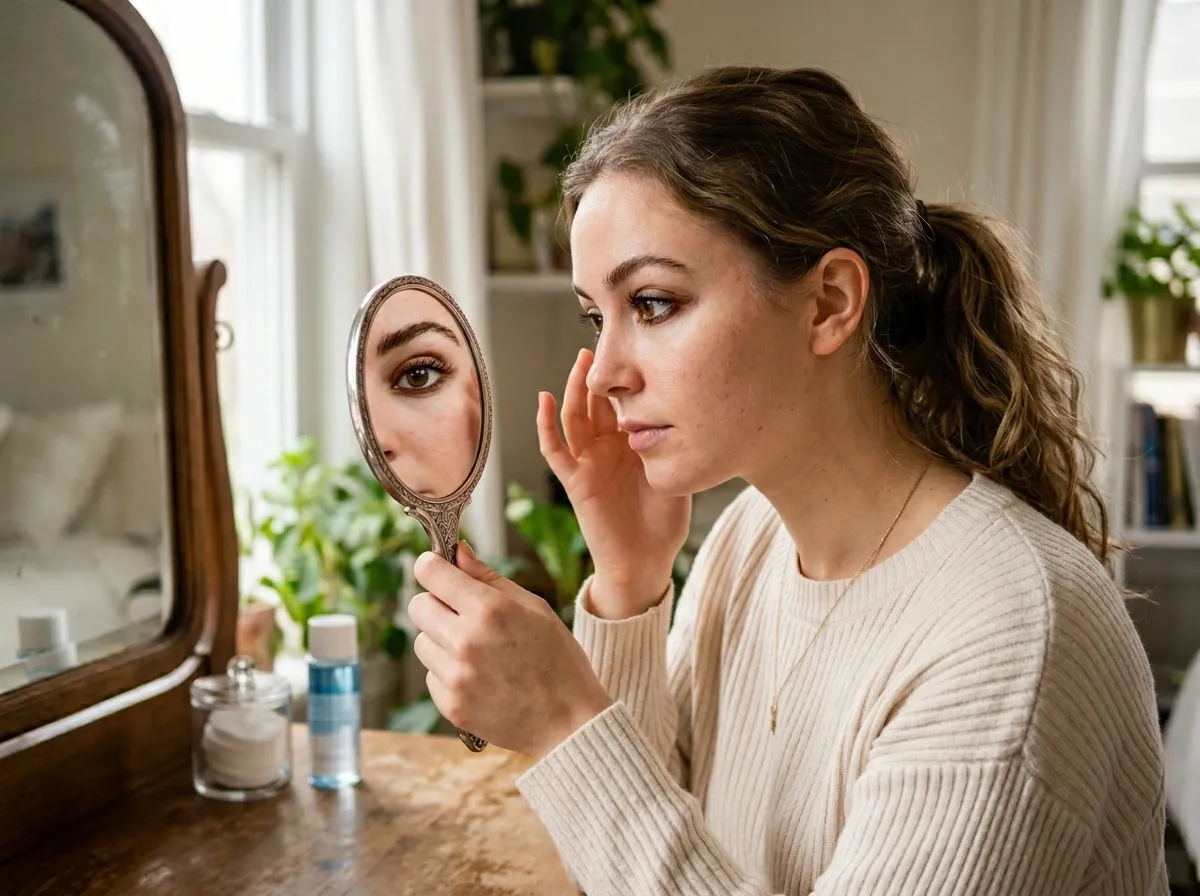
Lash blindness is not a medical condition. It is a psychological and perceptual phenomenon — the point at which your brain has so thoroughly recalibrated its baseline for what your eyes look like that your natural lashes register as essentially invisible by comparison. The term went viral on TikTok in 2025 and has since sparked genuine conversation among beauty lovers, lash artists, and even psychologists about the relationship between beauty standards, perception, and self-image.
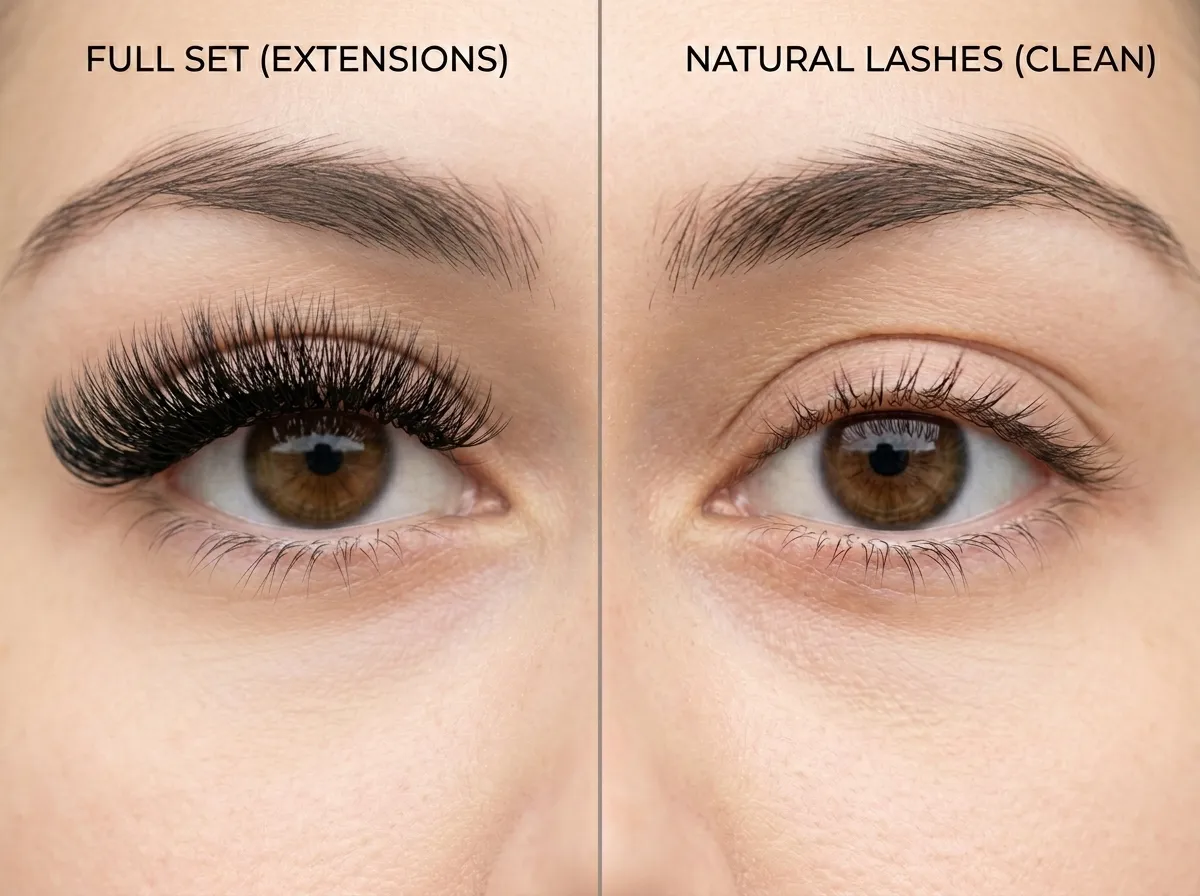
The concept sits at a fascinating intersection of beauty culture and neuroscience. Our brains are extraordinarily adaptive — they constantly update their reference points based on repeated exposure. When you wear full lash extensions every single day for an extended period, your brain quietly re-registers that level of lash density as your new normal. The moment the extensions are gone, even temporarily, your natural lashes do not just look different. They look wrong — sparse, short, and almost startling in their simplicity.
Is Lash Blindness the Same as Lash Dependency?
These two terms often get used interchangeably, but they describe slightly different things. Lash dependency is the behavioral pattern — the feeling that you cannot leave the house or face the day without your extensions in place. Lash blindness is the perceptual shift that drives that behavior. One is the symptom; the other is the cause. You can experience lash blindness without it tipping into dependency, but for many people the two go hand in hand — and understanding the distinction is the first step toward addressing both.
Why Lash Blindness Happens
To understand why lash blindness occurs, it helps to understand a concept called perceptual adaptation — the brain’s tendency to normalize sensory experiences through repeated exposure. It is the same mechanism that explains why you stop noticing the hum of an air conditioner after a few minutes in a room, or why a perfume you wear every day becomes almost undetectable to you even though others notice it immediately.
Applied to lash extensions, the process works like this: every morning you look in the mirror and see full, defined, extended lashes. Your brain logs that image as the current standard. Over weeks and months, that standard becomes entrenched. The extended version of your eyes stops feeling like an enhancement and starts feeling like the baseline — your actual face. Your natural lashes, by comparison, feel like a deficit rather than a neutral starting point.
The Role of Social Media in Amplifying Lash Blindness
Perceptual adaptation would happen with or without social media, but the constant scroll of heavily lashed content on Instagram and TikTok accelerates and intensifies the process. When your feed is populated almost entirely with images of full, dramatic lash sets — whether extensions, falsies, or heavily mascaraed natural lashes — your brain begins to process that level of enhancement as the norm for human eyes in general, not just for your own. This makes the gap between your extended and natural lashes feel even more pronounced than it objectively is.
This dynamic connects directly to the broader conversation about beauty psychology. The relationship between what we see externally and how we feel internally about our appearance is more powerful than most of us consciously realize. The deep dive into the psychology of beauty and self-confidence puts this in a broader context that is genuinely worth reading alongside this post.
Does Lash Blindness Mean Your Natural Lashes Are Actually Damaged?
Not necessarily — and this is an important distinction. Lash blindness is a perception problem, not always a physical one. Many people experiencing lash blindness have perfectly healthy natural lashes that are simply shorter and less dense than the extensions they have become accustomed to. That is completely normal. Natural lashes are not supposed to look like extensions — they were never meant to.
That said, lash blindness can sometimes co-occur with genuine lash thinning caused by improper extension application, too-heavy lash weights, or skipped aftercare. If your natural lashes look significantly thinner or more sparse than they did before you started getting extensions, that is worth investigating separately as a physical health question rather than a perceptual one. The guide on avoiding and fixing lash damage after extensions covers how to tell the difference and what to do about actual lash loss.
Signs You Might Have Lash Blindness
Lash blindness exists on a spectrum. For some people it is a mild, occasional awareness — a moment of surprise when they see themselves without extensions before quickly moving on. For others it becomes a persistent source of anxiety or a significant driver of beauty spending. Here are some of the most common signs that lash blindness has taken hold:
- You feel genuinely distressed or self-conscious when your extensions start to grow out, even if the set still looks full to everyone else
- You have pushed your fill appointments closer and closer together — not because the extensions are falling out, but because any thinning feels intolerable
- You avoid being seen without extensions even by close friends or family, or refuse to answer the door or join video calls without them
- You look at photos of yourself from before extensions and feel that version of your face looks unfinished or unwell
- You have lost the ability to judge whether your extensions look natural or overdone because all levels of density look normal to you now
- The thought of taking a break from extensions — even a brief one for lash health reasons — causes genuine anxiety
If several of these resonate, the good news is that lash blindness is entirely reversible. Your perception recalibrated once — it can recalibrate again, with the right approach and a little patience.
How to Reset Your Eye and Reverse Lash Blindness
A lash reset does not have to mean going cold turkey and suffering through weeks of feeling unlike yourself. The most sustainable approach is a gradual recalibration — gently shifting your baseline back toward your natural lashes while giving yourself transition tools that bridge the gap during the adjustment period.
Step 1 — Take a Planned Lash Break
The most direct route to reversing lash blindness is giving your eyes extended time without extensions so your brain can begin recalibrating its baseline. A four to eight week break is the typical recommendation — long enough for your perception to shift meaningfully, and also long enough to allow any extension-related stress on your natural lashes to recover. Understanding the natural lash growth cycle helps you set realistic expectations for what your lashes will look like at different points during the break — and why the first two weeks tend to be the most psychologically difficult.
During your break, resist the urge to fill the gap immediately with heavy mascara or strip lashes every single day. The goal is to give your perception genuine exposure to your natural lashes so your brain can begin updating its baseline. That cannot happen if you are masking them constantly.
Step 2 — Use a Lash Serum During Your Break
A lash growth serum used consistently during your break serves two purposes. It actively supports lash health and growth, so your natural lashes are in the best possible condition when you decide to return to extensions — and it gives you something proactive to do during the break that feels like forward momentum rather than deprivation. Look for a prostaglandin-free lash serum if you have sensitive eyes, as these deliver results without the side effect risks associated with prostaglandin-based formulas.
Step 3 — Reframe What You See in the Mirror
This step is less tangible but arguably the most important. Lash blindness is fundamentally a story your brain is telling you about what your face is supposed to look like — and like any story, it can be rewritten with intentional practice. Each morning during your reset period, take thirty seconds to genuinely look at your natural lashes in good lighting. Not with a critical eye, but with curiosity. Notice their actual length, their natural curl, the way they frame your eye without any enhancement.
Many people going through a lash reset report that around the three to four week mark, something shifts — they start to see their natural lashes as genuinely lovely rather than insufficient. That is the perceptual recalibration working. It takes time, but it is a real and achievable shift.
Step 4 — Try Lower-Intensity Lash Options as a Bridge
If a full cold-turkey break feels too abrupt, a middle path is to step down from full extensions to a lower-intensity lash service during your reset period. A lash lift and tint is an excellent bridge option — it enhances your natural lashes without adding any artificial length or density, which gently nudges your perception back toward your natural baseline while still giving you a polished, defined eye. Many people find that after a few months of lash lifts, they are genuinely happy with the result and no longer feel the pull toward full extensions.
Returning to Extensions After a Reset — Doing It Differently
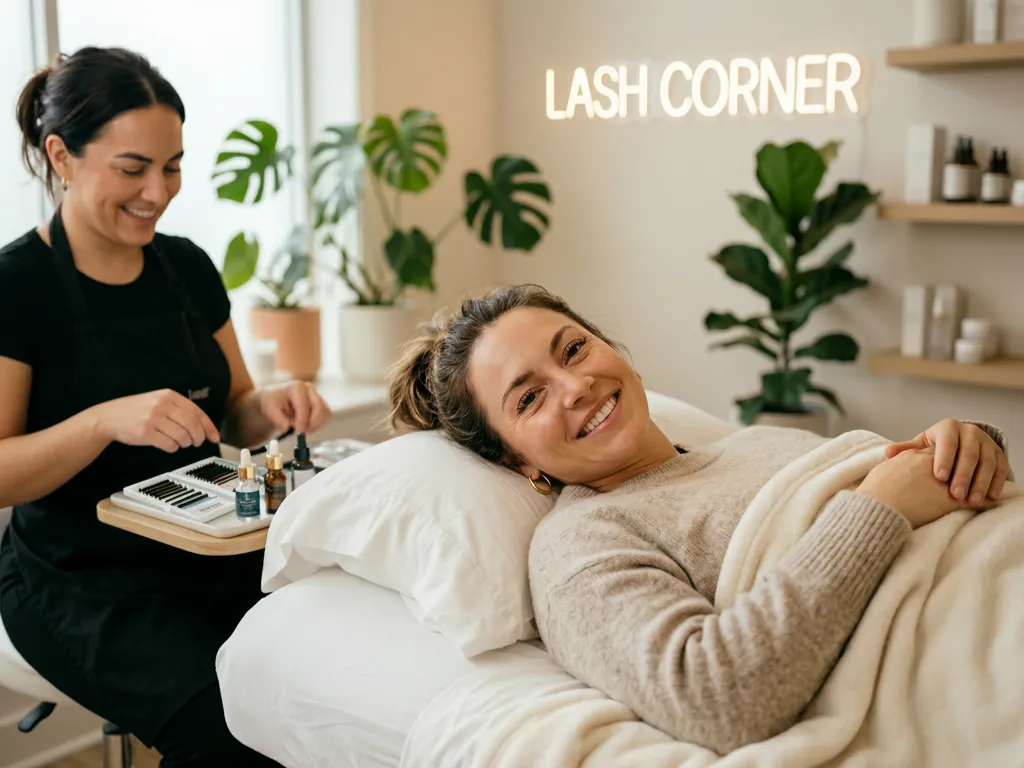
A lash reset does not have to mean giving up extensions forever. For many people, the goal is simply to develop a healthier relationship with them — one where extensions feel like a choice rather than a necessity, and where natural lashes feel like a perfectly valid alternative rather than a source of anxiety.
Choosing a More Natural Set This Time
When you return to extensions after a reset, consider working with your lash artist to choose a set that is closer to your natural lash parameters — a classic or light hybrid set rather than a full mega volume, and lengths that are only a few millimetres beyond your natural lashes rather than dramatically longer. This makes the gap between extended and natural feel less extreme, which means lash blindness is less likely to take hold again at the same intensity.
The principle of choosing extensions that enhance rather than transform is at the heart of the guide to choosing the best lash extension style for your eye shape — worth revisiting with fresh eyes after your reset to see what truly flattering and sustainable looks like for your specific features.
Building in Regular Natural Lash Days
One of the most effective ways to prevent lash blindness from re-establishing itself after a reset is to deliberately build natural lash days into your routine. This does not mean giving up extensions entirely — it means intentionally spending time with your natural lashes so your brain never fully loses its reference point for them. Even one or two days per month without any lash enhancement can be enough to maintain perceptual balance and keep your baseline calibrated.
Your Natural Lashes Have Always Been Enough
Lash blindness is ultimately a story about perception — and perception, unlike the length of your natural lashes, is something you have genuine agency over. The extensions are not the problem. The inability to see your own face clearly without them is. Once you recognize what is happening and understand why, you already have more power over it than it might feel like in the moment.
Taking a step back from full extensions, giving your natural lashes time and care, and gently recalibrating your baseline is not a beauty failure. It is one of the most self-aware things a lash lover can do — and it almost always results in a healthier, more sustainable relationship with the lash services and products you genuinely love. Your natural lashes were the starting point for everything. They deserve to be seen.